Explainer
What is a nakiri knife used for
Published
Short answer
A nakiri is a Japanese vegetable knife. Its flat, straight edge meets the board along its whole length, so it makes clean push cuts through onions, carrots, cabbage, herbs and greens without leaving accordion slices. It is not meant for bones, frozen food or rocking cuts, and it is a weak choice for dense winter squash.
Picks for this job
All 8 picks compared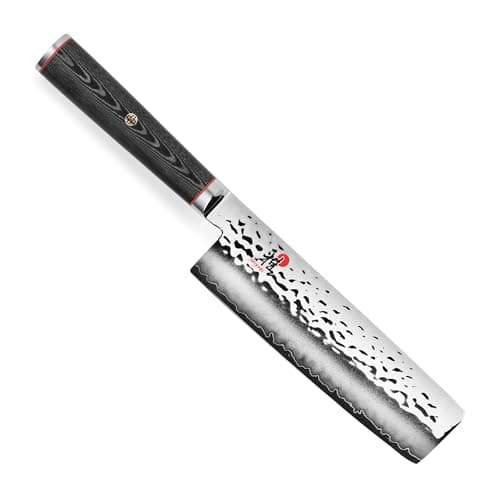
Miyabi Mizu SG2 6.5" nakiri, 63 HRC, 12-degree edge
See price on AmazonSee it on Amazon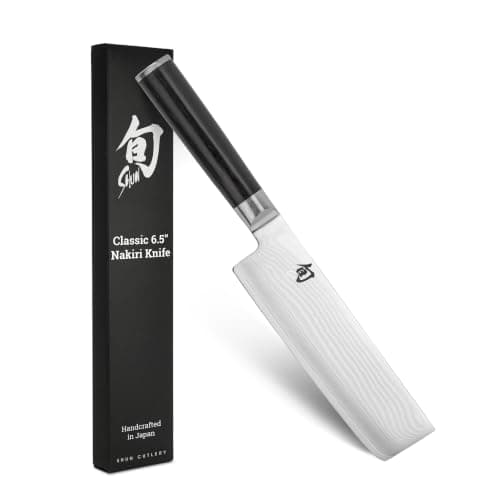
Shun Classic 6.5" nakiri, VG-MAX with free sharpening
See price on AmazonSee it on Amazon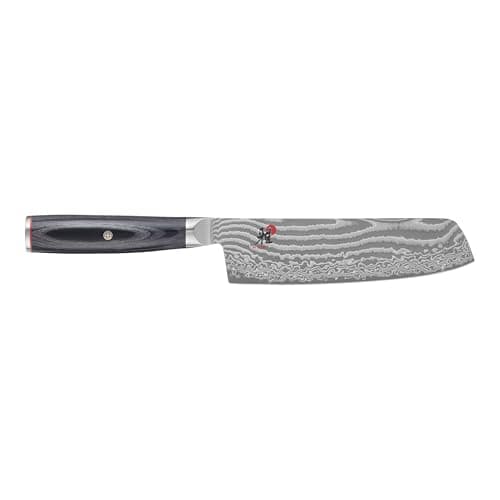
Miyabi Kaizen II 6.5" nakiri, FC61 at 61 HRC
See price on AmazonSee it on Amazon
If you cut a lot of vegetables, a nakiri can make prep faster and neater. This page explains what the rectangular blade is designed for, how to use it with a push cut and a chopping motion, where it falls short compared with a gyuto or santoku, and how to keep it sharp and rust free. It is written for US home cooks deciding whether a nakiri earns a spot next to their chef knife.
What makes a nakiri different
A nakiri has a rectangular blade, usually 165 to 180 mm long, with a nearly flat edge and a squared-off tip. The blade is tall, which gives your knuckles clearance and lets you scoop food off the board. It is a double-bevel knife, sharpened on both sides, so it works for either hand.
The flat edge is the key feature. With a curved chef knife, part of the edge lifts off the board as you cut, and thin slices of scallion can stay joined at the bottom. A nakiri's edge contacts the board along its length, so each cut goes all the way through.
牛刀Gyuto
180 to 270 mm
三徳Santoku
165 to 180 mm
菜切Nakiri
160 to 180 mm
文化Bunka
165 to 180 mm
切付Kiritsuke
210 to 270 mm
筋引Sujihiki
240 to 300 mm
ペティPetty
120 to 150 mm
What a nakiri is good at
A nakiri is built for vegetables and fruit that you cut with straight up-and-down or forward strokes.
- Slicing onions, shallots and leeks thin and even
- Chopping cabbage, lettuce and leafy greens
- Julienne and fine dice of carrots, peppers and celery
- Cutting herbs without bruising them through repeated rocking
- Peeling daikon or cucumber in a thin sheet (katsuramuki) with practice
- Slicing boneless tofu, mushrooms and soft fruit
How to use a nakiri
Use a pinch grip, with your thumb and the side of your index finger on the blade just ahead of the handle. Our guide on how to hold a chef knife covers this in detail, and it applies directly to a nakiri.
A nakiri is not designed for rocking. Instead, use one of these motions:
- 1
Push cut: Start with the heel slightly raised, then push the knife forward and down in one motion so the whole edge passes through the food.
- 2
Pull cut: For soft items, start at the front and draw the knife back and down.
- 3
Chop: For quick work on herbs or greens, lift the whole blade and bring it straight down, keeping the edge level with the board.
- 4
Use the claw grip on your guiding hand so your knuckles lead and your fingertips stay tucked.
- 5
Use the tall flat side of the blade to scoop and carry cut food to the pan.
Limits: meat, bones and hard squash
A nakiri can slice boneless meat, but the flat tip makes it poor at trimming fat, scoring or working around joints. A gyuto or petty does those jobs better.
Most Japanese nakiri are thin and hard (often HRC 60 or higher), so they are not choppers like a Chinese cleaver. Avoid bones, frozen food, hard cheese rinds and twisting the blade in dense produce. Thick winter squash such as kabocha or butternut can wedge the blade and cause a chip when you pry it out. Cut squash with a heavier knife, or split it carefully with a sturdy chef knife and steady straight pressure.
Note.Never twist or lever a thin Japanese blade sideways in hard food. That sideways force is a common cause of chips. See chipped Japanese knife for repair.
Nakiri vs santoku, usuba and Chinese cleaver
A santoku has a slightly curved edge and a pointed-ish tip, so it handles meat and fish too. A nakiri is more specialized but gives cleaner vegetable cuts. Compare them in nakiri vs santoku.
An usuba looks similar but is single bevel, used in professional kitchens for very thin vegetable work. It needs one-sided sharpening skills. See nakiri vs usuba. A Chinese cleaver (cai dao) is taller and often heavier and is used for everything from vegetables to boneless meat; nakiri vs Chinese cleaver explains the differences.
Nakiri maintenance tips
Care is the same as for any thin Japanese knife, with a few points specific to the flat edge.
- Hand wash and dry right away. Do not use the dishwasher; see can Japanese knives go in the dishwasher.
- Carbon steel nakiri must be wiped dry and may be oiled for storage. See Japanese knife oil.
- Sharpen on whetstones and keep the edge flat. Check it against a straight edge or the board: an edge that develops a belly or a dip will miss cuts.
- Use a wood or soft synthetic board. Glass and stone dull the edge quickly. See the best cutting board for Japanese knives.
- Store it in a block, on a magnetic strip or in a saya so the edge does not touch other metal.
Frequently asked questions
Is a nakiri worth it if I already have a chef knife? It is worth it if you cut a lot of vegetables and like push cutting. If you mostly rock-chop or cut a mix of meat and vegetables, a gyuto or santoku already covers the job.
Can you cut meat with a nakiri? You can slice boneless meat with it. It is not suited to bones, joints or detailed trimming, where a pointed knife is better.
What size nakiri should I get? 165 mm (about 6.5 inches) is the most common size and suits most home boards. A 180 mm nakiri gives more length for large cabbages and leeks.
Is a nakiri good for left-handed cooks? Yes, most nakiri are double bevel and work in either hand. Check that the handle is not a right-handed D shape if that matters to you.
What you need for this
- See price on AmazonAmazon
Miyabi Mizu SG2 6.5" nakiri, 63 HRC, 12-degree edge
 See price on AmazonAmazon
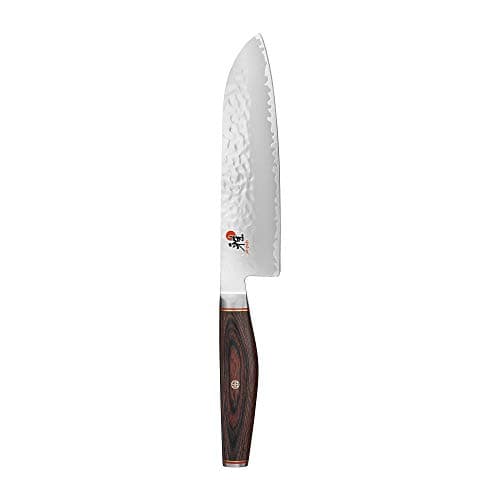
Miyabi Artisan 7" santoku in SG2 at 63 HRC
 See price on AmazonAmazon
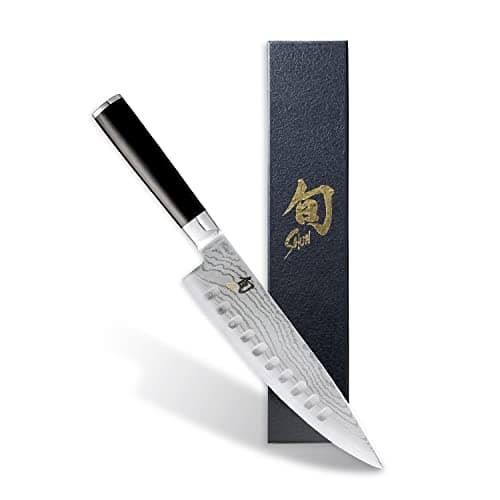
Shun Classic 8 in hollow ground chef, 16-degree
From Best Japanese kitchen knives for home cooks: one pick per job