How-to
How to hold a chef knife properly
Published
Short answer
Hold a chef knife with a pinch grip: pinch the blade just in front of the handle between your thumb and the side of your bent index finger, then wrap your other three fingers around the handle. Guide the food with your other hand in a claw, fingertips tucked and knuckles resting against the flat of the blade.
Picks for this job
All 7 picks compared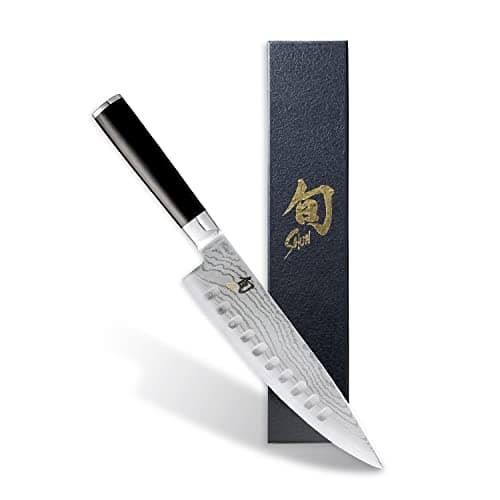
Shun Classic 8 in hollow ground chef, 16-degree
See price on AmazonSee it on Amazon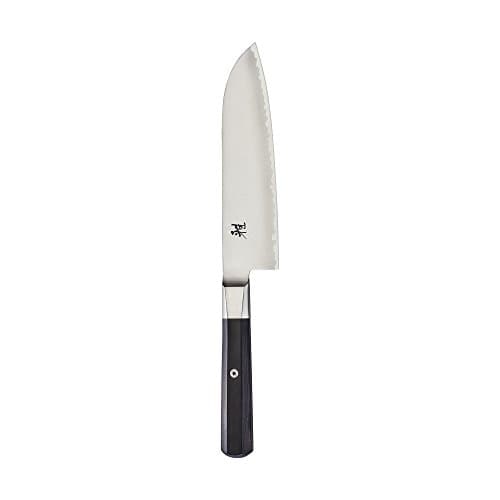
Miyabi Koh 7 in santoku, FC61 at 61 HRC
See price on AmazonSee it on Amazon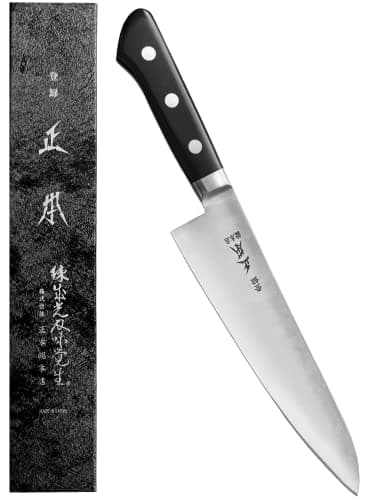
Masamoto AT 210 mm gyuto, 57 HRC, Pakkawood
See price on AmazonSee it on Amazon
How you hold a knife affects control, speed, fatigue and safety more than the knife itself. This how-to is for home cooks who want to learn the pinch grip and the claw hand properly, whether you use a German chef knife or a thin Japanese gyuto. You get step-by-step instructions for both hands, common mistakes to avoid, how to practice, and a few adjustments for light Japanese blades with wa handles.
Why the pinch grip matters
Most beginners hold a knife like a hammer, with all four fingers on the handle, or put an index finger on the spine. Both feel secure but give poor control of the blade's angle. The pinch grip puts your fingers on the blade itself, close to the balance point, so small movements of your hand translate directly to the edge.
With a pinch grip the knife tracks straighter, slices come out more even, and your wrist does less work. It also matters more with Japanese knives: a thin, hard edge rewards a straight cut and punishes twisting, which can chip it.
How to hold a chef knife: step by step
Practice these steps slowly with the knife on the board before cutting anything.
- Tip
- The point, for fine work
- Belly
- The curve of the edge, for rocking cuts
- Flat
- The straight part of the edge near the heel
- Heel
- The rear corner of the edge
- Choil
- Where the edge ends at the handle
- Spine
- The thick back of the blade
- Ferrule
- The collar of a wa handle; a Western knife has a bolster
- Tang
- The steel inside the handle
- HRC
- Hardness of the steel, here 60-61
- 1
Place the knife flat on the board with the handle toward your dominant hand.
- 2
Grip the handle with your middle, ring and little fingers, snug but not white-knuckled.
- 3
Bend your index finger and lay the side of it (between the first and second knuckle) against one face of the blade, just ahead of the handle or bolster.
- 4
Place the pad of your thumb on the opposite face of the blade, roughly across from your index finger.
- 5
Lift the knife. The blade should be pinched between thumb and index finger, with the handle resting in your palm and the other fingers.
- 6
Check that the blade hangs straight down from your hand rather than tilting. Adjust the thumb if it leans.
- 7
Relax your grip slightly. You want control, not a death grip, which tires your hand and makes cuts wobble.
The claw: how to hold food safely
Your guiding hand matters as much as your knife hand. The claw keeps fingertips out of the blade's path.
- 1
Curl your fingertips under so the nails point down toward the board.
- 2
Tuck your thumb behind your fingers.
- 3
Rest the middle knuckles lightly against the flat of the blade. They act as a guide and set the slice thickness.
- 4
Move the claw back a little after each cut, keeping the knuckles in contact with the blade.
- 5
Keep the blade's edge below your knuckle line. Do not raise the edge above them.
Note.Always cut on a stable board. Put a damp towel or non-slip mat under it, and cut round items like onions and potatoes in half first so they sit flat.
Common grip mistakes
A few habits cause most control problems and many cuts. Watch for these as you practice.
- Index finger on the spine: Feels precise but lets the blade wobble side to side and gives less power.
- Hammer grip on the handle: Your hand is far from the balance point, so control drops and the wrist tires.
- Squeezing too hard: Causes fatigue and jerky cuts.
- Flat fingers on the food: The fingertips are exposed. Always curl them into a claw.
- Twisting the blade to pop food off: Bad for thin Japanese edges. Lift the food off with the flat of the knife or your fingers instead.
Adjusting the grip for Japanese knives
Japanese knives are often lighter and thinner than German ones, and many use a wa handle with no bolster. A few adjustments help.
On a wa handle, the pinch sits right where the blade meets the ferrule. Since the knife is front-heavy compared with a Western knife, pinching slightly farther forward on the blade can make it feel balanced. On a Western handle with a bolster, pinch at the bolster as usual. See wa vs Western handles for how balance differs.
Let the knife do the work. A sharp Japanese edge needs little downward force. Use a forward push or backward pull rather than pressing straight down, and keep the blade vertical to avoid steering. Learn the main motions in how to cut with a chef knife.
Octagonal wa
Light, eight flat faces, works in either hand.
D-shaped wa
Light, with a ridge for the fingers. Made for one hand.
Western yo
Full tang between two scales and three rivets. Heavier at the back.
How to practice and build speed
Speed comes from consistency, not from forcing it. Spend a few minutes practicing on cheap, forgiving produce.
- 1
Start with a halved onion or a celery stalk, cutting slow, even slices.
- 2
Focus on keeping the knuckles in contact with the blade and the blade vertical.
- 3
Gradually increase pace only while slices stay even.
- 4
Move on to carrots and potatoes, which need more control because they are harder.
- 5
If your hand cramps, loosen your grip and check your posture: stand square to the board with the board at a comfortable height.
Choosing a knife that is easy to hold
A knife that suits your hand makes a good grip easier. Blade height affects knuckle clearance, and handle size and shape affect comfort. Cooks with smaller hands often like a shorter knife; see what size chef knife you need. Left-handed cooks should check handle shape and edge grind; see left-handed Japanese knives.
Most of all, keep the knife sharp. A dull knife needs more force, slips more and makes a safe grip harder. The best gyuto knives list covers chef knives in both handle styles.
Frequently asked questions
Should my index finger be on top of the knife? No. Resting the index finger on the spine reduces control. Use the pinch grip with the index finger bent against the side of the blade.
Does the pinch grip cause calluses? Some cooks get a light callus on the inside of the index finger. A knife with a smooth, rounded spine and choil reduces rubbing.
Is the pinch grip safe for beginners? Yes. It gives more control than a handle-only grip, and paired with the claw it is the standard method taught in culinary schools.
How do I hold a knife when cutting meat? Use the same pinch grip. For slicing, use long pull strokes. For trimming, a smaller petty knife held in a pinch gives more control.
What you need for this
- See price on AmazonAmazon
Shun Classic 8 in hollow ground chef, 16-degree
From Best Japanese knives for beginners: forgiving first picks
 See price on AmazonAmazon
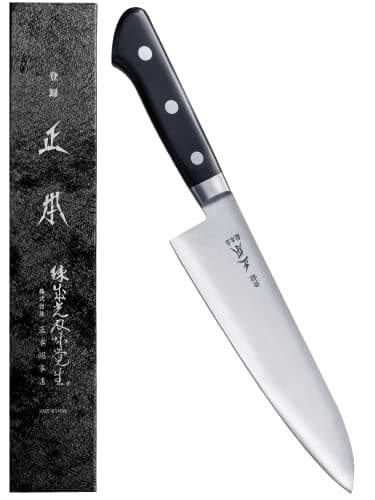
Masamoto VG 240 mm gyuto, HRC 58-59, POM handle
From Best gyuto knives: Japanese chef knives in 210 and 240 mm