How-to
How to cut with a chef knife: push, pull and rock
Published
Short answer
Use a pinch grip, curl your guiding hand into a claw, and let the knife slice forward or back instead of pressing straight down. Push cuts suit most vegetables, pull cuts suit fish and delicate items, and rock chopping suits herbs on a curved chef knife. With hard Japanese knives, avoid twisting, prying or slamming the edge into the board.
Picks for this job
All 8 picks compared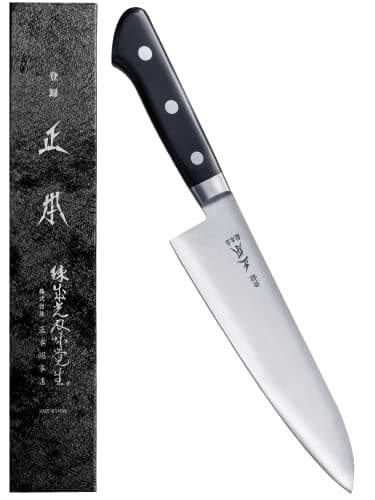
Masamoto VG 240 mm gyuto, HRC 58-59, POM handle
See price on AmazonSee it on Amazon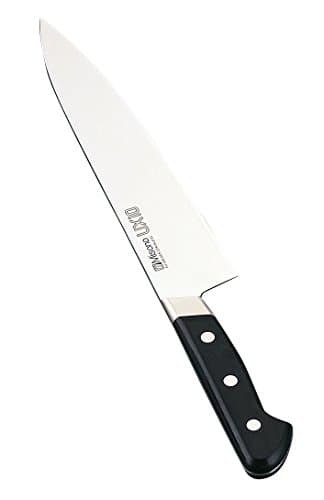
Misono UX10 210 mm gyuto in Swedish stainless
See price on AmazonSee it on Amazon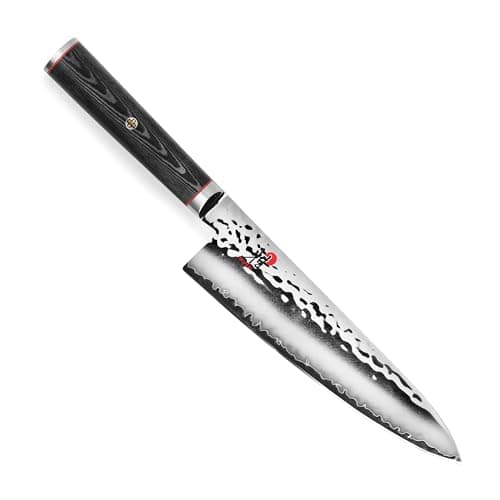
Miyabi Mizu SG2 8 in chef knife at 63 HRC
See price on AmazonSee it on Amazon
A sharp chef knife only works well if the cutting motion matches the blade. This page teaches the three basic motions, the push cut, the pull cut and the rock chop, with step by step instructions. It also explains which motion suits a curved Western chef knife, a gyuto, a santoku or a nakiri, and how to cut so a thin, hard Japanese edge does not chip or roll. It is for home cooks who want faster, safer and cleaner prep.
Start with the grip and the claw
Hold the handle with your middle, ring and little fingers, and pinch the blade just ahead of the handle between your thumb and the side of your index finger. This pinch grip gives far more control than wrapping your whole hand around the handle or pointing your index finger along the spine. Our how to hold a chef knife page covers it with more detail.
Your other hand is the guide. Curl the fingertips under so your knuckles touch the flat of the blade, and keep your thumb tucked behind your fingers. The knuckles set the slice thickness. Move the claw back a little after each cut, and never lift the edge higher than your knuckles.
- Tip
- The point, for fine work
- Belly
- The curve of the edge, for rocking cuts
- Flat
- The straight part of the edge near the heel
- Heel
- The rear corner of the edge
- Choil
- Where the edge ends at the handle
- Spine
- The thick back of the blade
- Ferrule
- The collar of a wa handle; a Western knife has a bolster
- Tang
- The steel inside the handle
- HRC
- Hardness of the steel, here 60-61
The push cut
The push cut is the main motion for Japanese knives and works with any profile. The knife moves forward and down at the same time, so the edge slices through the food instead of crushing it.
- 1
Rest the tip area of the edge on the food, with the heel slightly raised.
- 2
Push the knife forward and down in one smooth stroke.
- 3
Finish with the middle or heel of the edge touching the board.
- 4
Lift the blade straight back up just past the food, move the claw back, and repeat.
- 5
Keep the pressure light. A sharp edge should do the work.
Note.Good for onions, carrots, celery, peppers, potatoes, cucumbers and most daily vegetable prep.
The pull cut
The pull cut draws the blade back toward you. It is gentle on soft and delicate foods because the edge slices with almost no downward force.
- 1
Place the heel or middle of the edge on the far side of the food with the tip angled down toward the board.
- 2
Draw the knife back toward you and down in one long stroke, using as much of the edge as possible.
- 3
Let the tip finish on the board.
- 4
For raw fish or a roast, slice in a single pull without sawing back and forth.
- Raw fish for sashimi or crudo
- Herbs that bruise easily, such as basil
- Thin slices of boneless meat
- Scallions and chives
The rock chop
The rock chop keeps the tip on the board while the heel rises and falls. It needs a blade with a curved belly, such as a Western chef knife or a gyuto with a fair amount of curve. It is fast for mincing herbs and garlic.
To rock chop, keep the tip down, raise and lower the handle while moving the blade across the food, and use your guiding hand flat on the spine near the tip for fine mincing. Do not lift the tip and slam it back down. With a hard Japanese edge, a forceful rock that pounds the edge into the board can cause tiny chips. Keep it light.
Which motion suits which knife
If your knife has a flat edge, rocking feels choppy and leaves accordion cuts that are still attached. Switch to push cuts. See santoku vs chef knife and what is a nakiri knife used for for more on flat profiles.
Western chef knife
- Profile
- Pronounced curve
- Best motions
- Rock chop, push cut
Gyuto
- Profile
- Moderate curve toward tip
- Best motions
- Push cut, pull cut, light rock
Santoku
- Profile
- Mostly flat, dropped tip
- Best motions
- Push cut, pull cut, chop
Nakiri
- Profile
- Flat, square tip
- Best motions
- Straight up and down chop, push cut
Kiritsuke (double-bevel)
- Profile
- Flat, angled tip
- Best motions
- Push cut, long pull cut
Sujihiki
- Profile
- Long, slight curve
- Best motions
- Long single pull slices
| Knife | Profile | Best motions |
|---|---|---|
| Western chef knife | Pronounced curve | Rock chop, push cut |
| Gyuto | Moderate curve toward tip | Push cut, pull cut, light rock |
| Santoku | Mostly flat, dropped tip | Push cut, pull cut, chop |
| Nakiri | Flat, square tip | Straight up and down chop, push cut |
| Kiritsuke (double-bevel) | Flat, angled tip | Push cut, long pull cut |
| Sujihiki | Long, slight curve | Long single pull slices |
How to avoid chipping a Japanese edge
Japanese knives are often hardened to around HRC 60 or more, with a thin edge. That keeps them sharp longer, but it makes the edge less tolerant of sideways force. Most chips come from technique, not defects. Our HRC explainer explains why.
- Do not twist the blade to split hard vegetables like squash. Cut straight through or use a heavier knife.
- Never scrape food across the board with the edge. Flip the knife and use the spine.
- Avoid bones, frozen food, pits and hard cheese rinds.
- Cut on end-grain or edge-grain wood, or soft plastic. Never glass, stone or ceramic.
- Do not pry or lever food apart with the knife.
Note.If you already have a chip, see chipped Japanese knife for how to grind it out.
Keep the knife sharp so these motions work
Every motion here depends on a sharp edge. A dull knife makes you push harder, which crushes food and makes slips more likely. Touch up on a fine whetstone when the knife starts to skid on tomato skin or onion. Our whetstone sharpening guide walks through it, and the best whetstone sets guide lists good starter stones. A good board also helps; see best cutting board for Japanese knives.
Frequently asked questions
Should you push or pull when cutting? Both work. Push cuts are the everyday motion for vegetables. Pull cuts are better for fish, roasts and delicate herbs.
Why does my knife leave slices stuck together? Usually the edge is not reaching the board along its full length, often from rocking a flat blade. Use push cuts that finish flat on the board.
Can you rock chop with a Japanese knife? You can rock gently with a curved gyuto. Avoid hard, slamming rocks, and do not rock a flat santoku or nakiri.
How do professional chefs cut so fast? Consistent claw grip, light pressure, a sharp knife and lots of repetition. Speed comes after accuracy.
What you need for this
- See price on AmazonAmazon
Masamoto VG 240 mm gyuto, HRC 58-59, POM handle
From Best gyuto knives: Japanese chef knives in 210 and 240 mm
 See price on AmazonAmazon
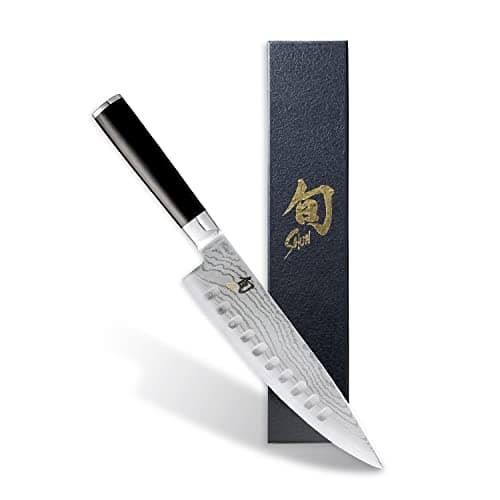
Shun Classic 8 in hollow ground chef, 16-degree
From Best Japanese knives for beginners: forgiving first picks
 See price on AmazonAmazon
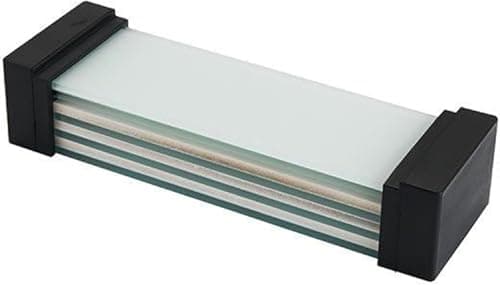
Shapton Glass 500, 2000, 16000 set with Field Holder