Fix
Chipped Japanese knife: causes and how to fix it
Published
Short answer
Japanese knives chip because their hard, thin edges cannot bend under impact or sideways force from bones, frozen food, twisting or hard boards. Small chips can be fixed at home by grinding the edge back on a coarse stone (about 220 to 400 grit) until the chip is gone, then resharpening. Large chips or broken tips are best sent to a professional or the maker.
Picks for this job
All 6 picks compared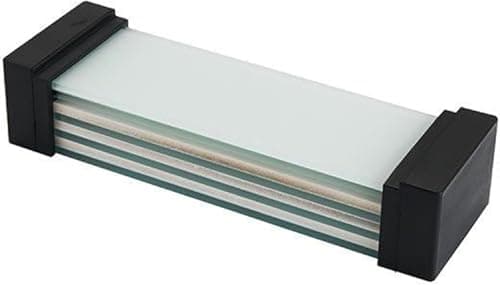
Shapton Glass 500, 2000, 16000 set with Field Holder
See price on AmazonSee it on Amazon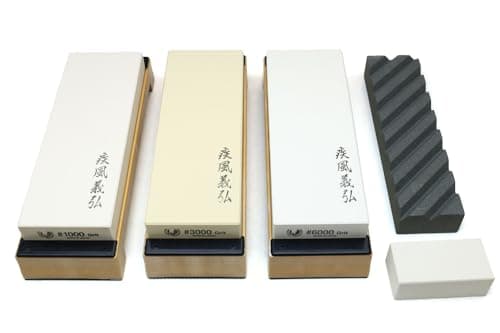
Yoshihiro 1000, 3000, 6000 set with fixer and nagura
See price on AmazonSee it on Amazon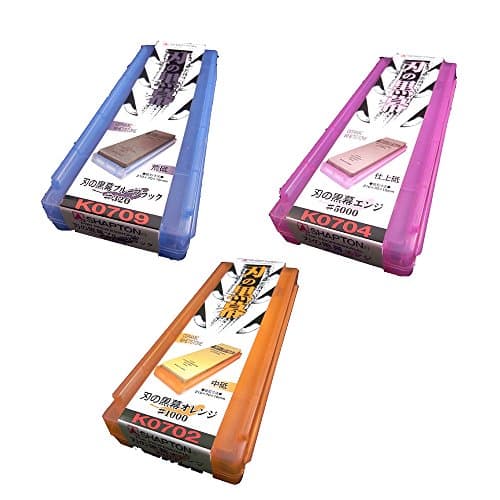
Shapton Kuromaku D-set: 320, 1000, 5000
See price on AmazonSee it on Amazon
Finding a chip in a new Japanese knife is upsetting, but it is common and usually fixable. This page is for home cooks with a chipped gyuto, santoku, nakiri or Shun knife. It explains why hard edges chip, how to judge how bad the damage is, a step-by-step home repair for small chips, when to send the knife to a professional or check the maker's service policy, and how to prevent chips from coming back.
Why Japanese knives chip
Hard steels, often HRC 60 or more, hold a sharp edge longer, but they are less flexible. A softer German knife tends to roll or dent when stressed; a hard Japanese edge is more likely to chip. Thin geometry and acute angles add to the effect.
The table lists the most common causes, roughly most likely first, with the habit that prevents each one.
- Edge retention
- rises with hardness
- Chip risk
- rises with hardness
- Ease of sharpening
- falls with hardness
Steels on the chart: X50CrMoV15 HRC 56 to 58; Cromova 18 HRC 56 to 58; AUS-10 HRC 59 to 60; VG-10 HRC 60 to 61; VG-MAX HRC 60 to 61; FC61 HRC 61 to 61; Ginsan (Silver 3) HRC 60 to 61; SG2 / R2 HRC 62 to 64; ZDP-189 HRC 64 to 66; Shirogami 1 and 2 HRC 61 to 64; Aogami 1 and 2 HRC 61 to 64; Aogami Super HRC 63 to 65.
Twisting or prying in hard food
- What happens
- Sideways force snaps off part of the edge
- Prevention
- Cut straight down; do not lever
Bones, frozen food, hard rinds
- What happens
- Impact on a hard object
- Prevention
- Use a heavier or softer knife for these
Glass, stone, marble or bamboo boards
- What happens
- Edge strikes a hard surface
- Prevention
- Use wood or soft synthetic boards
Dishwasher or loose drawer
- What happens
- Blade knocks against other items
- Prevention
- Hand wash; store edge-protected
Pull-through or coarse electric sharpeners
- What happens
- Tears steel from the edge
- Prevention
- Use whetstones or a guided system
Scraping food off the board with the edge
- What happens
- Rolls and chips the edge
- Prevention
- Use the spine to scrape
| Cause | What happens | Prevention |
|---|---|---|
| Twisting or prying in hard food | Sideways force snaps off part of the edge | Cut straight down; do not lever |
| Bones, frozen food, hard rinds | Impact on a hard object | Use a heavier or softer knife for these |
| Glass, stone, marble or bamboo boards | Edge strikes a hard surface | Use wood or soft synthetic boards |
| Dishwasher or loose drawer | Blade knocks against other items | Hand wash; store edge-protected |
| Pull-through or coarse electric sharpeners | Tears steel from the edge | Use whetstones or a guided system |
| Scraping food off the board with the edge | Rolls and chips the edge | Use the spine to scrape |
How bad is the chip?
Look at the edge under a bright light and run your thumbnail gently down the side of the blade toward the edge. A catch shows a chip. Then sort the damage into one of these groups, since the fix depends on size.
- Micro-chips: Tiny glints or rough spots along the edge. Normal sharpening on a 1000 grit stone usually removes them.
- Small chips: Visible notches up to roughly 1 mm deep. Fixable at home on a coarse stone with patience.
- Large chips or a broken tip: Deeper notches or a missing tip. Removing them takes a lot of steel and can change the profile. Consider a professional or the maker. See broken knife tip fix.
How to fix a small chip at home
You need a coarse stone (about 220 to 400 grit), a medium stone (about 1000) and a fine stone (about 3000 to 6000). Make sure the stones are flat; see how to flatten a whetstone.
- 1
Joint the edge: Hold the knife vertical, edge down, and draw it lightly along the coarse stone a few times. This grinds the edge back to the depth of the chip, leaving a flat, shiny line. Stop when the chip is gone.
- 2
Reset the bevel: Hold the knife at its normal angle (16 degrees per side for Shun; 12 to 15 for most other Japanese knives) on the coarse stone. Grind each side evenly until the flat line from jointing disappears and a burr forms.
- 3
Keep the profile: If the chip was in one spot, blend that area into the rest of the edge so you do not leave a dip.
- 4
Refine on the medium stone: Alternate sides, raising and removing a burr.
- 5
Finish on the fine stone with light pressure, then strop.
- 6
Test on paper or a tomato, then wash and dry the knife.
Note.Work slowly and keep your fingers behind the edge. Jointing creates a dull flat edge on purpose; do not panic. It is a normal first step.
When to send it in
Send the knife to a professional who works on Japanese knives if the chip is large, the tip is broken, the blade is bent or cracked, or you are not comfortable removing a lot of steel. A pro can reprofile the edge with less risk of uneven grinding.
Some makers offer sharpening or repair service. Shun listings mention free sharpening support, for example. Terms, shipping and eligibility can change, so check the maker's current policy before you send anything. See Shun free sharpening and repair for what to look for. Warranty coverage typically does not include damage from misuse, but read the maker's terms.
Specific notes for Shun and other hard knives
Shun's VG-MAX steel and 16-degree edge make it sharp and somewhat chip-prone if misused. The same applies to SG2, ZDP-189 and Aogami Super knives, which are even harder. Use the steel chart to see where your steel falls.
For harder steels, a slightly more obtuse micro-bevel (a few degrees more than the main angle) on the very edge can reduce future chipping at a small cost in sharpness. The sharpening angle finder helps set the spine height. See how to sharpen Shun knives for brand detail.
How to prevent chips
Most chips come from a few habits that are easy to change once you know them.
- Cut on end-grain or edge-grain wood, hinoki or soft synthetic boards. See the best cutting board for Japanese knives.
- Push or pull straight through food; do not twist or rock hard on the tip.
- Keep a tougher German knife or cleaver for bones, frozen food and hard squash.
- Scrape food with the spine, not the edge.
- Hand wash only, and store in a block, saya or magnetic strip.
- Use whetstones or a guided system, not pull-through sharpeners.
Frequently asked questions
Is a chipped Japanese knife ruined? Rarely. Most chips can be ground out. The knife loses a little height but keeps working well.
Can I use a knife with a small chip? Yes, but the chip can catch and tear food and may spread. Fix it at your next sharpening.
Why did my new Shun knife chip? Common causes are hard boards, twisting in dense food, bones, frozen food, dishwashers or pull-through sharpeners. Hard, thin edges are less forgiving of these.
Will the maker fix my chipped knife? Some makers offer sharpening or repair. Check the maker's current policy, shipping terms and warranty exclusions before sending it.
What you need for this
- See price on AmazonAmazon
Shapton Glass 500, 2000, 16000 set with Field Holder
 See price on AmazonAmazon
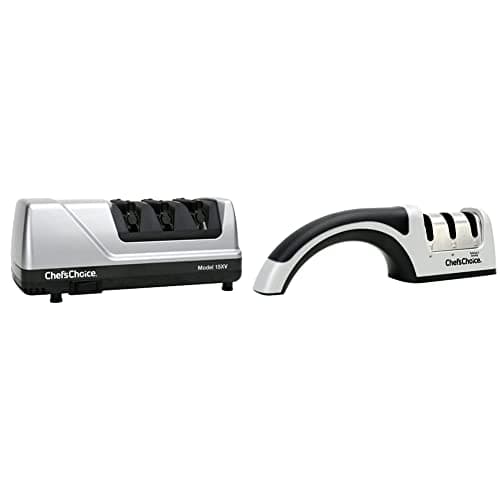
Chef'sChoice Trizor XV, 3-stage electric 15-degree sharpener
 See price on AmazonAmazon
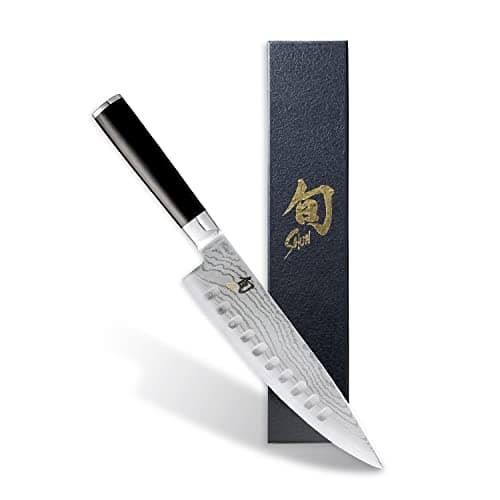
Shun Classic 8 in hollow ground chef, 16-degree
From Best Shun knives: Classic, Premier, Dual Core, Sora and Kanso