How-to
How to flatten a whetstone
Published
Short answer
To flatten a whetstone, draw a pencil grid on the wet surface, then rub the stone on a lapping plate, flattening stone or coarse sandpaper on flat glass until all the pencil lines are gone. Check it with a straightedge, chamfer the edges, and repeat every session or every few sessions so the stone never gets badly dished.
Picks for this job
All 6 picks compared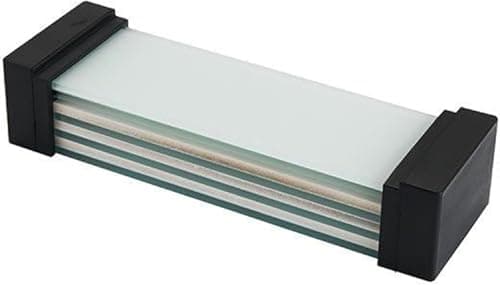
Shapton Glass 500, 2000, 16000 set with Field Holder
See price on AmazonSee it on Amazon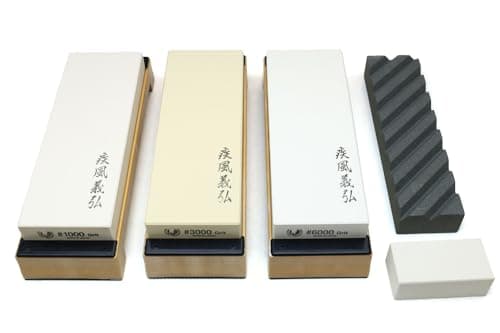
Yoshihiro 1000, 3000, 6000 set with fixer and nagura
See price on AmazonSee it on Amazon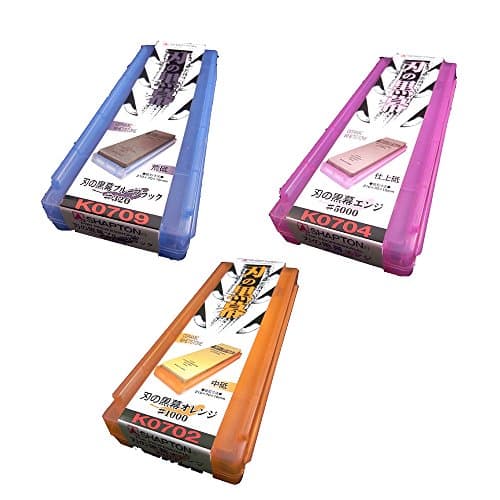
Shapton Kuromaku D-set: 320, 1000, 5000
See price on AmazonSee it on Amazon
Every water stone wears unevenly. The middle wears faster than the ends and the stone becomes dished, which rounds your knife's edge and makes a steady angle impossible. This how-to explains how to spot a dished stone, which flattening tools work, the pencil grid method step by step, how often to flatten, and a few mistakes to avoid. It is for home cooks who sharpen Japanese knives on whetstones.
Why flattening matters
When you sharpen, you naturally press hardest in the middle of the stone. Over time it forms a shallow dip from end to end and sometimes side to side. A knife sharpened on a dished stone touches the stone at different angles along the edge, so the bevel ends up rounded and the edge less keen.
A dished stone also makes it hard to sharpen a straight-edged knife like a nakiri. The edge picks up a curve that will no longer meet the board evenly. Keeping stones flat is one of the simplest ways to improve sharpening results.
How to tell if a stone is dished
Lay a straightedge, such as a steel ruler, across the stone lengthwise, crosswise and diagonally. Hold it against a light. Any gap under the middle means the stone is dished. Another sign is a bevel that looks wider at the heel and tip than in the middle of the blade, or a stone that rocks on a flat surface.
Flattening tools compared
There are several ways to flatten. Any of them works if the reference surface is truly flat. Current listings include the Shapton Lapping Plate at about $300; a coarse flattening stone or wet-and-dry silicon carbide sandpaper on a piece of thick glass costs far less.
Diamond lapping plate
- Pros
- Fast, stays flat for a long time, works on hard stones
- Cons
- Higher upfront cost
Flattening stone (coarse silicon carbide)
- Pros
- Lower cost, often included in kits
- Cons
- Wears and needs flattening itself
Sandpaper on glass or granite
- Pros
- Cheap and very flat if the base is flat
- Cons
- Paper wears out quickly and is messy
Concrete or sidewalk
- Pros
- Free
- Cons
- Not reliably flat and can contaminate the stone
| Method | Pros | Cons |
|---|---|---|
| Diamond lapping plate | Fast, stays flat for a long time, works on hard stones | Higher upfront cost |
| Flattening stone (coarse silicon carbide) | Lower cost, often included in kits | Wears and needs flattening itself |
| Sandpaper on glass or granite | Cheap and very flat if the base is flat | Paper wears out quickly and is messy |
| Concrete or sidewalk | Free | Not reliably flat and can contaminate the stone |
How to flatten a whetstone with the pencil grid method
This method shows exactly where the stone is high and when it is flat.
- 1
Soak or wet the stone as its maker directs.
- 2
Draw a grid of pencil lines across the whole surface, about 1/2 inch apart, in both directions.
- 3
Wet the lapping plate, flattening stone or sandpaper. For sandpaper, place it on glass or granite with a little water underneath so it does not slide.
- 4
Place the stone face down and rub it in figure eights or straight back-and-forth strokes with even pressure. Rotate the stone end for end every few strokes.
- 5
Lift and check. Pencil lines remain in the low spots, usually the middle.
- 6
Continue until every pencil line is gone. That means the whole surface has been ground level.
- 7
Check with a straightedge in several directions.
- 8
Chamfer the edges by rubbing each edge at about 45 degrees a few times. This prevents chipping of the stone and keeps sharp corners from catching the knife.
- 9
Rinse the stone well to remove grit from the flattener before sharpening.
Note.Rinse thoroughly after flattening, especially before using a fine stone. Coarse grit left on the surface will scratch your edge.
How often to flatten
Flatten a little and often. Many sharpeners flatten at the end of every session, or every few sessions, because a slightly worn stone takes a few seconds to correct while a badly dished one can take a long time.
Soft, fast-cutting coarse stones dish fastest and need the most attention. Hard, fine stones wear slowly. Flatten each stone in a set, not just the one you use most, and flatten coarse stones before moving to finer ones. See the whetstone grit guide for what each grit does.
Common mistakes
A few errors waste time or make the stone worse instead of better. Watch for these.
- Using an uneven base: Countertops, cutting boards and concrete are rarely flat enough.
- Uneven pressure: Pressing on one end creates a new slope. Keep pressure centered and rotate the stone.
- Skipping the grid: Without it, it is hard to tell when the stone is truly flat.
- Not flattening the flattener: Silicon carbide flattening stones also dish. Check them with a straightedge.
- Mixing grit: Rinse the stone and your hands well before going to a finer stone.
Use the whole stone to slow dishing
Prevention helps. When sharpening, use the whole length and width of the stone rather than one spot in the middle. Vary where you start each stroke, and for a long gyuto, sweep the knife diagonally so the heel, middle and tip all travel across different parts of the stone.
A flat stone and a steady angle work together. Our guide on how to sharpen a Japanese knife on a whetstone covers the angle and technique, and the sharpening angle finder shows the spine lift for your knife. For brand specifics, see how to sharpen Shun knives.
Frequently asked questions
Do new whetstones need flattening? Many come reasonably flat, but checking with a straightedge before first use is a good habit. Some are slightly uneven out of the box.
Can I flatten a whetstone with sandpaper? Yes. Use coarse wet-and-dry silicon carbide paper on flat glass or granite with water, and replace it as it wears.
Can I flatten a diamond plate? Diamond plates are not flattened like water stones. If one is warped or worn out, replace it.
What happens if I sharpen on a dished stone? The edge becomes rounded and the bevel uneven, so the knife feels less sharp and straight-edged knives lose their flat profile.