Explainer
Whetstone grit guide: which grits you need
Published
Short answer
For kitchen knives, a medium stone around 1000 grit does most of the sharpening. Add a fine stone in the 3000 to 6000 range to refine and polish the edge, and a coarse stone around 220 to 400 only for repairing chips or reshaping a very dull blade. A combination 1000/6000 stone is a simple, effective start for most home cooks.
Picks for this job
All 6 picks compared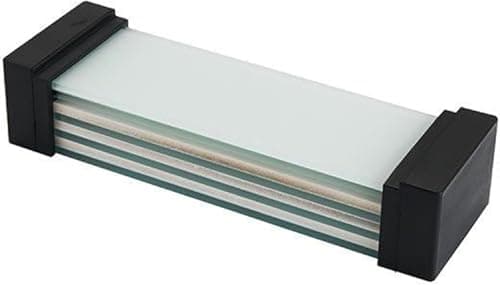
Shapton Glass 500, 2000, 16000 set with Field Holder
See price on AmazonSee it on Amazon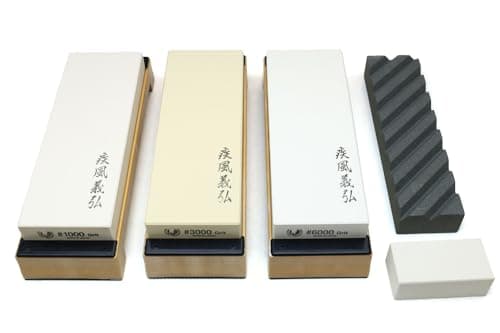
Yoshihiro 1000, 3000, 6000 set with fixer and nagura
See price on AmazonSee it on Amazon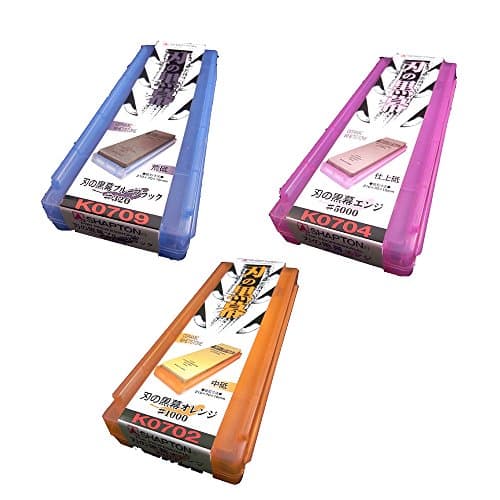
Shapton Kuromaku D-set: 320, 1000, 5000
See price on AmazonSee it on Amazon
This page is for home cooks buying their first whetstones, or trying to make sense of a set with four different numbers on it. It explains what grit numbers mean, what each grit range is for, simple two-stone and three-stone plans, how the grit you finish on changes the feel of the edge, and the difference between soaking and splash-and-go stones. It also covers grit choices for santokus and very hard steels.
What whetstone grit numbers mean
The grit number describes how fine the abrasive particles are. Lower numbers mean larger, coarser particles that remove steel quickly and leave deep scratches. Higher numbers mean finer particles that remove little steel and leave a smoother, more polished edge. Japanese stones mostly use the Japanese JIS grit scale, so a 1000 grit Japanese stone is not directly comparable with a 1000 grit sandpaper or a Western stone on a different scale.
Think of sharpening as a sequence: a coarser stone creates a new edge and a burr, and each finer stone removes the scratches left by the previous one. You rarely need every grit. Most of the time you start in the middle and finish on a fine stone.
Grit ranges and what each one is for
The 1000 grit stone is the workhorse. If your knife is dull but undamaged, start there. Only drop to a coarse stone when the 1000 grit cannot remove damage in a reasonable time, such as a visible chip or a rounded tip. See chipped Japanese knife and broken knife tip fix for repairs.
Coarse
- Grit
- 120-400
- Use it for
- Repairing chips, fixing a broken tip, reshaping a very dull edge
- How often
- Rarely
Medium
- Grit
- 600-1500
- Use it for
- Routine sharpening of a dull knife
- How often
- Every sharpening
Fine
- Grit
- 2000-4000
- Use it for
- Refining the edge after the medium stone
- How often
- Most sharpenings
Polishing
- Grit
- 5000-8000+
- Use it for
- Very smooth, polished edge for push cuts and fish
- How often
- Optional
| Range | Grit | Use it for | How often |
|---|---|---|---|
| Coarse | 120-400 | Repairing chips, fixing a broken tip, reshaping a very dull edge | Rarely |
| Medium | 600-1500 | Routine sharpening of a dull knife | Every sharpening |
| Fine | 2000-4000 | Refining the edge after the medium stone | Most sharpenings |
| Polishing | 5000-8000+ | Very smooth, polished edge for push cuts and fish | Optional |
Simple stone plans for home cooks
You can sharpen well with very few stones. Pick a plan based on how much you sharpen and how much damage your knives see.
- One stone: a 1000 grit stone, or a 1000/6000 combination stone. Covers routine sharpening for most kitchens.
- Two stones: 1000 and 4000 to 6000. Gives a refined, long-lasting edge on Japanese steels.
- Three stones: 400, 1000 and 4000 to 6000. Adds a coarse stone for chips and very dull knives.
- Add a flattening plate or lapping stone to any plan, because stones dish with use. See how to flatten a whetstone.
How finishing grit changes the edge
The last stone you use shapes how the edge behaves. An edge finished around 1000 grit has a slightly toothy feel that bites into tomato skins, onion skins and crusty surfaces. An edge finished at 4000 to 6000 is smoother and glides through soft proteins and push cuts cleanly. Very high polishes, 8000 and above, can feel almost slick on tomato skins.
Many home cooks find a finish in the 3000 to 6000 range the best balance for a gyuto or santoku. If your knife slips on tomato skins after polishing, a few light passes on a 1000 grit stone can restore some bite.
Soaking stones vs splash-and-go stones
Some stones need to be soaked in water before use, usually until they stop releasing air bubbles. Others, often called splash-and-go, only need water splashed on the surface. Soaking stones are often softer and release fresh abrasive quickly; splash-and-go stones are usually harder and more convenient. Follow the maker's instructions, because soaking a stone that is not meant to be soaked can crack it or weaken the bond.
Do not use oil on water stones. Keep the surface wet while sharpening, and the gray slurry that forms is part of the abrasive action, so do not rinse it away constantly.
Note.Store soaking stones dry after use. Leaving them in water for long periods can damage some stones, and freezing a wet stone can crack it.
Grits for hard steels and different shapes
Very hard powder steels such as SG2, R2 and ZDP-189 sharpen more slowly than VG-10 or German steel. Many standard stones still work, but a harder, faster-cutting medium stone helps, and some owners add a diamond plate for repairs. Carbon steels such as Aogami and Shirogami sharpen quickly on almost any stone. The steel chart shows where each steel sits.
Shape does not change the grit plan. A santoku, nakiri, gyuto and petty all use the same stones; only the technique for the tip and flat section differs. For angles, see Japanese knife sharpening angles by brand, and for the full technique, how to sharpen a Japanese knife on a whetstone.
A typical sharpening session
Between sharpenings, a fine ceramic rod can realign a slightly rolled edge on many Japanese knives. See honing rods for Japanese knives before you use one.
- 1
Check the edge: if there are chips, start on a coarse stone; otherwise start at about 1000 grit.
- 2
Sharpen each side until a light burr forms along the full length of the edge.
- 3
Move to the fine stone and repeat with lighter pressure and fewer strokes.
- 4
Remove the burr with alternating very light strokes or by drawing the edge through soft wood.
- 5
Rinse and dry the knife, rinse the stones, and let them air dry before storing.
Frequently asked questions
What grit whetstone should a beginner buy? A 1000 grit stone or a 1000/6000 combination stone. It handles routine sharpening and lets you learn angle control before adding more stones.
Do I need a 400 grit stone? Only if you need to repair chips or a broken tip, or your knives get very dull before you sharpen them. Many home cooks never need one.
Is 8000 grit worth it? It is optional. It gives a polished, refined edge, but the difference in daily home cooking over a 4000 to 6000 finish is small.
What grit for a santoku? The same as any Japanese knife: about 1000 grit for sharpening and 3000 to 6000 for finishing.
What you need for this
- See price on AmazonAmazon
Shapton Glass 500, 2000, 16000 set with Field Holder
 See price on AmazonAmazon
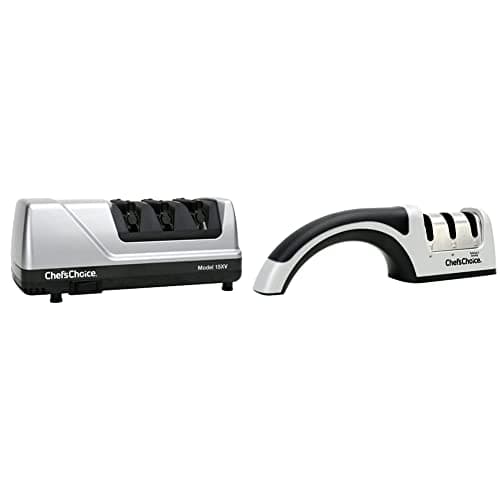
Chef'sChoice Trizor XV, 3-stage electric 15-degree sharpener
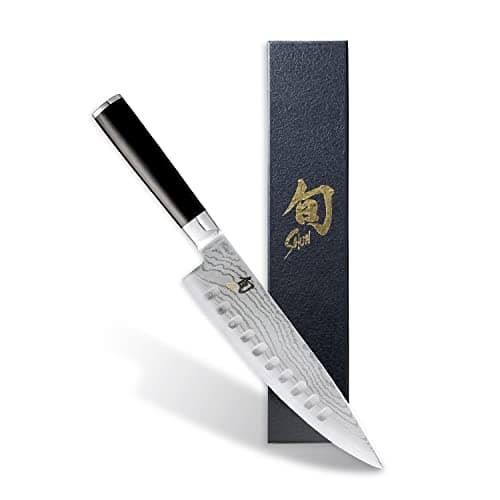 See price on AmazonAmazon
Shun Classic 8 in hollow ground chef, 16-degree
From Best Japanese knives for beginners: forgiving first picks