Fix
Broken knife tip: how to reshape it
Published
Short answer
To fix a broken knife tip, grind the spine side down on a coarse whetstone to form a new point, not the edge side, so the blade keeps its edge profile. Then reshape the curve near the tip, raise a burr on a medium stone and finish as normal. The knife ends up a few millimeters shorter.
Picks for this job
All 6 picks compared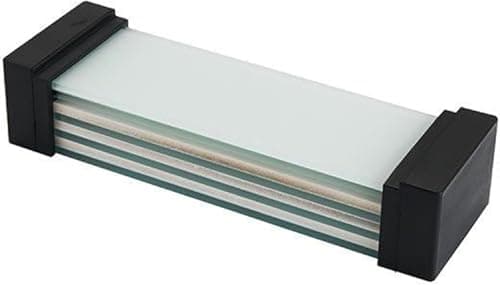
Shapton Glass 500, 2000, 16000 set with Field Holder
See price on AmazonSee it on Amazon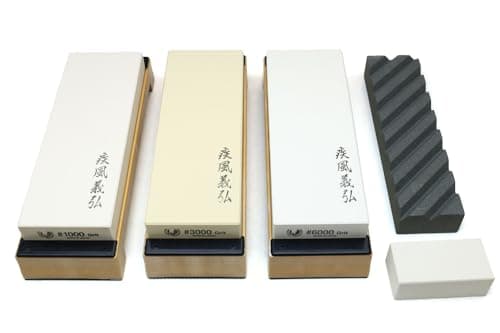
Yoshihiro 1000, 3000, 6000 set with fixer and nagura
See price on AmazonSee it on Amazon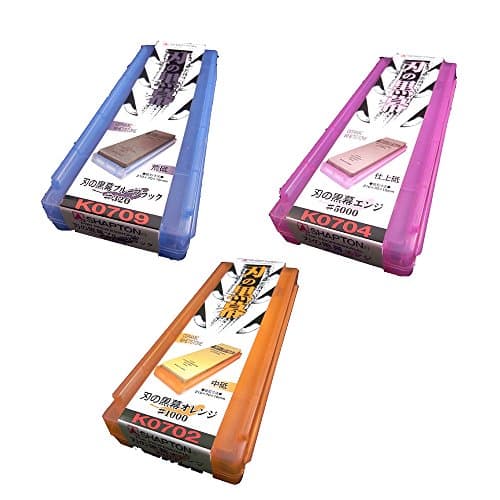
Shapton Kuromaku D-set: 320, 1000, 5000
See price on AmazonSee it on Amazon
Tips break when a knife is dropped, used to pry, or knocks against a sink or another knife. Thin, hard Japanese blades are especially prone to it. The good news is that a snapped tip is one of the most fixable kinds of damage. This page shows how to reshape a broken tip at home with whetstones, how to keep the knife's profile looking natural, and when it is smarter to use a manufacturer's service or a professional sharpener.
Why knife tips break
Japanese knives are hardened to around HRC 60 or more and ground very thin near the tip, so they snap rather than bend. See what HRC means for why. Knife shapes with a fine point, like a gyuto, kiritsuke or petty, are most at risk.
Dropping the knife
- What happens
- Tip lands on hard floor and snaps
- How to prevent it
- Let a falling knife drop; never grab it
Prying or twisting
- What happens
- Side load snaps a thin tip
- How to prevent it
- Use a paring knife or tool for prying
Loose in a drawer or sink
- What happens
- Tip hits other utensils
- How to prevent it
- Use a block, strip or saya
Stabbing into hard food
- What happens
- Tip bends or breaks in squash or frozen food
- How to prevent it
- Cut straight down, avoid frozen items
Knocking magnet strip edge
- What happens
- Tip clips the strip when placing
- How to prevent it
- Place spine first, then roll the blade on
| Cause | What happens | How to prevent it |
|---|---|---|
| Dropping the knife | Tip lands on hard floor and snaps | Let a falling knife drop; never grab it |
| Prying or twisting | Side load snaps a thin tip | Use a paring knife or tool for prying |
| Loose in a drawer or sink | Tip hits other utensils | Use a block, strip or saya |
| Stabbing into hard food | Tip bends or breaks in squash or frozen food | Cut straight down, avoid frozen items |
| Knocking magnet strip edge | Tip clips the strip when placing | Place spine first, then roll the blade on |
What you need
A coarse stone makes the job much faster. Our best whetstone sets guide includes sets with a coarse stone, and the whetstone grit guide explains grits.
- A coarse whetstone, 220-400 grit, or a coarse diamond plate
- A medium stone around 1000 grit and a fine stone around 3000-6000 grit
- A marker pen to draw the new tip line
- Water, a towel and a non-slip stone holder
- Painter's tape to protect the blade face from scratches (optional)
How to reshape a broken tip, step by step
- Tip
- The point, for fine work
- Belly
- The curve of the edge, for rocking cuts
- Flat
- The straight part of the edge near the heel
- Heel
- The rear corner of the edge
- Choil
- Where the edge ends at the handle
- Spine
- The thick back of the blade
- Ferrule
- The collar of a wa handle; a Western knife has a bolster
- Tang
- The steel inside the handle
- HRC
- Hardness of the steel, here 60-61
- 1
Look at the knife from the side and decide where the new tip will be. On most knives, the new point should be slightly above the edge line, close to where the old tip would have been.
- 2
Draw the new spine line with a marker, curving from the spine down to the new point. Bringing the spine down keeps the edge length and curve mostly intact.
- 3
Hold the knife upright, spine down, at 90 degrees to the coarse stone. Grind the spine along your marker line with light, steady strokes. Keep the blade vertical so the new spine stays square.
- 4
Check often. Stop when the marker line is reached and the new point is sharp in profile.
- 5
If the broken end left a flat spot in the edge, grind the edge near the tip at 90 degrees (edge straight down onto the stone) very lightly to blend the curve, then stop.
- 6
Sharpen the new tip area at the knife's normal angle on the coarse stone until a burr forms on both sides. This rebuilds the bevel you flattened.
- 7
Move to the medium stone and sharpen the whole edge, blending the tip into the rest. Then refine on the fine stone and deburr.
Note.Grinding generates fine metal and stone particles. Keep the stone wet and rinse the knife well. Keep fingers clear of the edge, especially when the blade is held upright.
Spine down or edge up: which way to grind
There are two ways to make a new tip. Bringing the spine down keeps the edge profile and the knife's cutting length, which is usually what you want on a chef knife or gyuto. Bringing the edge up keeps the spine line but removes edge steel and adds more curve near the tip, which can change how the knife rocks.
For small breaks of 1-3 mm, grinding mostly the spine side is usually enough. For larger breaks, you may need a bit of both. Work slowly, compare the knife to photos of the original profile, and stop to look often. A slightly blunter tip is more durable, which is not a bad thing on a home knife.
When to use a pro or the maker
If you do not have a coarse stone, the break is large, or the knife is expensive, a professional sharpener can reshape the tip quickly. Some makers repair tips too. As of October 2026, Kai's Shun service lists tip repair as part of its free lifetime sharpening (you pay shipping and processing). See Shun free sharpening and repair. For other brands, check the maker's service page.
Also see a pro if the blade is cracked, not just broken at the tip. A crack can spread, and many makers treat it differently from a chip.
Prevent the next break
Chips along the edge are fixed in a similar way, with coarse grinding followed by sharpening. See chipped Japanese knife. If you are replacing a damaged knife, a softer German knife is more forgiving of rough use; see best German chef knives.
- Store knives in a block, on a magnetic strip or in a saya. See how to store Japanese knives.
- Never leave knives in the sink or loose in a drawer.
- Use the tip for fine cutting only, not prying or stabbing into hard foods.
- Keep knives out of the dishwasher, where they rattle against other items. See can Japanese knives go in the dishwasher.
- If a knife falls, step back and let it drop.
Frequently asked questions
Can a broken knife tip be fixed? Yes. The tip is reground on a coarse stone to form a new point, then the edge is sharpened. The knife ends up slightly shorter.
Should I grind the spine or the edge to fix the tip? Usually the spine. Bringing the spine down keeps the edge length and profile, so the knife cuts the same way.
Can I fix a broken tip without a whetstone? A coarse diamond plate or a belt sander can work, but belt sanders can overheat thin steel. A pro is safer if you lack stones.
Does Shun fix broken tips? As of October 2026, Kai lists tip repair under its Shun sharpening service. Check Kai's page for the current terms.
What you need for this
- See price on AmazonAmazon
Shapton Glass 500, 2000, 16000 set with Field Holder
 See price on AmazonAmazon
Chef'sChoice Trizor XV, 3-stage electric 15-degree sharpener
 See price on AmazonAmazon
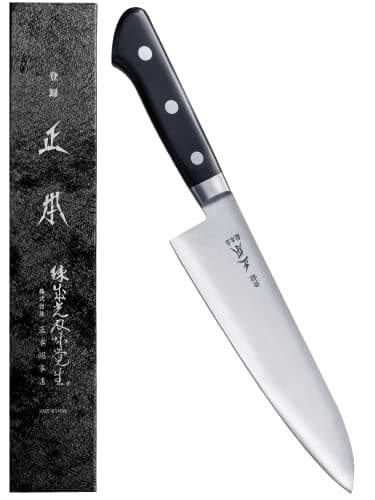
Masamoto VG 240 mm gyuto, HRC 58-59, POM handle
From Best gyuto knives: Japanese chef knives in 210 and 240 mm