Explainer
Should you use a honing rod on Japanese knives
Published
Short answer
Yes, with care. A fine ceramic or smooth honing rod, used at the knife's edge angle with a few light strokes, can straighten a slightly rolled edge and extend time between sharpenings. Avoid coarse grooved steel rods and heavy, fast strokes, because hard Japanese steel is less flexible than German steel and is more likely to chip than bend back into line.
Picks for this job
All 8 picks compared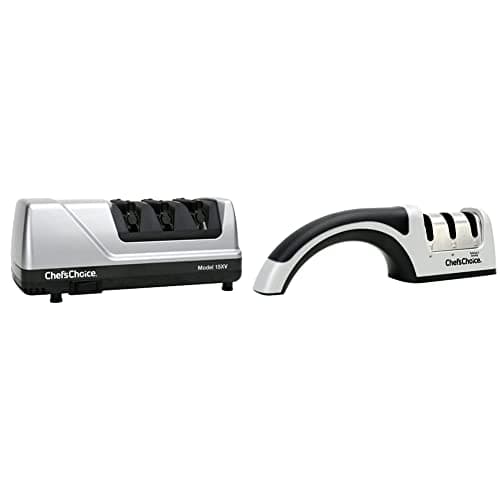
Chef'sChoice Trizor XV, 3-stage electric 15-degree sharpener
See price on AmazonSee it on Amazon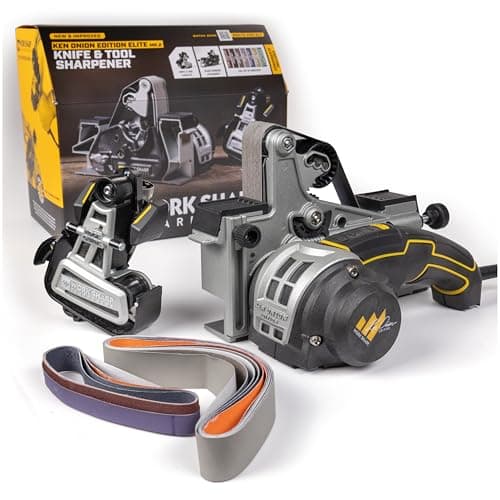
Work Sharp Ken Onion Elite Mk2, belt sharpener 10 to 35 degrees
See price on AmazonSee it on Amazon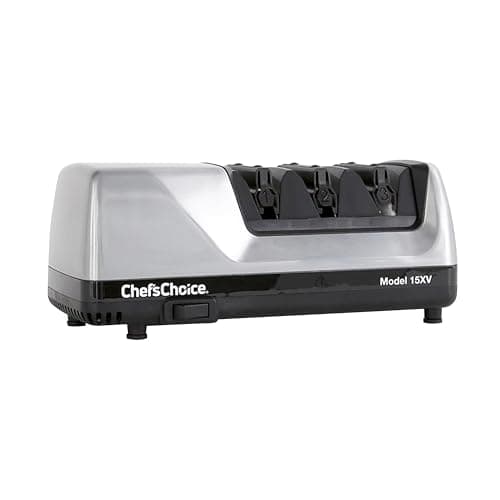
Chef'sChoice 15XV with metal housing, 3-stage diamond
See price on AmazonSee it on Amazon
This page is for owners of Shun, Miyabi, Global, MAC and other Japanese knives who were told never to use a honing steel, or who have one from a German block set and wonder whether it is safe. It explains what honing actually does, why hard steels behave differently, the types of rods, how to hone safely, how often, and when sharpening is the better answer. The goal is a longer-lasting edge without new chips.
What honing does and what it does not
Honing and sharpening are different jobs. Sharpening removes steel on an abrasive to create a new edge. Honing realigns an edge that has rolled or bent slightly to one side during use, with little or no steel removed. A ceramic rod also removes a very small amount of steel, so it sits between pure honing and light sharpening.
Honing cannot fix a truly dull, rounded or chipped edge. If a few light passes do not restore the bite, the knife needs a whetstone. See the whetstone grit guide.
Why hard Japanese edges behave differently
German knives typically use steel around HRC 56 to 58. That softer steel bends rather than breaks, so its edge rolls during use, and a steel rod pushes it back. Japanese knives are often HRC 60 to 64 or higher, with thinner edges ground at lower angles. These edges roll less, and when stressed they are more likely to chip than to bend.
A coarse, grooved steel rod concentrates force on small points of the edge. Used with the fast, forceful strokes often shown for German knives, it can cause micro-chips on a hard Japanese edge. That is the source of the advice to avoid honing steels; the real issue is the type of rod and the pressure. Check your knife's hardness in the steel chart.
- Edge retention
- rises with hardness
- Chip risk
- rises with hardness
- Ease of sharpening
- falls with hardness
Steels on the chart: X50CrMoV15 HRC 56 to 58; Cromova 18 HRC 56 to 58; AUS-10 HRC 59 to 60; VG-10 HRC 60 to 61; VG-MAX HRC 60 to 61; FC61 HRC 61 to 61; Ginsan (Silver 3) HRC 60 to 61; SG2 / R2 HRC 62 to 64; ZDP-189 HRC 64 to 66; Shirogami 1 and 2 HRC 61 to 64; Aogami 1 and 2 HRC 61 to 64; Aogami Super HRC 63 to 65.
Types of honing rods
Several Japanese brands sell their own rods; for example Shun sells a honing steel for its knives and Miyabi sells ceramic rods. If your brand offers one, it is designed with that knife's hardness in mind.
Grooved steel
- Surface
- Ridged steel
- Fit for Japanese knives
- Not recommended
- Notes
- Made for softer German steel
Smooth or fine steel
- Surface
- Polished or very fine
- Fit for Japanese knives
- Usable with light pressure
- Notes
- Realigns without abrading
Ceramic
- Surface
- Fine ceramic abrasive
- Fit for Japanese knives
- Recommended
- Notes
- Realigns and removes a tiny amount of steel
Diamond
- Surface
- Diamond coated
- Fit for Japanese knives
- Not for routine honing
- Notes
- Abrasive enough to act as a coarse sharpener
| Rod | Surface | Fit for Japanese knives | Notes |
|---|---|---|---|
| Grooved steel | Ridged steel | Not recommended | Made for softer German steel |
| Smooth or fine steel | Polished or very fine | Usable with light pressure | Realigns without abrading |
| Ceramic | Fine ceramic abrasive | Recommended | Realigns and removes a tiny amount of steel |
| Diamond | Diamond coated | Not for routine honing | Abrasive enough to act as a coarse sharpener |
How to hone a Japanese knife safely
Factory angles by brand are listed in Japanese knife sharpening angles by brand. The vertical method above keeps the rod still and the angle easier to control than honing in the air.
- 1
Hold the rod vertically with the tip resting on a folded towel on the counter.
- 2
Place the heel of the knife against the rod at the knife's edge angle per side, for example about 16 degrees for Shun or 10 to 12 degrees for Miyabi.
- 3
Draw the knife down and toward you so the whole edge from heel to tip touches the rod, using only the weight of the knife.
- 4
Repeat on the other side at the same angle.
- 5
Alternate sides for about 3 to 5 light strokes each. Stop there.
- 6
Test on a tomato or a sheet of paper. If it still drags, sharpen on a stone instead of honing more.
Note.Slow and light beats fast and forceful. If you hear a gritty or catching sound, check the edge for chips and reduce pressure.
How often to hone
Japanese knives need honing far less often than German knives. For most home cooks, a few light passes on a ceramic rod when the knife first starts to feel less crisp is enough, which might be every week or two with daily cooking. There is no need to hone before every use.
If you find yourself honing constantly, the edge may be fully dull, the cutting board may be too hard, or the technique may be rolling the edge. Our page on why a knife gets dull fast covers the usual causes, and the best cutting board for Japanese knives explains why glass and stone boards wreck edges.
Alternatives to a honing rod
A fine whetstone in the 3000 to 6000 range can do the same job as a ceramic rod with more control: a few edge-trailing strokes per side at the factory angle restore a crisp edge. A leather or balsa strop with a light polishing compound is another gentle option for very hard steels.
Some brands also run sharpening services. Shun, for example, offers free sharpening for its knives; see Shun free sharpening and repair. For home stones, the whetstone set guide lists options.
Frequently asked questions
Will a honing steel damage my Shun or Miyabi? A coarse grooved steel used with force can chip the edge. A fine ceramic or smooth rod used gently at the correct angle is generally safe.
Is a ceramic rod a sharpener? It is mildly abrasive, so it removes a little steel, but it cannot restore a dull or damaged edge. Use a whetstone for that.
Can I use the steel from my German knife block? Only with very light pressure and if it is smooth or fine. If it is coarse and grooved, keep it for the German knives.
Is honing the same as stropping? No. Stropping draws the edge backward across leather or another soft surface to remove a burr and polish the edge. Both are light maintenance between sharpenings.
What you need for this
- See price on AmazonAmazon
Chef'sChoice Trizor XV, 3-stage electric 15-degree sharpener
 See price on AmazonAmazon
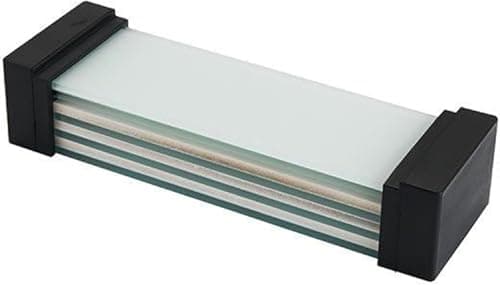
Shapton Glass 500, 2000, 16000 set with Field Holder
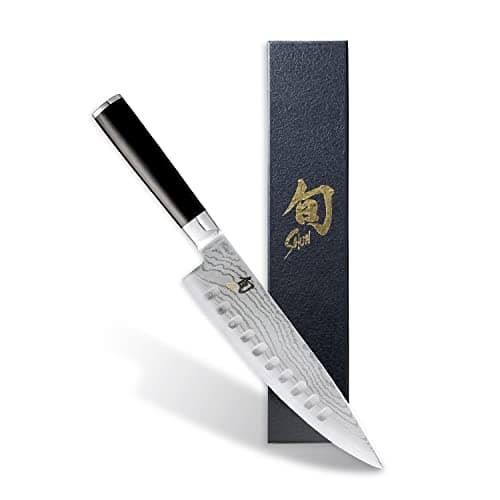 See price on AmazonAmazon
Shun Classic 8 in hollow ground chef, 16-degree
From Best Shun knives: Classic, Premier, Dual Core, Sora and Kanso