How-to
Carbon steel knife patina: what it is and how to build one
Published
Short answer
A patina is a thin, stable layer of oxide that forms on carbon steel as it reacts with food and air. It shows as gray, blue, brown or black shading and helps protect the blade from red rust and reduce metallic smells. You can let it build naturally through cooking, or force one quickly with mustard, vinegar or coffee on a clean, degreased blade.
Picks for this job
All 7 picks compared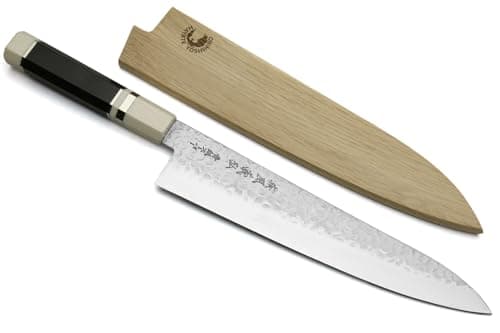
Yoshihiro Super Blue 210 mm gyuto, 63-64 HRC
See price on AmazonSee it on Amazon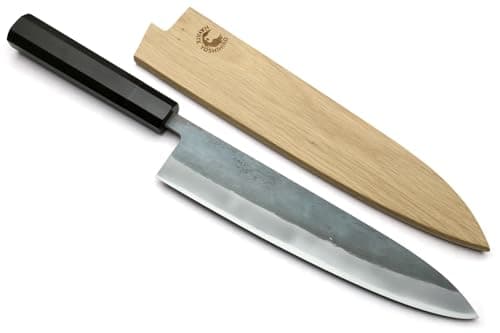
Yoshihiro Kurouchi Blue #2 240 mm gyuto with saya
See price on AmazonSee it on Amazon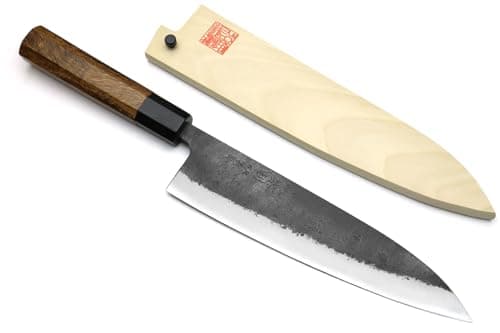
Yoshihiro White #2 Nashiji 210 mm gyuto, cocobolo
See price on AmazonSee it on Amazon
If you own an Aogami, Shirogami or other carbon steel knife, it will change color. That is normal and usually good. This page explains what patina is, how it differs from rust, the pros and cons of letting it form naturally versus forcing it, step-by-step methods for a forced patina, and how to keep a patina healthy. It is for home cooks new to carbon steel Japanese knives.
What patina is
Carbon steel lacks the chromium that makes stainless steel resist corrosion, so it reacts with moisture, acids and sulfur compounds in food. A patina is a controlled, stable oxide layer that forms during that reaction. It is mostly dark iron oxide rather than the flaky orange iron oxide we call rust.
Once formed, the patina slows further reaction. The blade becomes less likely to rust and less likely to give a metallic taste or discolor foods like onions and apples. It is cosmetic as well as protective, and many owners like the look it develops over time.
Patina vs rust: how to tell
The difference is mostly color and texture, and it is easy to check at a glance.
Color
- Patina
- Gray, blue, purple, brown or black
- Rust
- Orange, red-brown
Texture
- Patina
- Smooth, part of the surface
- Rust
- Raised, powdery or flaky
Wipes off?
- Patina
- No
- Rust
- Often leaves orange on a cloth
Effect
- Patina
- Protects the steel
- Rust
- Pits and weakens the steel
Action
- Patina
- Leave it
- Rust
- Remove promptly
| Feature | Patina | Rust |
|---|---|---|
| Color | Gray, blue, purple, brown or black | Orange, red-brown |
| Texture | Smooth, part of the surface | Raised, powdery or flaky |
| Wipes off? | No | Often leaves orange on a cloth |
| Effect | Protects the steel | Pits and weakens the steel |
| Action | Leave it | Remove promptly |
Note.If you see orange spots, remove them right away with a fine abrasive such as a rust eraser or a cork with baking soda paste. See Japanese knife rust.
Natural vs forced patina
A natural patina builds as you cook. Cutting proteins, onions and acidic produce creates uneven, colorful shading. It takes weeks of regular use and you must wipe the blade dry often in the early days, since bare steel is most reactive.
A forced patina is created on purpose before or early in use. It gives a more even layer quickly and offers protection from the start. The trade-off is that it can look less natural, and if done poorly it can be blotchy. Both are fine; it is personal preference.
How to force a patina step by step
These methods use household items. Work on a clean blade so the patina forms evenly.
- 1
Wash the blade with dish soap and hot water, then wipe with rubbing alcohol or acetone to remove oils. Avoid touching the steel afterward.
- 2
Choose a reactive agent: yellow mustard, warm white vinegar, or strong hot coffee are common choices.
- 3
Mustard: Spread a thin layer, or a pattern with a cotton swab, on both sides of the blade. Leave it for several minutes to an hour, checking often.
- 4
Vinegar: Wipe on warm vinegar with a paper towel, or wrap the blade in a vinegar-soaked towel. Check every few minutes.
- 5
Coffee: Submerge the blade (not a wooden handle) in hot strong coffee for some minutes up to an hour.
- 6
Rinse, wash with mild soap, and dry completely.
- 7
Repeat if you want a darker or more even color.
- 8
Apply a thin coat of camellia or mineral oil. See Japanese knife oil.
Note.Keep acids away from wooden handles and ferrules. Do not leave the blade soaking overnight; long exposure can etch or pit the steel.
Tips for an even result
A few details make the difference between a smooth patina and a blotchy one.
- Degrease thoroughly. Fingerprints and oil spots block the reaction.
- Warm the agent slightly; warm vinegar or coffee reacts faster.
- Check often. You can always add more color, but removing it takes abrasives.
- Expect the edge to lose patina when sharpened. That is normal; it rebuilds through use.
- Clad knives (carbon core with stainless sides) only patina on the exposed core near the edge.
Keeping a patina healthy
Once you have a patina, care is simple. Wipe the blade during prep, especially after acidic foods. Hand wash, rinse and dry right away. For long storage, apply a light film of oil. Never put a carbon knife in the dishwasher; see can Japanese knives go in the dishwasher.
If the patina wears unevenly or you want a fresh start, a fine abrasive or a polishing compound will remove it, and you can rebuild. Store carbon knives in a dry place, not a damp drawer; see how to store Japanese knives. For choosing between steels, see carbon vs stainless Japanese knives and Aogami vs Shirogami.
Frequently asked questions
Does patina affect food? A stable patina is food safe and actually reduces the metallic taste and discoloration that bare carbon steel can cause.
Should I remove the patina? No, unless you want a different look. It protects the steel. Remove orange rust, but leave the patina.
How long does a natural patina take? It depends on use. Regular cooking with proteins and acidic foods builds a visible patina over a few weeks.
Does stainless steel get a patina? Not in the same way. Stainless steels resist the reactions that form a patina, though a stainless-clad carbon knife will patina on its exposed carbon core.
What you need for this
- See price on AmazonAmazon
Yoshihiro Super Blue 210 mm gyuto, 63-64 HRC
 See price on AmazonAmazon
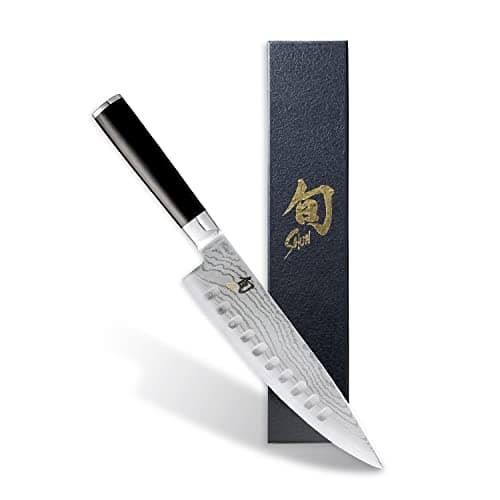
Shun Classic 8 in hollow ground chef, 16-degree
From Best Japanese kitchen knives for home cooks: one pick per job