How-to
Japanese knife oil: camellia oil and how to use it
Published
Short answer
Japanese knife oil is usually camellia (tsubaki) oil, a light, food-safe oil used to protect carbon steel blades from rust during storage. Apply a few drops to a clean, dry blade and wipe to a thin film. Food-grade mineral oil works too. Stainless knives rarely need blade oil, but unfinished wooden handles benefit from occasional mineral oil.
Picks for this job
All 7 picks compared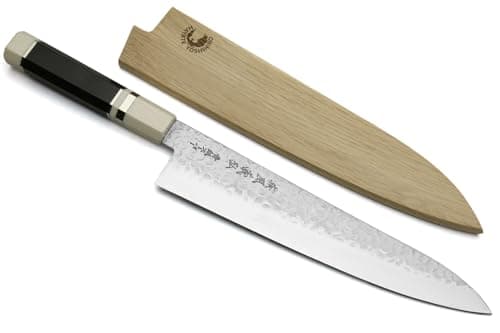
Yoshihiro Super Blue 210 mm gyuto, 63-64 HRC
See price on AmazonSee it on Amazon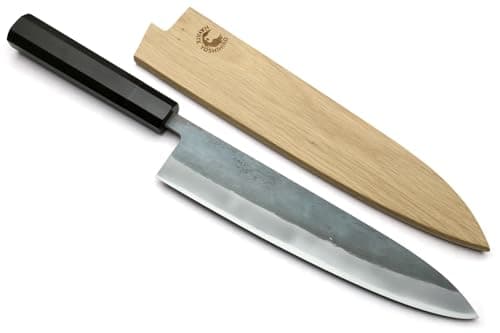
Yoshihiro Kurouchi Blue #2 240 mm gyuto with saya
See price on AmazonSee it on Amazon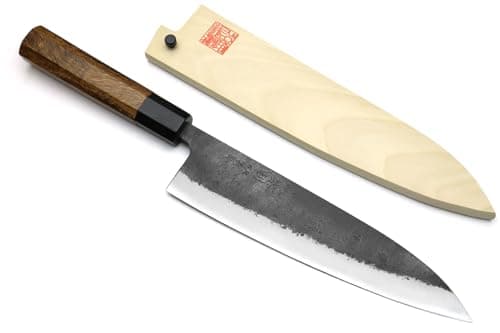
Yoshihiro White #2 Nashiji 210 mm gyuto, cocobolo
See price on AmazonSee it on Amazon
Oiling is a simple habit that prevents rust on carbon steel and keeps wooden handles from drying out. This page explains what camellia oil is, which knives need oil and which do not, how to oil a blade and a handle step by step, food-safe alternatives, and oils to avoid. It also suggests what to put in a basic Japanese knife care kit. It is for home cooks with carbon or stainless Japanese knives.
What camellia oil is
Camellia oil, called tsubaki oil in Japan, is pressed from the seeds of the camellia plant. It has long been used in Japan to protect blades and tools. It is light, food safe and has little smell, and it does not go rancid as quickly as many cooking oils.
Food-grade mineral oil is a common US alternative. It is inexpensive, food safe, odorless and widely sold for cutting boards. Either oil works for blade protection.
You only need a small amount. A typical bottle lasts a long time because each application is just a few drops spread into a very thin film. More oil does not add protection; it only leaves a sticky residue that collects dust.
Which knives need oil
Whether to oil depends on the steel and the handle. The table below sorts common knives by what they need.
Carbon steel (Aogami, Shirogami)
- Blade oil
- Yes, for storage and humid conditions
- Handle oil
- If the wood is unfinished
Stainless-clad carbon core
- Blade oil
- Yes, along the exposed edge
- Handle oil
- If the wood is unfinished
Stainless (VG-10, VG-MAX, SG2)
- Blade oil
- Rarely needed
- Handle oil
- If the wood is unfinished
Pakkawood or resin handles
- Blade oil
- Per blade
- Handle oil
- No; these are sealed
Stainless steel handles (e.g. Global)
- Blade oil
- Per blade
- Handle oil
- No
| Knife | Blade oil | Handle oil |
|---|---|---|
| Carbon steel (Aogami, Shirogami) | Yes, for storage and humid conditions | If the wood is unfinished |
| Stainless-clad carbon core | Yes, along the exposed edge | If the wood is unfinished |
| Stainless (VG-10, VG-MAX, SG2) | Rarely needed | If the wood is unfinished |
| Pakkawood or resin handles | Per blade | No; these are sealed |
| Stainless steel handles (e.g. Global) | Per blade | No |
How to oil a blade
Oil only a clean, fully dry blade. Oil on a wet blade traps water against the steel.
If you live somewhere humid, or keep knives near a dishwasher or sink, check carbon blades every few days in storage. A light re-wipe with oil prevents most spotting before it starts.
- 1
Wash the knife with mild soap and warm water and rinse.
- 2
Dry thoroughly with a towel, including the area near the handle.
- 3
Put two or three drops of camellia or mineral oil on a paper towel or soft cloth.
- 4
Wipe both sides of the blade and the spine with a thin film. It should look slightly glossy, not wet.
- 5
Wipe off any excess.
- 6
Store the knife in a dry place: a block, magnetic strip or saya. See how to store Japanese knives.
- 7
Before cooking, wipe the blade with a clean towel. Food-safe oils do not need to be washed off, but a quick wipe keeps food from tasting oily.
Note.Daily use usually does not require oiling if you wipe the blade dry. Oil matters most for storage, humid weather and knives used only occasionally.
How to care for wooden handles
Many wa handles are made from magnolia (ho wood), walnut or other woods that may be unfinished or lightly finished. Unfinished wood can dry, crack or absorb stains. Every few weeks or months, depending on use, rub a little food-grade mineral oil or a board cream of mineral oil and beeswax into the handle. Let it soak in, then wipe off the excess.
Sealed handles such as Pakkawood, resin-stabilized wood and synthetic handles generally do not need oil. Keep all handles out of soaking water and the dishwasher. If a handle loosens or cracks, see loose or cracked knife handle.
Octagonal wa
Light, eight flat faces, works in either hand.
D-shaped wa
Light, with a ridge for the fingers. Made for one hand.
Western yo
Full tang between two scales and three rivets. Heavier at the back.
Oils to avoid
Many oils work in a pinch, but some cause problems over time.
- Olive, vegetable and canola oils: Can turn rancid and sticky on stored blades and handles.
- Non-food-safe oils such as some machine oils or WD-40: Not suitable for knives that touch food.
- Raw linseed oil: Slow to dry and can go rancid. Avoid unless it is a product made for food contact.
- Heavy greases: Attract dust and are hard to clean off before cooking.
What to put in a Japanese knife care kit
A simple care kit covers most needs. Many brands sell kits, but you can build one yourself: a small bottle of camellia oil or food-grade mineral oil, a soft cloth, a rust eraser for carbon steel, a whetstone set with a flattening stone, a fine ceramic honing rod or leather strop, and saya or edge guards for storage.
For sharpening gear, see the best whetstone sets and best sharpeners for Japanese knives. For carbon steel, pair oiling with a healthy patina; see carbon steel knife patina and Japanese knife rust.
Frequently asked questions
Is camellia oil food safe? Yes. Pure camellia oil is a plant-based oil used for both blades and cooking in Japan. Check that the bottle is pure camellia oil without additives.
Can I use mineral oil instead of camellia oil? Yes. Food-grade mineral oil is a common, inexpensive alternative and works well for blades and unfinished handles.
Do stainless Japanese knives need oil? Usually not on the blade. Hand wash and dry them. Oil only unfinished wooden handles.
How often should I oil a carbon steel knife? Whenever you store it for more than a day or two, and more often in humid weather. Daily users who wipe the blade dry may oil only occasionally.
What you need for this
- See price on AmazonAmazon
Yoshihiro Super Blue 210 mm gyuto, 63-64 HRC
 See price on AmazonAmazon
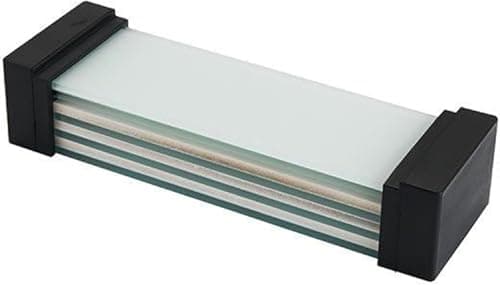
Shapton Glass 500, 2000, 16000 set with Field Holder
 See price on AmazonAmazon
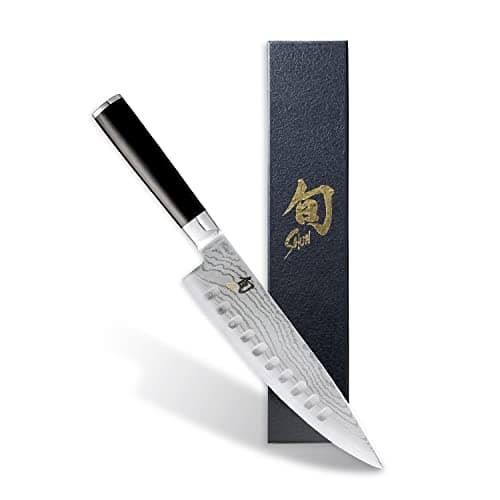
Shun Classic 8 in hollow ground chef, 16-degree
From Best Japanese kitchen knives for home cooks: one pick per job