Fix
Rust on a Japanese knife: how to remove and prevent it
Published
Short answer
Light surface rust on a Japanese knife can usually be removed with a rust eraser, or a paste of baking soda or a mild cleanser such as Bar Keepers Friend on a soft cloth or cork, rubbing along the blade rather than across it. Rinse, dry completely and, for carbon steel, wipe on a thin coat of food-safe oil. To prevent rust, wipe the blade dry during and after use, never leave it wet or in the sink, and never put it in the dishwasher.
Picks for this job
All 7 picks compared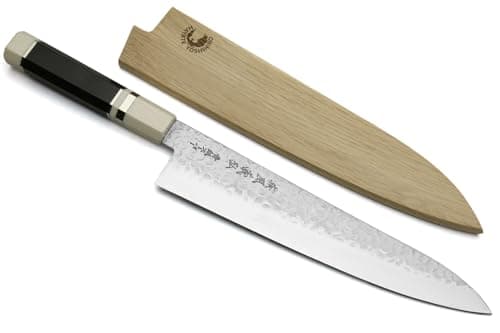
Yoshihiro Super Blue 210 mm gyuto, 63-64 HRC
See price on AmazonSee it on Amazon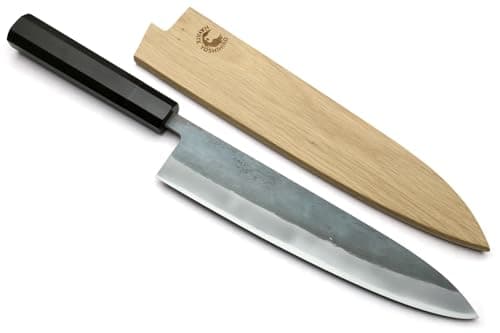
Yoshihiro Kurouchi Blue #2 240 mm gyuto with saya
See price on AmazonSee it on Amazon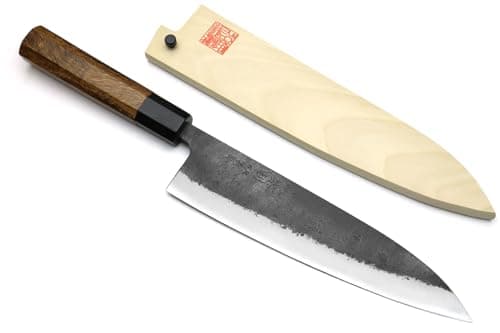
Yoshihiro White #2 Nashiji 210 mm gyuto, cocobolo
See price on AmazonSee it on Amazon
This page is for owners of carbon steel knives in Aogami or Shirogami and owners of stainless knives who have found orange spots on the blade. It explains the difference between rust and patina, how to remove light and heavier rust step by step, what to do about pitting near the edge, and the daily habits that prevent rust on both carbon and stainless blades. It also covers storage and oiling.
Rust or patina: tell them apart first
Carbon steel knives darken with use. That gray, blue, brown or purple coloring is patina, a stable oxide layer that actually helps protect the steel. It is smooth, does not rub off on a cloth and does not need to be removed. Rust is different: it is orange or red-brown, often raised or powdery, and comes off on a damp paper towel.
Stainless knives such as VG-10, SG2 and German steels resist rust but are not rust-proof. They can show small orange spots, usually from being left wet, sitting in acidic food or salty water, or being washed in a dishwasher. Our page on carbon steel knife patina shows what normal patina looks like.
Color
- Patina
- Gray, blue, purple, brown
- Rust
- Orange or red-brown
Texture
- Patina
- Smooth, flat
- Rust
- Raised, rough or powdery
Wipe test
- Patina
- Does not come off
- Rust
- Leaves orange on a damp towel
Action
- Patina
- Leave it
- Rust
- Remove promptly
| Sign | Patina | Rust |
|---|---|---|
| Color | Gray, blue, purple, brown | Orange or red-brown |
| Texture | Smooth, flat | Raised, rough or powdery |
| Wipe test | Does not come off | Leaves orange on a damp towel |
| Action | Leave it | Remove promptly |
Common causes of rust on Japanese knives
- Leaving the knife wet on the board, in a drying rack or in the sink.
- Cutting acidic or salty foods (citrus, tomatoes, onions, pickles) and not wiping the blade during prep.
- Putting the knife in the dishwasher, where heat, moisture and detergent attack the steel and handle.
- Storing the knife damp in a block, saya or drawer.
- Sweaty or humid kitchens, especially for carbon steel knives stored for weeks without oil.
- Contact with other wet metal, which can leave transfer spots.
How to remove light surface rust
- 1
Wash the knife with warm soapy water and dry it so you can see the rust clearly.
- 2
Rub the spot with a rust eraser, a rubberized abrasive block sold by Japanese knife makers, moving along the length of the blade, not across it.
- 3
If you do not have a rust eraser, use a paste of baking soda and water, or a mild cleanser such as Bar Keepers Friend, on a wine cork or soft cloth.
- 4
Work gently around the edge, keeping your fingers behind the spine.
- 5
Rinse thoroughly, dry completely, and check that no orange residue comes off on a towel.
- 6
For carbon steel, wipe on a thin layer of food-safe oil such as camellia oil before storing.
Note.Keep pressure light and stroke along the blade. Scrubbing across a polished or Damascus finish leaves visible scratches and can dull the etched pattern.
Heavier rust and pitting
If rust has been left for a while, it can eat small pits into the steel. Rust erasers and fine abrasive pads can remove the rust itself, but pits remain as dark dots. On the face of the blade they are cosmetic. At the edge, pits can weaken the steel and catch on food, and the usual fix is to sharpen past them on a coarse then medium whetstone; see the whetstone grit guide.
Avoid aggressive tools such as steel wool, wire brushes, sandpaper or rotary tools on a good knife unless you are prepared to refinish the blade. If the rust is extensive, the knife is valuable, or it is a single-bevel knife, a professional knife shop can clean and refinish it. Many specialist shops listed in where to buy Japanese knives also offer restoration.
How to prevent rust
Prevention is mostly habit. For stainless knives, washing and drying right after use is usually enough. For carbon steel, add wiping during prep and occasional oiling.
- Wipe the blade with a dry towel during prep, especially after acidic or salty foods.
- Hand wash with mild soap, rinse and dry immediately, including the area near the handle.
- Never soak a knife or leave it in the sink, and never use the dishwasher. See can Japanese knives go in the dishwasher.
- Let the knife air dry for a few minutes after towel drying before putting it in a saya or block.
- For carbon steel kept unused for more than a few days, wipe on a thin film of oil. See Japanese knife oil.
- Store in a dry place with airflow. See how to store Japanese knives.
Carbon vs stainless: how much care each needs
Carbon steels such as Aogami (blue) and Shirogami (white) are prized for how easily they take a keen edge, but they rust readily, sometimes within minutes in contact with acidic food. Many carbon knives use stainless cladding to reduce the exposed area, but the edge is still carbon steel. Stainless steels such as VG-10 and SG2 need far less care and suit most home cooks who want a low-maintenance knife.
If rust keeps coming back on a carbon knife despite good habits, consider whether a stainless knife would fit your kitchen better. The carbon vs stainless comparison and the steel chart help with that choice.
Frequently asked questions
What is a rust eraser? It is a block of rubber with abrasive particles, sold by Japanese knife makers and shops for removing surface rust from blades. It works like a pencil eraser and comes in coarse and fine grades.
Can I use vinegar to remove rust from a knife? Vinegar can loosen rust, but it also attacks carbon steel and can leave uneven etching. A rust eraser or mild abrasive is more controlled for a good knife.
Why is my stainless Japanese knife rusting? Usually from being left wet, sitting in acidic or salty residue, or going through the dishwasher. Clean the spots and dry the knife promptly after use.
Should I remove patina from a carbon steel knife? No. Patina is stable and protective. Remove only orange rust.
What you need for this
- See price on AmazonAmazon
Yoshihiro Super Blue 210 mm gyuto, 63-64 HRC
 See price on AmazonAmazon
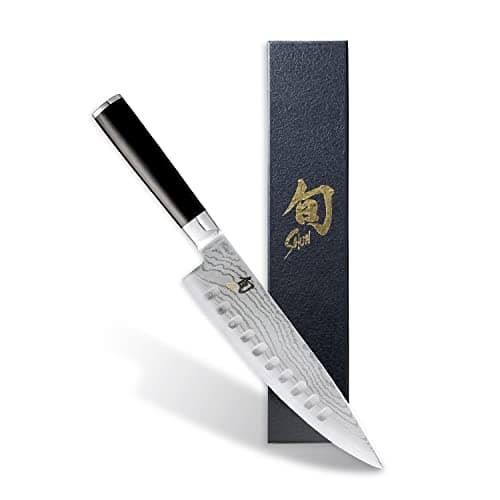
Shun Classic 8 in hollow ground chef, 16-degree
From Best Japanese kitchen knives for home cooks: one pick per job