Comparison
Carbon steel vs stainless Japanese knives
Published
Short answer
Carbon steel Japanese knives, such as those with Aogami (blue) or Shirogami (white) cores, take a very keen edge and are easy to sharpen, but they rust if left wet and develop a gray patina. Stainless knives, such as VG-10, SG2 or Swedish stainless, resist rust and need far less attention while still getting very sharp. Choose carbon if you enjoy maintenance and sharpening; choose stainless if you want low-care sharpness.
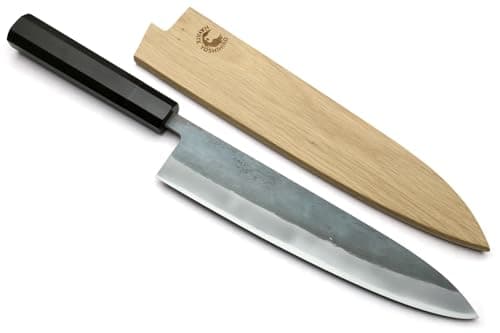
Yoshihiro
Yoshihiro Kurouchi Blue #2 240 mm gyuto with saya
See price on Amazon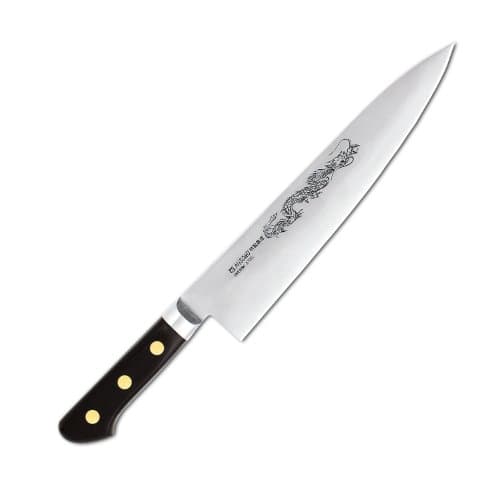
Misono
Misono Swedish carbon gyuto with dragon engraving
See price on Amazon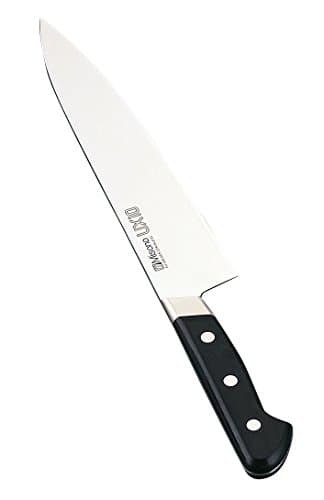
Misono
Misono UX10 210 mm gyuto in Swedish stainless
See price on Amazon
- Yoshihiro Kurouchi Blue #2 240 mm gyuto with saya
- Steel
- Blue Steel #2 core
- Hardness (HRC)
- 62-63
- Blade length
- 9.5 in (240 mm)
- Cladding
- Kurouchi stainless clad
- Misono Swedish carbon gyuto with dragon engraving
- Steel
- Swedish carbon steel
- Hardness (HRC)
- Not stated
- Blade length
- Not stated
- Cladding
- None stated (not stain resistant)
- Misono UX10 210 mm gyuto in Swedish stainless
- Steel
- Swedish steel, stain resistant
- Hardness (HRC)
- Not stated
- Blade length
- 8.2 in (21 cm)
- Cladding
- -
| Pick | Steel | Hardness (HRC) | Blade length | Cladding | Price | Link |
|---|---|---|---|---|---|---|
| Yoshihiro Kurouchi Blue #2 240 mm gyuto with saya | Blue Steel #2 core | 62-63 | 9.5 in (240 mm) | Kurouchi stainless clad | - | Amazon |
| Misono Swedish carbon gyuto with dragon engraving | Swedish carbon steel | Not stated | Not stated | None stated (not stain resistant) | - | Amazon |
| Misono UX10 210 mm gyuto in Swedish stainless | Swedish steel, stain resistant | Not stated | 8.2 in (21 cm) | - | - | Amazon |
Facts are taken from each Amazon listing. Prices are checked daily and shown with their date.
Verdict
Buy the Misono UX10 or another stainless gyuto if you want low-care sharpness. Buy the Yoshihiro Kurouchi stainless clad blue steel gyuto if you want a carbon edge with easier care, or the Misono EU carbon gyuto if you want the full carbon experience and will wipe and dry it every time.
This page is for cooks choosing their first serious Japanese knife who keep running into the carbon vs stainless question, along with labels like high carbon stainless, stainless clad and semi-stainless. It explains what each type of steel is, how they differ in sharpness, edge holding, sharpening and care, and who each one suits. It uses three gyutos from our guides as examples: a stainless clad blue steel knife, a full carbon knife and a stainless knife, so you can see how listings describe each type.
The core difference: chromium and rust
All knife steel is iron and carbon. Stainless steels add enough chromium to form a thin protective layer that resists rust. Carbon steels have little or no chromium, so they react with water, acids and salt. That single difference drives most of what you notice as an owner: carbon knives need wiping dry during and after use and will darken over time, while stainless knives tolerate a bit of neglect.
Japanese carbon steels such as Shirogami (white paper) and Aogami (blue paper) are prized because they can be hardened to a high level with a very fine grain, which takes a crisp, keen edge and sharpens quickly on whetstones. Modern stainless steels like VG-10 and SG2 come close in sharpness and often hold an edge as long or longer. Our steel chart and Aogami vs Shirogami pages cover specific grades.
- Edge retention
- rises with hardness
- Chip risk
- rises with hardness
- Ease of sharpening
- falls with hardness
Steels on the chart: X50CrMoV15 HRC 56 to 58; Cromova 18 HRC 56 to 58; AUS-10 HRC 59 to 60; VG-10 HRC 60 to 61; VG-MAX HRC 60 to 61; FC61 HRC 61 to 61; Ginsan (Silver 3) HRC 60 to 61; SG2 / R2 HRC 62 to 64; ZDP-189 HRC 64 to 66; Shirogami 1 and 2 HRC 61 to 64; Aogami 1 and 2 HRC 61 to 64; Aogami Super HRC 63 to 65.
Three example gyutos: spec table
These three knives show the main construction types. Specs come only from the listings; where a listing does not state a figure, the table says so.
Steel type
- Yoshihiro Kurouchi Blue Steel Gyuto
- Blue Steel #2 core, stainless clad
- Misono EU Carbon Gyuto
- Swedish carbon steel
- Misono UX10 Chef's Knife
- Swedish stainless steel
Rust resistance
- Yoshihiro Kurouchi Blue Steel Gyuto
- Core reactive, cladding stainless
- Misono EU Carbon Gyuto
- Not stain resistant
- Misono UX10 Chef's Knife
- Stain resistant
Hardness
- Yoshihiro Kurouchi Blue Steel Gyuto
- HRC 62-63
- Misono EU Carbon Gyuto
- Not stated in listing
- Misono UX10 Chef's Knife
- Not stated in listing
Edge
- Yoshihiro Kurouchi Blue Steel Gyuto
- Double edged
- Misono EU Carbon Gyuto
- 70:30 asymmetrical bevel
- Misono UX10 Chef's Knife
- Asymmetrical edge
Length
- Yoshihiro Kurouchi Blue Steel Gyuto
- 9.5" (240 mm)
- Misono EU Carbon Gyuto
- Not stated in listing
- Misono UX10 Chef's Knife
- 8.2" (21 cm)
Handle
- Yoshihiro Kurouchi Blue Steel Gyuto
- Octagonal ebony wa handle
- Misono EU Carbon Gyuto
- Not stated in listing
- Misono UX10 Chef's Knife
- Not stated in listing
Finish
- Yoshihiro Kurouchi Blue Steel Gyuto
- Kurouchi black-forged
- Misono EU Carbon Gyuto
- Dragon engraving
- Misono UX10 Chef's Knife
- Not stated in listing
| Spec | Yoshihiro Kurouchi Blue Steel Gyuto | Misono EU Carbon Gyuto | Misono UX10 Chef's Knife |
|---|---|---|---|
| Steel type | Blue Steel #2 core, stainless clad | Swedish carbon steel | Swedish stainless steel |
| Rust resistance | Core reactive, cladding stainless | Not stain resistant | Stain resistant |
| Hardness | HRC 62-63 | Not stated in listing | Not stated in listing |
| Edge | Double edged | 70:30 asymmetrical bevel | Asymmetrical edge |
| Length | 9.5" (240 mm) | Not stated in listing | 8.2" (21 cm) |
| Handle | Octagonal ebony wa handle | Not stated in listing | Not stated in listing |
| Finish | Kurouchi black-forged | Dragon engraving | Not stated in listing |
Sharpness and feel
Many sharpeners describe carbon steel edges as feeling more toothy and responsive, and carbon steels generally reach a keen edge quickly on stones with a clear burr that is easy to remove. The Yoshihiro listing gives HRC 62-63 for its Blue Steel #2 core, a high hardness that holds a fine edge well.
Good stainless steels are not far behind. A Misono UX10 or a VG-10 or SG2 knife gets extremely sharp, and harder powder stainless steels like SG2 often hold an edge longer than simple carbon steels, though they take longer to sharpen. For most home cooks the difference in cutting feel is smaller than the difference in care. Our whetstone grit guide explains how to sharpen each type.
Rust, patina and daily care
A carbon steel blade left wet, or used on acidic foods like tomatoes and citrus without wiping, can show orange rust spots within hours. With regular use it builds a patina: a gray, blue or mottled layer of stable oxide that helps protect the steel. Patina is normal and harmless; rust is not. The Yoshihiro listing advises hand wash and dry only, and to do so immediately when working with acidic ingredients.
Stainless knives still need hand washing and drying, but a few minutes wet in the sink will not ruin them. If you are often interrupted while cooking, share knives with others or simply want less to think about, stainless is the safer choice. See carbon steel patina, Japanese knife rust and knife oil for care routines.
- 1
Wipe the blade on a towel every few minutes while cutting, especially acidic foods.
- 2
Wash by hand with warm water and mild soap right after use.
- 3
Dry the blade completely, including near the handle.
- 4
For storage longer than a few days, wipe on a thin film of food-safe knife oil.
- 5
Remove light rust with a soft rust eraser or fine abrasive, then rinse and dry.
Note.Never put a carbon steel knife in the dishwasher. Prolonged wet heat and detergent will cause rust and can damage wooden handles.
Stainless clad and semi-stainless explained
Stainless clad (sometimes called sanmai) knives sandwich a carbon steel core between layers of stainless steel. The Yoshihiro blue steel gyuto is an example: the edge is reactive Blue Steel #2, but the sides are stainless, so only the exposed edge needs carbon-style care. It is a popular middle ground for cooks who want carbon sharpness with less maintenance.
Semi-stainless steels sit between the two groups, with more chromium than plain carbon steel but less than true stainless. They resist rust better than carbon steel but can still spot if left wet. High carbon stainless is a marketing term that usually means a stainless steel with enough carbon to harden well; most German and many Japanese stainless knives use it. Use the steel chart tool to look up how a specific steel is classed.
Which steel suits which cook
Choose carbon steel, or stainless clad carbon, if you sharpen on whetstones, enjoy the ritual of care, cook in a calm setting where you can wipe the blade as you go, and like the look of patina. Our carbon steel knife guide lists both full carbon and clad options.
Choose stainless if you want a knife that forgives a moment of neglect, if others in your home will use it, or if you are new to Japanese knives. Stainless knives make up most of our Japanese kitchen knife picks and beginner picks.
- Lowest maintenance: stainless (VG-10, SG2, Swedish stainless).
- Carbon edge, easier care: stainless clad carbon core.
- Full traditional experience: carbon steel throughout.
- Shared kitchens and beginners: stainless.
Frequently asked questions
Are there Japanese knives that do not rust? Stainless Japanese knives in steels like VG-10, SG2 and Swedish stainless resist rust well with normal hand washing and drying. No steel is completely rust-proof if left wet for long periods.
Is carbon steel sharper than stainless? Carbon steel takes a very keen edge and sharpens easily, but quality stainless steels get nearly as sharp and some hold an edge longer. The bigger difference is care, not peak sharpness.
Is patina the same as rust? No. Patina is a stable gray or blue oxide layer that forms with use and helps protect the steel. Rust is orange-brown, flaky and should be removed.
What does high carbon stainless mean? It describes a stainless steel with enough carbon to harden well. It is still stainless, so it behaves like other stainless knives for care. See what is VG-10 steel for one common example.
What you need for this
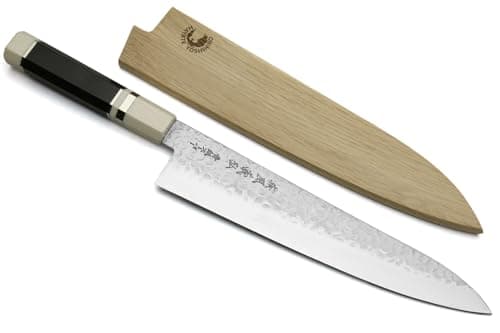 See price on AmazonAmazon
Yoshihiro Super Blue 210 mm gyuto, 63-64 HRC
 See price on AmazonAmazon
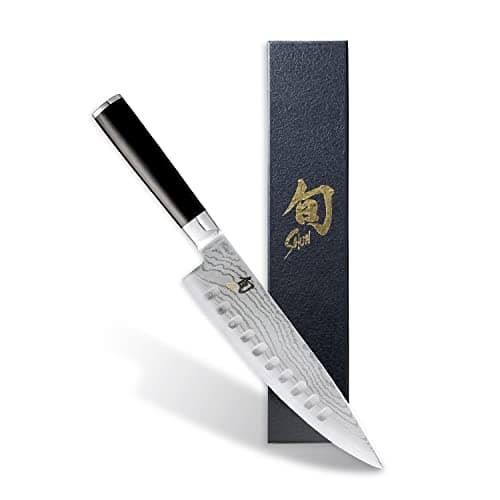
Shun Classic 8 in hollow ground chef, 16-degree
From Best Japanese kitchen knives for home cooks: one pick per job