Explainer
Japanese knife steel chart: HRC, edge retention and rust
Published
Short answer
There is no single best steel. Stainless steels like VG-10 (about HRC 60-61) are the easy-care choice, powder steels like SG2 (about HRC 62-64) hold an edge longer, and carbon steels like Shirogami and Aogami (about HRC 61-64) sharpen most easily but rust. German X50CrMoV15 (about HRC 56-58) is softer and tougher but dulls sooner.
Picks for this job
All 8 picks compared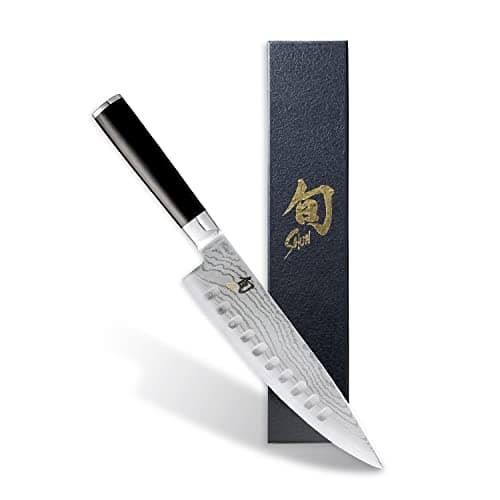
Shun Classic 8" chef's knife, VG-MAX with 16-degree edge
See price on AmazonSee it on Amazon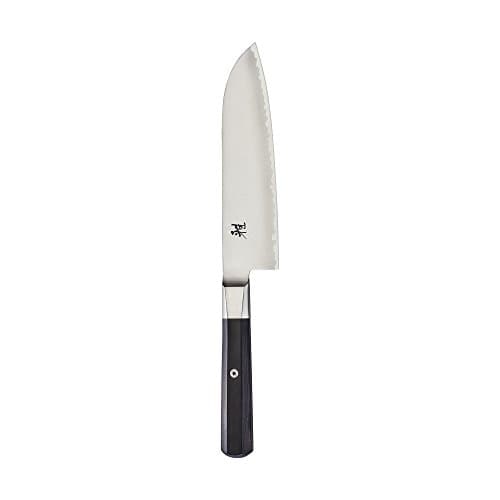
Miyabi Koh 7" santoku, FC61 steel at 61 HRC
See price on AmazonSee it on Amazon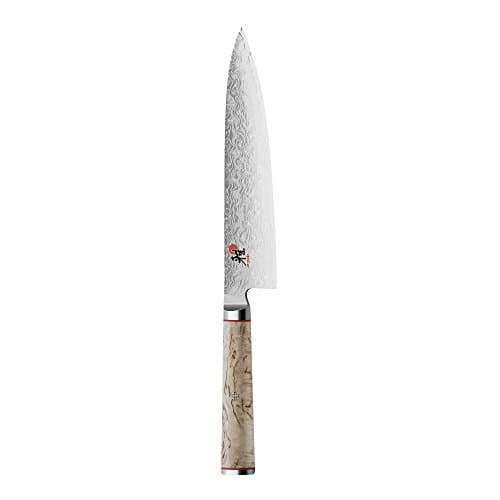
Miyabi Birchwood SG2 8" chef's knife, 9.5-12 degree edge
See price on AmazonSee it on Amazon
Knife listings name the core steel, but rarely explain what it means in your kitchen. This page puts the common Japanese and German knife steels in one table with their typical hardness range, whether they rust, how long they hold an edge and how easy they are to sharpen. The ranges are widely published by makers and steel suppliers; individual knives vary with heat treatment. Use the chart to narrow your choice, then compare picks in our gear guides.
Knife steel chart
Hardness is given on the Rockwell C scale (HRC). The ranges below are typical published ranges, not guarantees. A maker can harden the same steel a point or two higher or lower. For an interactive version that compares up to three steels, use our steel chart tool.
- Edge retention
- rises with hardness
- Chip risk
- rises with hardness
- Ease of sharpening
- falls with hardness
Steels on the chart: X50CrMoV15 HRC 56 to 58; Cromova 18 HRC 56 to 58; AUS-10 HRC 59 to 60; VG-10 HRC 60 to 61; VG-MAX HRC 60 to 61; FC61 HRC 61 to 61; Ginsan (Silver 3) HRC 60 to 61; SG2 / R2 HRC 62 to 64; ZDP-189 HRC 64 to 66; Shirogami 1 and 2 HRC 61 to 64; Aogami 1 and 2 HRC 61 to 64; Aogami Super HRC 63 to 65.
X50CrMoV15 (Wusthof, Zwilling)
- Type
- Stainless
- Typical HRC
- 56-58
- Rust resistance
- High
- Edge retention
- Moderate
- Ease of sharpening
- Easy
Cromova 18 (Global)
- Type
- Stainless
- Typical HRC
- 56-58
- Rust resistance
- High
- Edge retention
- Moderate
- Ease of sharpening
- Easy
AUS-10
- Type
- Stainless
- Typical HRC
- 59-60
- Rust resistance
- High
- Edge retention
- Good
- Ease of sharpening
- Easy
VG-10
- Type
- Stainless
- Typical HRC
- 60-61
- Rust resistance
- High
- Edge retention
- Good
- Ease of sharpening
- Moderate
VG-MAX (Shun)
- Type
- Stainless
- Typical HRC
- 60-61
- Rust resistance
- High
- Edge retention
- Good
- Ease of sharpening
- Moderate
Ginsan (Silver 3)
- Type
- Stainless
- Typical HRC
- 60-61
- Rust resistance
- High
- Edge retention
- Good
- Ease of sharpening
- Easy
SG2 / R2 (powder)
- Type
- Stainless
- Typical HRC
- 62-64
- Rust resistance
- High
- Edge retention
- Very good
- Ease of sharpening
- Slower
ZDP-189 (powder)
- Type
- Stainless
- Typical HRC
- 64-66
- Rust resistance
- Moderate
- Edge retention
- Excellent
- Ease of sharpening
- Slow
Shirogami 1 and 2 (White)
- Type
- Carbon
- Typical HRC
- 61-64
- Rust resistance
- Low, rusts
- Edge retention
- Good
- Ease of sharpening
- Very easy
Aogami 1 and 2 (Blue)
- Type
- Carbon
- Typical HRC
- 61-64
- Rust resistance
- Low, rusts
- Edge retention
- Very good
- Ease of sharpening
- Easy
Aogami Super
- Type
- Carbon
- Typical HRC
- 63-65
- Rust resistance
- Low, rusts
- Edge retention
- Excellent
- Ease of sharpening
- Moderate
| Steel | Type | Typical HRC | Rust resistance | Edge retention | Ease of sharpening |
|---|---|---|---|---|---|
| X50CrMoV15 (Wusthof, Zwilling) | Stainless | 56-58 | High | Moderate | Easy |
| Cromova 18 (Global) | Stainless | 56-58 | High | Moderate | Easy |
| AUS-10 | Stainless | 59-60 | High | Good | Easy |
| VG-10 | Stainless | 60-61 | High | Good | Moderate |
| VG-MAX (Shun) | Stainless | 60-61 | High | Good | Moderate |
| Ginsan (Silver 3) | Stainless | 60-61 | High | Good | Easy |
| SG2 / R2 (powder) | Stainless | 62-64 | High | Very good | Slower |
| ZDP-189 (powder) | Stainless | 64-66 | Moderate | Excellent | Slow |
| Shirogami 1 and 2 (White) | Carbon | 61-64 | Low, rusts | Good | Very easy |
| Aogami 1 and 2 (Blue) | Carbon | 61-64 | Low, rusts | Very good | Easy |
| Aogami Super | Carbon | 63-65 | Low, rusts | Excellent | Moderate |
How to read the chart
Hardness (HRC) is the main lever. Higher hardness lets a maker grind a thinner, more acute edge that stays sharp longer. The cost is that very hard edges are more likely to chip if twisted, dropped or used on bone, and they take more time to sharpen. Our what is HRC page explains this trade-off.
Rust resistance depends on chromium. Stainless steels contain enough chromium to resist rust with normal care. Carbon steels like Shirogami and Aogami do not, so they discolor and rust if left wet. Clad knives often have a stainless outer layer over a carbon core, so only the edge needs extra care.
Edge retention comes from hardness plus carbides formed by elements like tungsten, vanadium and molybdenum. Powder steels such as SG2 spread those carbides finely, which helps them stay sharp a long time.
Ease of sharpening is how quickly the steel responds on a whetstone. Simple carbon steels sharpen fastest and take a very fine edge. Powder steels with lots of hard carbides need more time and benefit from good stones.
Stainless Japanese steels
VG-10 is the most common core steel in mid-priced Japanese knives. It balances edge retention, rust resistance and price, and it is used by many brands, often under Damascus cladding. VG-MAX is Shun's version with more carbon and alloying elements. See what is VG-10 steel.
SG2 (also sold as R2) is a powder steel found in higher-end lines from Miyabi, Shun and others. It is typically hardened higher than VG-10, so it holds an edge longer but is slower to sharpen. Our VG-10 vs SG2 comparison covers the difference in daily use.
Ginsan, or Silver 3, is a stainless steel prized because it sharpens and feels much like carbon steel without the rust. AUS-10 sits a little lower on hardness and is common in value lines.
Carbon Japanese steels
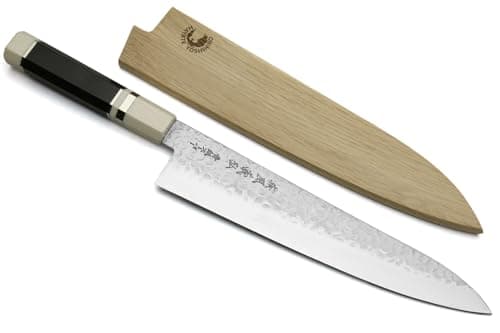
Shirogami (White paper) steel is very pure high-carbon steel. It takes an extremely keen edge and sharpens fast, which is why it is traditional for single-bevel knives. Aogami (Blue paper) adds chromium and tungsten for better edge retention. Aogami Super adds more carbon plus molybdenum and vanadium and is typically hardened to the top of the range. See Aogami vs Shirogami.
All of these rust. Wipe the blade dry right after use, never leave it wet, and expect a gray or blue patina to form. Patina is normal and helps protect the steel. Our carbon vs stainless and carbon steel patina pages cover care, and best carbon steel Japanese knives lists picks.
Note.Carbon steel reacts with acidic foods like onions, citrus and tomatoes. It can leave a gray tint or metallic taste on fresh blades until a patina forms.
German steels for comparison
Wusthof and Zwilling use X50CrMoV15, a stainless steel typically hardened around HRC 56-58. Global uses its own Cromova 18 steel in a similar range. These softer steels are tougher, so they resist chipping and handle rougher use like cutting near bone. They dull faster and are usually sharpened at wider angles. See Japanese vs German knives and best German chef knives.
Which steel should you choose
Steel is only part of the picture. Heat treatment, edge geometry and how you use and sharpen the knife matter as much. Start with the shape and size you need, then pick a steel. Our best Japanese kitchen knives guide lists the core steel for every pick.
- Easy care, first Japanese knife: VG-10, VG-MAX or AUS-10 stainless.
- Long edge life, willing to sharpen on stones: SG2 / R2 powder steel.
- Love sharpening, want the keenest edge: Shirogami or Aogami carbon, with careful drying.
- Stainless that sharpens like carbon: Ginsan.
- Rough use, bones nearby, minimal fuss: German X50CrMoV15.
Frequently asked questions
What is the hardest Japanese knife steel? Among common kitchen steels, powder steels like ZDP-189 (typically HRC 64-66) and carbon Aogami Super (typically HRC 63-65) are at the top of the range.
What is the best steel for a chef knife? For most home cooks, a stainless steel like VG-10 or SG2 is the best balance of sharpness, edge life and easy care.
Is harder steel always better? No. Harder steel holds an edge longer but chips more easily and takes longer to sharpen. Technique and care matter more at high hardness.
Do Japanese stainless knives ever rust? They can spot if left wet or in a dishwasher, especially near the edge. Hand wash and dry them right away.
What you need for this
- See price on AmazonAmazon
Shun Classic 8 in hollow ground chef, 16-degree
From Best Japanese kitchen knives for home cooks: one pick per job
 See price on AmazonAmazon
Yoshihiro Super Blue 210 mm gyuto, 63-64 HRC
 See price on AmazonAmazon
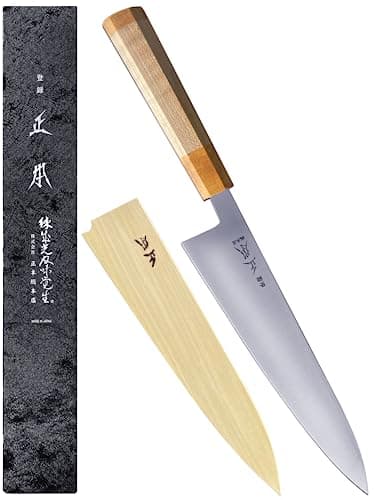
Masamoto KS 240 mm gyuto, Shirogami #2 at HRC 62-63