Explainer
What is VG-10 steel and is it good
Published
Short answer
VG-10 is a high-carbon stainless steel made by Takefu Special Steel in Fukui, Japan. It contains about 1 percent carbon and 15 percent chromium plus molybdenum, vanadium and cobalt, and kitchen knives made from it are usually hardened to about HRC 60 to 61. It takes a fine edge, holds it well, resists rust and sharpens easily on whetstones, which is why it is one of the most common core steels in Japanese and Damascus-clad knives.
Picks for this job
All 8 picks compared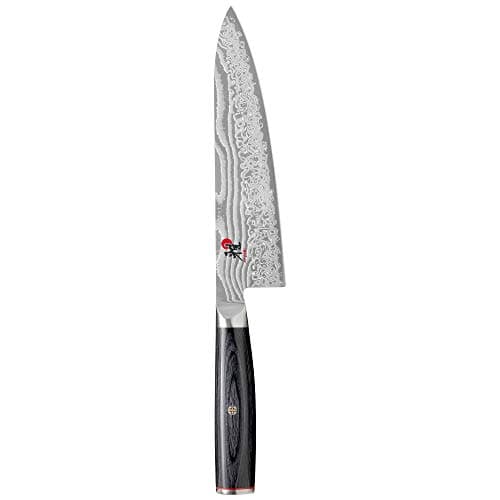
Miyabi Kaizen II 8", FC61 core at 61 HRC under 48 layers
See price on AmazonSee it on Amazon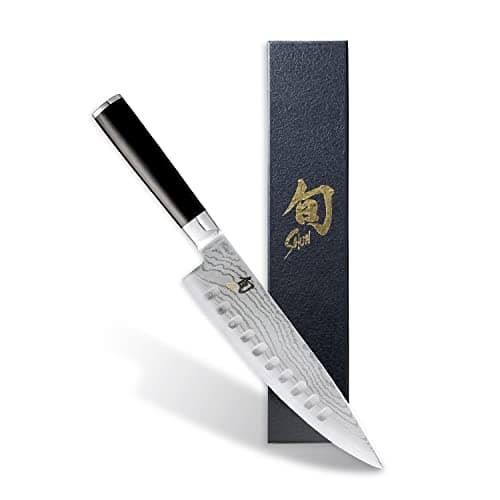
Shun Classic 8" chef's knife, VG-MAX under 68 layers
See price on AmazonSee it on Amazon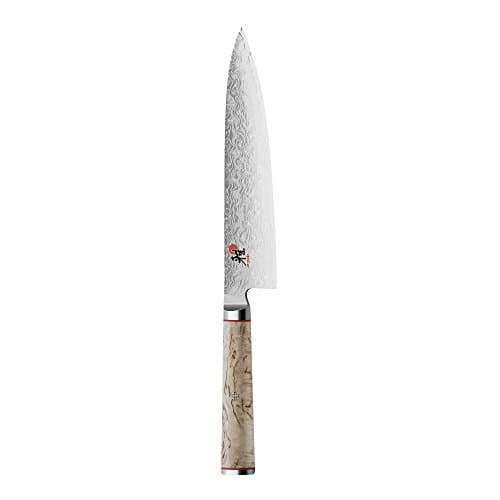
Miyabi Birchwood SG2 8", 100-layer flower Damascus
See price on AmazonSee it on Amazon
This page is for home cooks who keep seeing VG-10 on knife listings, especially Damascus gyutos and santokus, and want to know whether it is a good steel and how it compares with alternatives. It covers what is in VG-10, how hard it usually is, how it behaves in a kitchen, why it is so often wrapped in Damascus cladding, how it compares with German steel and SG2, and how to care for it.
Where VG-10 comes from
VG-10 is produced by Takefu Special Steel, a steelmaker in Echizen, Fukui Prefecture. VG stands for V Gold, a family of stainless cutlery steels; VG-1 and VG-10 are the best known. It was developed as a premium stainless steel for blades, and it has been used for decades in Japanese kitchen knives as well as in folding knives sold around the world.
Many makers use VG-10, which is one reason it is so widespread. Shun's VG-MAX is a Kai variant described as having more chromium and vanadium than VG-10; other makers such as Tojiro, Fujiwara and numerous smaller workshops use VG-10 itself. Miyabi used VG-10 in its original Kaizen series before moving that line to FC61.
VG-10 composition
The figures below are the approximate ranges commonly published for VG-10. Exact numbers can vary slightly between sources and batches. Each element has a job: carbon allows high hardness, chromium makes the steel stainless, molybdenum and vanadium refine the grain and add wear resistance, and cobalt is added to strengthen the steel and support a fine edge.
Carbon
- Approximate content
- 0.95-1.05%
- Effect
- Hardness and edge retention
Chromium
- Approximate content
- 14.5-15.5%
- Effect
- Stain and rust resistance
Molybdenum
- Approximate content
- 0.9-1.2%
- Effect
- Toughness, corrosion resistance
Vanadium
- Approximate content
- 0.1-0.3%
- Effect
- Fine grain, wear resistance
Cobalt
- Approximate content
- 1.3-1.5%
- Effect
- Strength, supports a fine edge
| Element | Approximate content | Effect |
|---|---|---|
| Carbon | 0.95-1.05% | Hardness and edge retention |
| Chromium | 14.5-15.5% | Stain and rust resistance |
| Molybdenum | 0.9-1.2% | Toughness, corrosion resistance |
| Vanadium | 0.1-0.3% | Fine grain, wear resistance |
| Cobalt | 1.3-1.5% | Strength, supports a fine edge |
How hard is VG-10
Kitchen knives in VG-10 are usually heat treated to about HRC 60 to 61. That is harder than German knife steel, which typically sits around HRC 56 to 58, and softer than powder steels such as SG2 at roughly HRC 62 to 64. The middle position is part of VG-10's appeal: hard enough for a thin, sharp edge with good retention, but tough enough that it is less prone to chipping than the hardest steels.
Hardness is a property of the heat treatment as well as the steel, so two VG-10 knives from different makers can differ by a point or so. Our HRC explainer covers what the numbers mean, and the steel chart compares VG-10 with other steels side by side.
- Edge retention
- rises with hardness
- Chip risk
- rises with hardness
- Ease of sharpening
- falls with hardness
Steels on the chart: X50CrMoV15 HRC 56 to 58; Cromova 18 HRC 56 to 58; AUS-10 HRC 59 to 60; VG-10 HRC 60 to 61; VG-MAX HRC 60 to 61; FC61 HRC 61 to 61; Ginsan (Silver 3) HRC 60 to 61; SG2 / R2 HRC 62 to 64; ZDP-189 HRC 64 to 66; Shirogami 1 and 2 HRC 61 to 64; Aogami 1 and 2 HRC 61 to 64; Aogami Super HRC 63 to 65.
Why so many Damascus knives use VG-10
Most "Damascus" kitchen knives are made of a hard core steel sandwiched between layers of softer, patterned steel. VG-10 is a popular core for this because it is stainless, takes a good edge, and is widely available, including as pre-laminated stock that combines a VG-10 core with layered stainless cladding. That makes it practical for many makers to offer an attractive Damascus knife at a moderate price.
The pattern is decorative and the cladding adds some stiffness and protection to the core, but the cutting edge is the VG-10 at the center. When you see "VG-10 Damascus," read it as a VG-10 knife with a patterned jacket. See is Damascus steel better for more on how to read these listings.
Pros and cons of VG-10 in the kitchen
For most home cooks, VG-10 is a sensible balance. It needs a little more care than a German knife but much less than carbon steel, and it rewards that care with a sharper, longer-lasting edge.
- Pro: stainless, so it tolerates acidic foods and brief moisture far better than carbon steel.
- Pro: takes a very fine edge and holds it noticeably longer than German steel.
- Pro: sharpens readily on ordinary whetstones; no diamond plates required.
- Pro: widely used, so there are many knives at many price points.
- Con: harder and thinner edges can chip if twisted or used on bone or glass.
- Con: can show small rust spots if left wet, especially near the edge.
- Con: does not hold an edge as long as SG2 or other powder steels.
VG-10 compared with other common steels
Against German X50CrMoV15, VG-10 is harder and holds an edge longer, but is less forgiving of misuse. Against SG2 (also sold as R2), VG-10 is a little softer and less wear resistant, but somewhat tougher and quicker to sharpen. Against carbon steels such as Aogami and Shirogami, VG-10 is far more rust resistant, while carbon steels are often said to take an even keener edge and are easy to sharpen. Our VG-10 vs SG2 page and Japanese knife steel chart cover the details.
X50CrMoV15 (German)
- Type
- Stainless
- Typical HRC
- 56-58
- Rust risk
- Low
VG-10
- Type
- Stainless
- Typical HRC
- 60-61
- Rust risk
- Low
SG2 / R2
- Type
- Stainless powder
- Typical HRC
- 62-64
- Rust risk
- Low
Aogami / Shirogami
- Type
- Carbon
- Typical HRC
- 61-64
- Rust risk
- High
| Steel | Type | Typical HRC | Rust risk |
|---|---|---|---|
| X50CrMoV15 (German) | Stainless | 56-58 | Low |
| VG-10 | Stainless | 60-61 | Low |
| SG2 / R2 | Stainless powder | 62-64 | Low |
| Aogami / Shirogami | Carbon | 61-64 | High |
Caring for and sharpening VG-10
Hand wash, dry immediately and never use the dishwasher. If you notice small orange spots, they usually come from leaving the knife wet or in contact with acidic food; the Japanese knife rust guide explains how to remove them. Store the knife so the edge is protected.
VG-10 sharpens well on a 1000 grit whetstone, with a 3000 to 6000 grit stone for refining. Most VG-10 knives come with edges between about 12 and 16 degrees per side; check your brand in the sharpening angle finder. If you hone, use a fine ceramic rod with light strokes, as explained in honing rods for Japanese knives.
Frequently asked questions
Is VG-10 a good steel for a chef knife? Yes. It is one of the most proven stainless steels for Japanese chef knives, with a good balance of sharpness, edge retention, rust resistance and ease of sharpening.
Does VG-10 rust? It is stainless, so it resists rust well, but it can show small spots if left wet or dirty. Wash and dry it promptly.
Is VG-10 better than German steel? It is harder and holds a sharper edge longer, but German steel is tougher and more forgiving. Choose based on how you use and care for your knives.
Is VG-MAX the same as VG-10? No. VG-MAX is a Kai-specific steel used in Shun knives and described as a VG-10 variant with added chromium and vanadium. It performs similarly.
What you need for this
- See price on AmazonAmazon
Miyabi Kaizen II 8" chef's knife, FC61 at 61 HRC
From Best Damascus Japanese knives, judged by the core steel
- See price on AmazonAmazon
Shun Classic 8 in hollow ground chef, 16-degree
From Best Japanese kitchen knives for home cooks: one pick per job