Fix
Loose or cracked knife handle: repair or replace
Published
Short answer
First check the warranty: many brands cover handles that loosen or crack from a manufacturing defect. Traditional Japanese wa handles are designed to be replaced, so a loose or cracked wa handle can be rehandled by a knife shop or a careful owner. A cracked riveted Western handle is harder to fix at home and usually goes back under warranty or to a professional. Stop using any knife whose handle moves on the tang.
Picks for this job
All 8 picks compared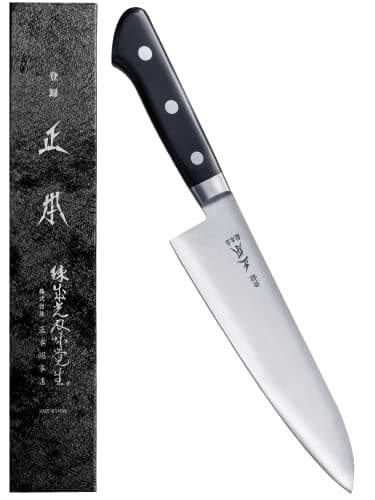
Masamoto VG 240 mm gyuto, HRC 58-59, POM handle
See price on AmazonSee it on Amazon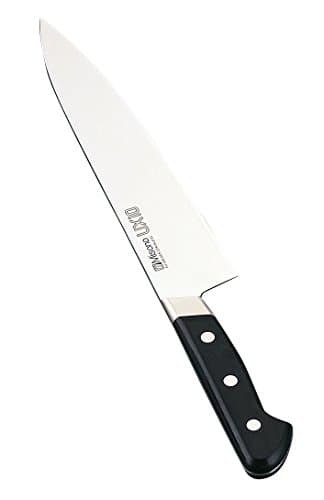
Misono UX10 210 mm gyuto in Swedish stainless
See price on AmazonSee it on Amazon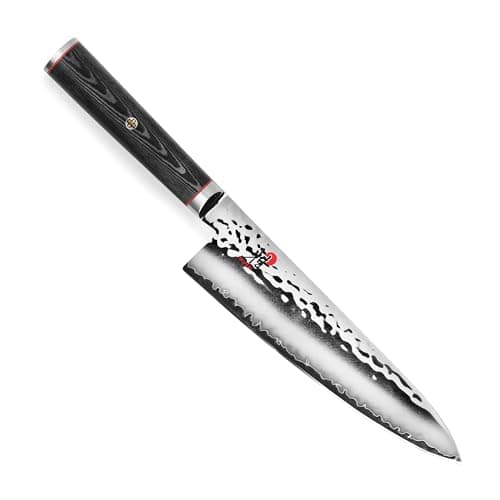
Miyabi Mizu SG2 8 in chef knife at 63 HRC
See price on AmazonSee it on Amazon
This page is for anyone whose kitchen knife handle has started to wobble, separate at the ferrule, or crack along the scales. It explains how wa and Western handles are attached, what usually causes the damage, how to decide between warranty, professional rehandling and home repair, the basic steps for a home rehandle of a wa handle, and the care habits that keep a handle tight. Safety comes first: a loose handle can fail mid-cut.
How knife handles are attached
A Japanese wa handle is fitted over a narrow, pointed tang. The tang is usually pushed or heated into a hole in the handle and often fixed with glue or epoxy. Nothing passes through the side of the handle. This makes wa handles light and easy to replace, but they rely on a snug fit that water and wood movement can loosen.
A Western or yo handle has a full tang running the length of the handle, with scales of wood, composite or plastic attached by rivets and adhesive on each side. These handles are very solid, but if a scale cracks or separates, the repair involves removing rivets, which is harder to do at home. The handle types explainer shows both designs.
Octagonal wa
Light, eight flat faces, works in either hand.
D-shaped wa
Light, with a ridge for the fingers. Made for one hand.
Western yo
Full tang between two scales and three rivets. Heavier at the back.
Common causes
Dishwasher
- What happens
- Heat and moisture swell and shrink wood and break down adhesive
- Typical handle
- Both
Soaking or leaving wet
- What happens
- Wood absorbs water around the tang, then shrinks as it dries
- Typical handle
- Wa
Dry climate or heat
- What happens
- Wood shrinks and the fit loosens or splits
- Typical handle
- Wa and wooden scales
Prying or twisting
- What happens
- Side load levers the tang in the handle
- Typical handle
- Wa
Dropping
- What happens
- Impact cracks the handle or ferrule
- Typical handle
- Both
Manufacturing defect
- What happens
- Poor fit or adhesive from the start
- Typical handle
- Both
| Cause | What happens | Typical handle |
|---|---|---|
| Dishwasher | Heat and moisture swell and shrink wood and break down adhesive | Both |
| Soaking or leaving wet | Wood absorbs water around the tang, then shrinks as it dries | Wa |
| Dry climate or heat | Wood shrinks and the fit loosens or splits | Wa and wooden scales |
| Prying or twisting | Side load levers the tang in the handle | Wa |
| Dropping | Impact cracks the handle or ferrule | Both |
| Manufacturing defect | Poor fit or adhesive from the start | Both |
Note.If the blade moves at all relative to the handle, stop using the knife until it is repaired. A handle that fails mid-cut can send the blade sideways.
Step 1: check the warranty
Before attempting a repair, check the maker's warranty. Many major brands, including Shun, Miyabi, Global, Wusthof and Zwilling, offer limited lifetime warranties against manufacturing defects, and a handle that loosens or cracks without abuse may qualify. Damage from dishwashers, misuse or dropping is usually excluded. A home repair may void the warranty, so ask first.
Warranty claims often require proof of purchase from an authorized dealer; see where to buy Japanese knives. Shun's service program is described in Shun free sharpening and repair. Read the brand's own warranty page for current terms.
Step 2: decide on repair or replacement
Many Japanese knife shops offer rehandling as a routine service, and a new handle can also be an upgrade in comfort. For a hard-used knife, compare the repair cost with a new knife from the Japanese knives for beginners or gyuto guides.
- Wa handle slightly loose, no cracks: a knife shop can reset it, or a confident owner can re-seat it with food-safe epoxy.
- Wa handle cracked or ferrule split: rehandle with a new wa handle. Replacement handles are sold by length and tang size.
- Western handle with a hairline crack in one scale: contact the maker or a professional; rescaling requires removing rivets.
- Western handle loose on the tang or rivets moving: professional repair or warranty.
- Inexpensive knife with a badly broken handle: replacement may cost less than repair.
Home rehandling a wa knife: basic steps
Rehandling a wa knife is a common project for owners comfortable with simple tools. Procedures vary by knife and handle, so follow the instructions from the handle maker. The outline below is general guidance, not a substitute for those instructions.
- 1
Wrap the blade fully in several layers of tape or cardboard so you can grip it safely.
- 2
Remove the old handle: many wa handles release by tapping the back of the ferrule gently with a wooden block while holding the blade, wrapped, in a vise or with a firm grip. Gentle heat on the handle can soften old adhesive.
- 3
Clean the tang of old glue and any rust with a fine abrasive.
- 4
Test fit the new handle. The tang should go in snugly without forcing; widen the hole slightly if needed.
- 5
Fill the gap with a small amount of food-safe or kitchen-rated epoxy, insert the tang, align the blade straight with the handle, and wipe off any excess.
- 6
Let the epoxy cure fully as directed before use, then oil raw wood lightly.
Note.Keep the edge covered the whole time, work slowly and keep hands behind the blade. If you are not comfortable doing this, a knife shop will do it safely.
Care that keeps handles tight
These habits also prevent rust on the blade and around the tang; see Japanese knife rust and can Japanese knives go in the dishwasher.
- Hand wash only, quickly, and dry the handle as carefully as the blade.
- Never soak a knife or leave it in the sink.
- Rub raw wooden handles with a little mineral oil now and then, especially in dry climates.
- Do not pry, twist or lever with the knife; use the right tool for hard jobs.
- Store knives so they do not fall or get knocked. See how to store Japanese knives.
Frequently asked questions
Can I glue a loose knife handle? For a wa handle, re-seating it with food-safe epoxy is a common fix. For a riveted Western handle, glue alone is rarely a lasting repair; use the warranty or a professional.
How much does rehandling cost? It varies widely by shop, handle material and knife. Ask a local or online Japanese knife shop for a quote before deciding.
Is a cracked handle covered by warranty? Often, if it is a manufacturing defect. Damage from dishwashers, drops or misuse is usually excluded. Check the brand's warranty terms.
Can I replace a Western handle with a wa handle? Not directly. A Western full tang is a different shape from a wa tang, so conversion is a specialist job, if it is possible at all.
What you need for this
- See price on AmazonAmazon
Masamoto VG 240 mm gyuto, HRC 58-59, POM handle
From Best gyuto knives: Japanese chef knives in 210 and 240 mm
 See price on AmazonAmazon
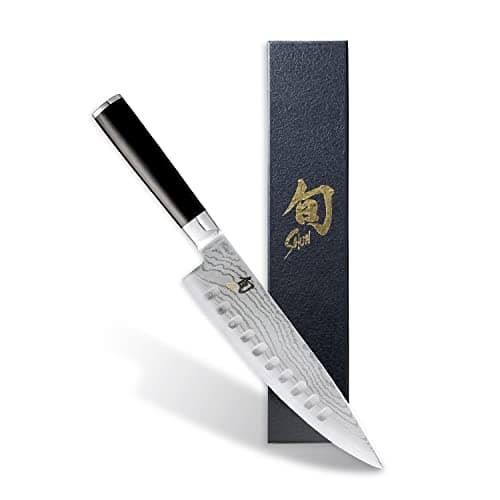
Shun Classic 8 in hollow ground chef, 16-degree
From Best Japanese knives for beginners: forgiving first picks