Gear guide
Best santoku knives from Japan and Germany
Picked from Amazon listings, not hands-on tests. How we pick
Top picks at a glance
Compare all picks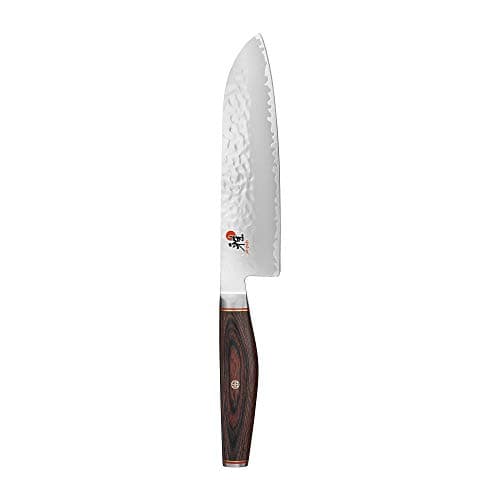
Closest match for the job
Miyabi Artisan 7" santoku in SG2 at 63 HRC
SG2 micro-carbide powder steel at 63 HRC, per the title, is among the hardest blades in this comparison.
See price on AmazonSee it on Amazon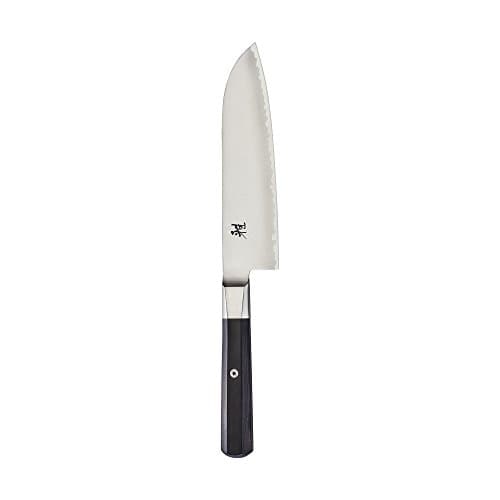
Most for the money on paper
Miyabi Koh 7" santoku, FC61 steel at 61 HRC
The listing states FC61 fine carbide steel at 61 Rockwell with an ice-hardened FRIODURx2 blade.
See price on AmazonSee it on Amazon
Most complete listing
Wusthof Classic Ikon 7" hollow-edge santoku, German
Forged from a single block of high carbon stainless steel and tempered to 58 HRC, per the listing.
See price on AmazonSee it on Amazon
A santoku is a shorter, flatter alternative to a chef's knife. The blade is usually around 7 inches, the tip drops down to meet the edge, and the flat profile suits push cutting and chopping rather than rocking. That makes it a good main knife for small kitchens and cramped cutting boards. At $150 and up, most santokus look alike, so the differences that matter are on the spec sheet: the steel and its hardness, how acute the edge is, and whether the handle is a Western grip or a Japanese D or octagon shape. Harder, thinner Japanese blades hold a keen edge longer but need more care. German blades are softer and more forgiving. This guide lines up eight listings side by side using only what each listing states, and writes "Not stated" where a listing leaves a spec out.
Compare the picks
- Miyabi Artisan 7" santoku in SG2 at 63 HRC
- Steel
- SG2 micro-carbide powder steel
- Hardness (HRC)
- 63
- Blade length
- 7 in
- Edge angle
- 9.5 to 12 degrees
- Miyabi Koh 7" santoku, FC61 steel at 61 HRC
- Steel
- FC61 fine carbide stainless
- Hardness (HRC)
- 61
- Blade length
- 7 in
- Edge angle
- 9.5 to 12 degrees
- Wusthof Classic Ikon 7" hollow-edge santoku, German
- Steel
- High carbon stainless steel
- Hardness (HRC)
- 58
- Blade length
- 7 in
- Edge angle
- 10 degrees
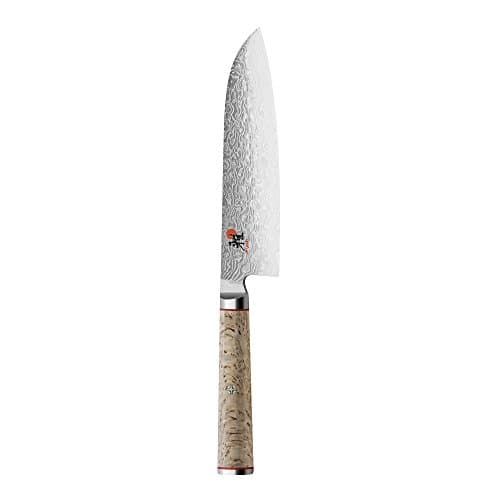 Miyabi Birchwood SG2 7" santoku, 101-layer Damascus
- Steel
- SG2 micro-carbide powder steel
- Hardness (HRC)
- 63
- Blade length
- 7 in
- Edge angle
- 9.5 to 12 degrees
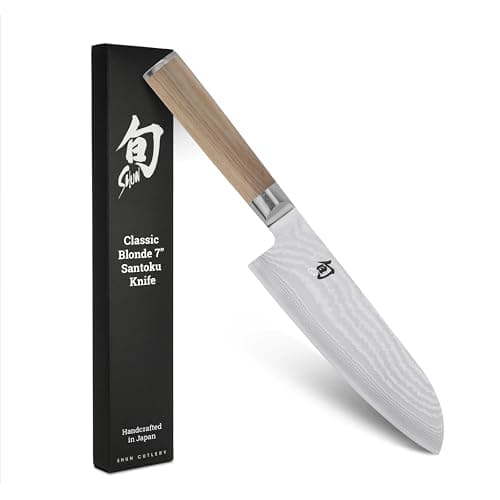 Shun Classic Blonde 7" santoku, VG-MAX, D handle
- Steel
- VG-MAX core, 68-layer Damascus cladding
- Hardness (HRC)
- Not stated
- Blade length
- 7 in
- Edge angle
- 16 degrees
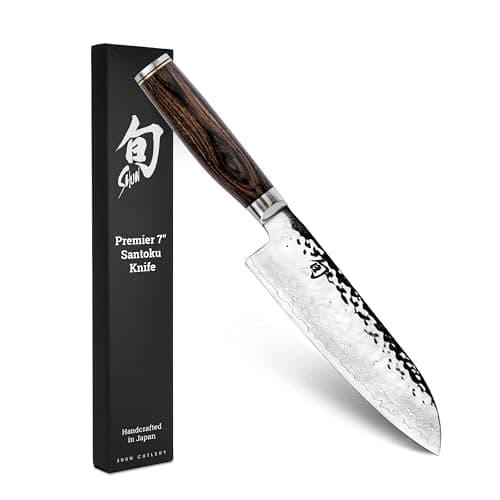 Shun Premier 7" santoku with hammered VG-MAX blade
- Steel
- VG-MAX core, 68-layer Damascus cladding
- Hardness (HRC)
- Not stated
- Blade length
- 7 in
- Edge angle
- 16 degrees
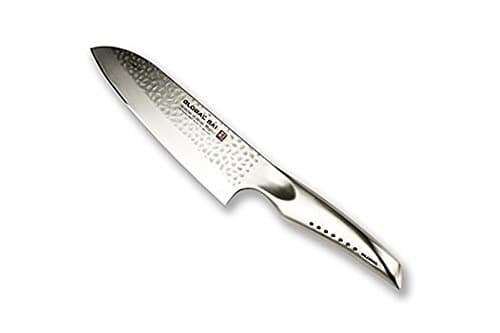 Global SAI-03 7.5" santoku, Cromova 18 steel
- Steel
- Cromova 18 stainless
- Hardness (HRC)
- 56-58
- Blade length
- 7.5 in
- Edge angle
- Not stated
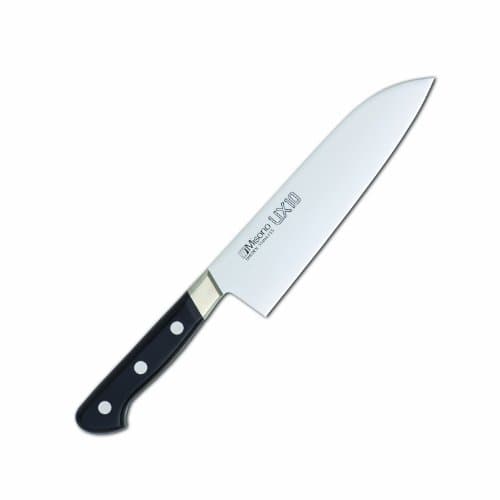 Misono UX10 7" santoku in Swedish stainless
- Steel
- Swedish stain-resistant steel
- Hardness (HRC)
- 59-60
- Blade length
- 7 in (18 cm)
- Edge angle
- Not stated
| Pick | Steel | Hardness (HRC) | Blade length | Edge angle | Price | Link |
|---|---|---|---|---|---|---|
| Miyabi Artisan 7" santoku in SG2 at 63 HRC | SG2 micro-carbide powder steel | 63 | 7 in | 9.5 to 12 degrees | - | Amazon |
| Miyabi Koh 7" santoku, FC61 steel at 61 HRC | FC61 fine carbide stainless | 61 | 7 in | 9.5 to 12 degrees | - | Amazon |
| Wusthof Classic Ikon 7" hollow-edge santoku, German | High carbon stainless steel | 58 | 7 in | 10 degrees | - | Amazon |
| Miyabi Birchwood SG2 7" santoku, 101-layer Damascus | SG2 micro-carbide powder steel | 63 | 7 in | 9.5 to 12 degrees | - | Amazon |
| Shun Classic Blonde 7" santoku, VG-MAX, D handle | VG-MAX core, 68-layer Damascus cladding | Not stated | 7 in | 16 degrees | - | Amazon |
| Shun Premier 7" santoku with hammered VG-MAX blade | VG-MAX core, 68-layer Damascus cladding | Not stated | 7 in | 16 degrees | - | Amazon |
| Global SAI-03 7.5" santoku, Cromova 18 steel | Cromova 18 stainless | 56-58 | 7.5 in | Not stated | - | Amazon |
| Misono UX10 7" santoku in Swedish stainless | Swedish stain-resistant steel | 59-60 | 7 in (18 cm) | Not stated | - | Amazon |
Facts are taken from each Amazon listing. Prices are checked daily and shown with their date.
The picks in detail
Pick 1 · MIYABI
Miyabi Artisan 7" santoku in SG2 at 63 HRC
See price on AmazonA thin Japanese santoku in SG2 powder steel at 63 Rockwell, hand-honed to a 9.5 to 12 degree edge. The strongest all-round pick for cooks who want a very keen main knife.
What the listing offers
- SG2 micro-carbide powder steel at 63 HRC, per the title, is among the hardest blades in this comparison.
- The listing states a Honbazuke hand-honed edge of 9.5 to 12 degrees, far more acute than the German picks here.
- D-shaped Pakkawood handle and handcrafted in Seki, Japan, according to the listing.
Limits to know
- A hard, very thin edge is less forgiving of bones, frozen food and twisting cuts than softer German steel.
- The listing does not state care or warranty terms, so check the current listing before buying.
Pick 2 · MIYABI
Miyabi Koh 7" santoku, FC61 steel at 61 HRC
See price on AmazonA 7-inch santoku for push cutting and small kitchens, with FC61 steel at 61 HRC and a thin, hand-honed edge. Strong value for a cook who wants a keen, shorter blade.
What the listing offers
- The listing states FC61 fine carbide steel at 61 Rockwell with an ice-hardened FRIODURx2 blade.
- Hand-honed Honbazuke edge at 9.5 to 12 degrees is among the finest angles in this guide.
- Octagon Pakkawood handle and handcrafted Seki, Japan origin are both stated.
Limits to know
- A santoku's flatter profile is less suited to rock chopping than a gyuto.
- A very fine edge at 61 HRC needs care around bones and frozen food, which the listing does not address.
Pick 3 · Wüsthof
Wusthof Classic Ikon 7" hollow-edge santoku, German
See price on AmazonA forged German santoku tempered to 58 HRC with a hollow edge and a 10 degree cutting edge. The pick for cooks who want a tougher, more forgiving blade than the Japanese options.
What the listing offers
- Forged from a single block of high carbon stainless steel and tempered to 58 HRC, per the listing.
- The listing states a 10 degree cutting edge and a hollow edge with indentations for food release.
- Double bolster for balance, and made in Solingen, Germany, according to the listing.
Limits to know
- 58 HRC is softer than the 61 to 63 HRC Japanese picks, so expect to hone it more often.
- The double bolster can make full-length sharpening on whetstones harder; the listing does not address it.
Pick 4 · MIYABI
Miyabi Birchwood SG2 7" santoku, 101-layer Damascus
See price on AmazonThe same SG2 steel and 63 HRC as the Artisan, dressed in a 101-layer flower Damascus pattern and a Karelian birch handle. For buyers who want the keen edge plus a showpiece look.
What the listing offers
- SG2 powder steel, CRYODUR ice-hardened to Rockwell 63, according to the listing.
- Hand-honed with the three-step Honbazuke process to a 9.5 to 12 degree edge, per the listing.
- 101-layer flower Damascus design with a Karelian birch handle, handcrafted in Seki.
Limits to know
- It costs well over the Artisan for what the listing describes as the same steel and edge angle.
- A natural birch handle may need more care than Pakkawood; the listing does not give care instructions.
Pick 5 · Shun
Shun Classic Blonde 7" santoku, VG-MAX, D handle
See price on AmazonThe Classic Blonde santoku uses the same VG-MAX and Damascus build as the Premier with a smooth blade and a light D-shaped handle. Suits cooks who prefer a Japanese D grip.
What the listing offers
- VG-MAX steel and 68-layer Damascus cladding with a 16 degree edge, according to the listing.
- D-shaped blonde Pakkawood handle is stated to work for both left and right-handed users.
- Free sharpening and honing support is stated on the listing.
Limits to know
- No hammered finish, so it lacks the food-release feature the Premier listing describes.
- Hardness is not stated on the listing, so it is hard to compare with Miyabi.
Pick 6 · Shun
Shun Premier 7" santoku with hammered VG-MAX blade
See price on AmazonA hammered santoku with a stated 16-degree edge and contoured Pakkawood handle. Suits beginners who mostly slice vegetables and boneless proteins.
What the listing offers
- Hammered tsuchime finish is described as reducing drag and sticking.
- The listing states a 16-degree edge on VG-MAX steel.
- Contoured Pakkawood handle is described as secure for either hand.
Limits to know
- HRC is not stated in the listing, so hardness cannot be compared.
- A santoku's flat profile is less suited to rocking cuts than a chef knife.
Pick 7 · Global
Global SAI-03 7.5" santoku, Cromova 18 steel
See price on AmazonGlobal's SAI santoku has a 7.5 inch Cromova 18 blade at 56 to 58 HRC and a seamless steel build. For cooks who value easy cleaning and a light knife.
What the listing offers
- The listing states smooth contours and seamless construction that eliminate food and dirt traps.
- Cromova 18 stainless steel is stated to resist rust, stains and corrosion.
- Described as lightweight and balanced, with a slightly longer 7.5 inch blade.
Limits to know
- 56-58 HRC is the softest range in this guide, so expect more frequent honing.
- The edge angle is not stated, and the listing does not describe the handle material.
Pick 8 · Misono
Misono UX10 7" santoku in Swedish stainless
See price on AmazonA Misono UX10 santoku in 18 cm with Swedish stain-resistant steel. A quieter alternative to the Miyabi Koh for cooks who want a double-edged santoku with a composite handle.
What the listing offers
- The listing states Swedish stain-resistant steel at 59-60 Rockwell C.
- Double-edged blade is listed, so it suits right- and left-handed cooks alike.
- Composite wood handle is stated, which holds up better to moisture than raw wood.
Limits to know
- The title marks it as a right-hand version, so check the listing variant before ordering.
- No edge angle or warranty details are stated in the listing.
Read before you buy
- What size chef knife do I need: 180, 210, 240 or 270 mmPick the right chef knife or gyuto length with a size table in mm and inches, matched to your cutting board, hand size and what you cook most often.
- What is a santoku knife used forWhat a santoku knife is used for, what the name means, why it has a flat edge and dimples, and how to cut with it at home. Plain answers for home cooks.
- What is a nakiri knife used forA nakiri is a Japanese vegetable knife with a flat edge for push cutting. Learn what it does well, how to use it, its limits and how to care for it.
- What is a bunka knife and what is it forA bunka is a compact Japanese all-purpose knife with a flat edge and an angled reverse tanto tip. Learn its uses, history and how it compares with a santoku.
- Types of Japanese knives and what each one doesGyuto, santoku, nakiri, bunka, sujihiki, petty, deba and yanagiba explained: what each Japanese knife type does, typical lengths and who needs it.
More gear: Shapes and how to use them
Edge & Haft chooses every product independently from what its Amazon listing states. We may earn a commission from the links above. As an Amazon Associate I earn from qualifying purchases.