Gear guide
Best nakiri knives for vegetables
Picked from Amazon listings, not hands-on tests. How we pick
Top picks at a glance
Compare all picks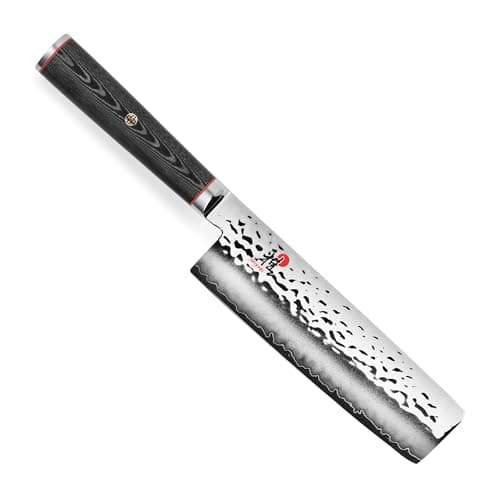
Closest match for the job
Miyabi Mizu SG2 6.5" nakiri, 63 HRC, 12-degree edge
The listing states SG2 powder steel ice-hardened to 63 Rockwell for strong edge retention.
See price on AmazonSee it on Amazon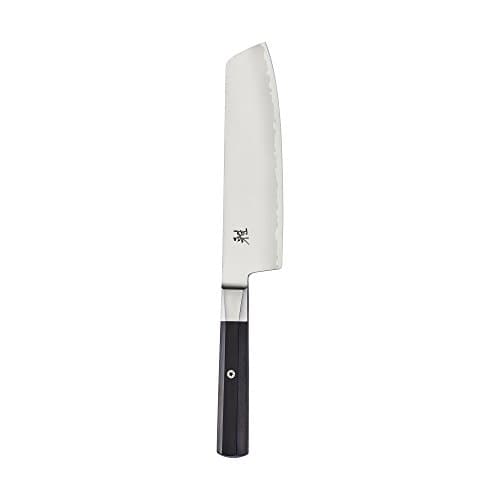
Most for the money on paper
Miyabi Koh 6.5" nakiri, FC61 steel at the lowest price
Listing states FC61 fine carbide stainless at 61 Rockwell with FRIODURx2 ice hardening.
See price on AmazonSee it on Amazon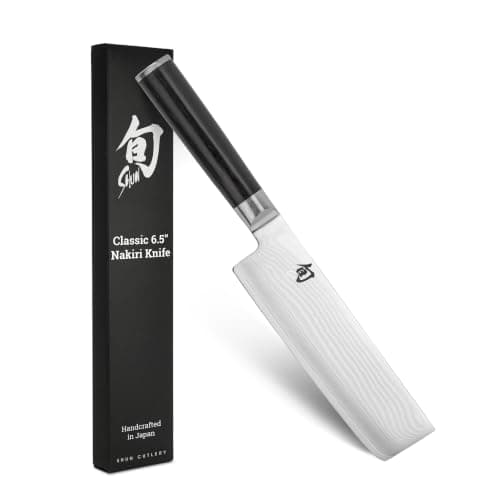
Most complete listing
Shun Classic 6.5" nakiri, VG-MAX with free sharpening
Listing describes it as a specialized vegetable knife for slicing and dicing produce.
See price on AmazonSee it on Amazon
A nakiri is a flat, rectangular vegetable knife. Because the edge is straight, the whole blade meets the board at once, so you get clean full-length cuts through onions, cabbage and squash without the accordion effect a curved chef's knife can leave. The things that separate a good nakiri from an average one are the core steel, how hard it is, how thin the edge is ground, and whether the handle suits the way you hold a knife. Very hard steels such as SG2 or Blue Steel #2 hold a fine edge longer but ask for gentler use and whetstone sharpening. Softer stainless is more forgiving. This guide compares eight nakiri knives from Miyabi, Shun and Yoshihiro on steel, Rockwell hardness, blade length, edge angle and handle, using only what each Amazon listing states.
Compare the picks
- Miyabi Mizu SG2 6.5" nakiri, 63 HRC, 12-degree edge
- Steel
- SG2 micro-carbide powder stainless
- Hardness (HRC)
- 63
- Blade length
- 6.5 in
- Edge angle
- 12 degrees, double bevel
- Shun Classic 6.5" nakiri, VG-MAX with free sharpening
- Steel
- VG-MAX core, 68-layer Damascus cladding
- Hardness (HRC)
- Not stated
- Blade length
- 6.5 in
- Edge angle
- 16 degrees
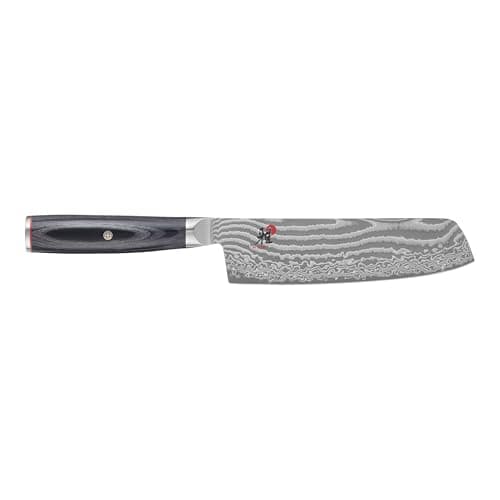 Miyabi Kaizen II 6.5" nakiri, FC61 at 61 HRC
- Steel
- FC61 core, 48 layers of damast steel
- Hardness (HRC)
- 61
- Blade length
- 6.5 in
- Edge angle
- 9.5-12 degrees
- Miyabi Koh 6.5" nakiri, FC61 steel at the lowest price
- Steel
- FC61 fine carbide stainless
- Hardness (HRC)
- 61
- Blade length
- 6.5 in
- Edge angle
- 9.5-12 degrees
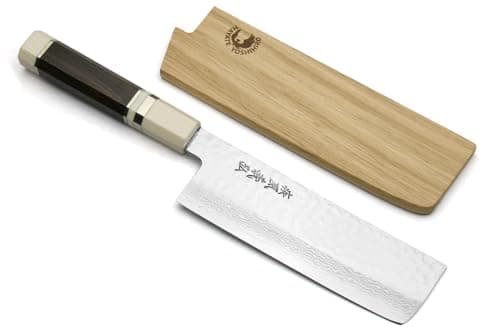 Yoshihiro VG10 46-layer nakiri with ebony wa handle and saya
- Steel
- VG10 core, 46-layer hammered Damascus
- Hardness (HRC)
- 60
- Blade length
- 165 mm (6.5 in)
- Edge angle
- Not stated (double edged)
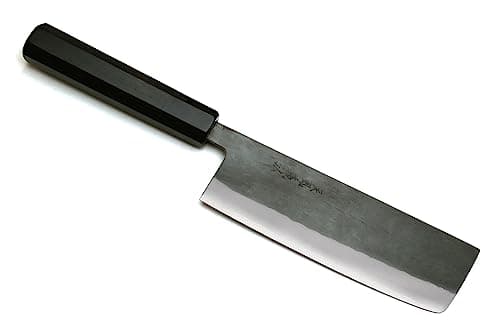 Yoshihiro Kurouchi Blue #2 nakiri, 62-63 HRC carbon core
- Steel
- Blue Steel #2 core, stainless clad
- Hardness (HRC)
- 62-63
- Blade length
- 165 mm (6.5 in)
- Edge angle
- Not stated (double edged)
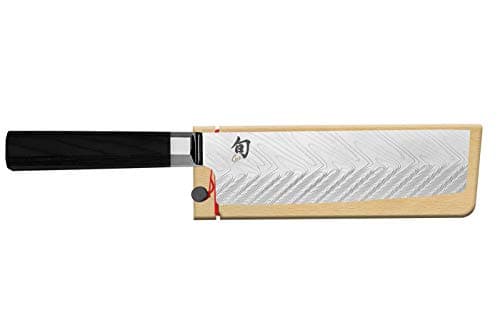 Shun Dual Core 6.5" nakiri, 71 layers of VG10 and VG2
- Steel
- 71 micro-layers of VG10 and VG2
- Hardness (HRC)
- Not stated
- Blade length
- 6.5 in
- Edge angle
- 16 degrees
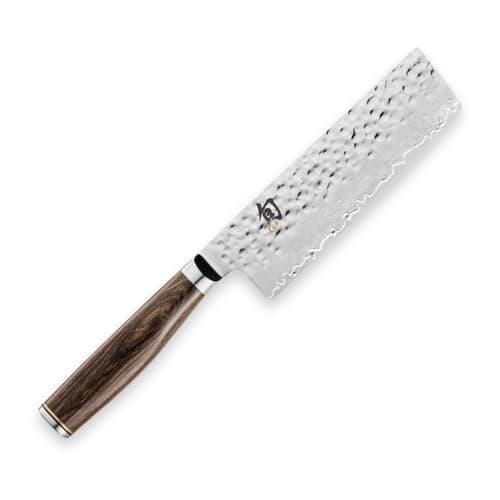 Shun Premier 5.5" nakiri with hammered tsuchime finish
- Steel
- VG-MAX core, 68-layer Damascus cladding
- Hardness (HRC)
- Not stated
- Blade length
- 5.5 in
- Edge angle
- 16 degrees
| Pick | Steel | Hardness (HRC) | Blade length | Edge angle | Price | Link |
|---|---|---|---|---|---|---|
| Miyabi Mizu SG2 6.5" nakiri, 63 HRC, 12-degree edge | SG2 micro-carbide powder stainless | 63 | 6.5 in | 12 degrees, double bevel | - | Amazon |
| Shun Classic 6.5" nakiri, VG-MAX with free sharpening | VG-MAX core, 68-layer Damascus cladding | Not stated | 6.5 in | 16 degrees | - | Amazon |
| Miyabi Kaizen II 6.5" nakiri, FC61 at 61 HRC | FC61 core, 48 layers of damast steel | 61 | 6.5 in | 9.5-12 degrees | - | Amazon |
| Miyabi Koh 6.5" nakiri, FC61 steel at the lowest price | FC61 fine carbide stainless | 61 | 6.5 in | 9.5-12 degrees | - | Amazon |
| Yoshihiro VG10 46-layer nakiri with ebony wa handle and saya | VG10 core, 46-layer hammered Damascus | 60 | 165 mm (6.5 in) | Not stated (double edged) | - | Amazon |
| Yoshihiro Kurouchi Blue #2 nakiri, 62-63 HRC carbon core | Blue Steel #2 core, stainless clad | 62-63 | 165 mm (6.5 in) | Not stated (double edged) | - | Amazon |
| Shun Dual Core 6.5" nakiri, 71 layers of VG10 and VG2 | 71 micro-layers of VG10 and VG2 | Not stated | 6.5 in | 16 degrees | - | Amazon |
| Shun Premier 5.5" nakiri with hammered tsuchime finish | VG-MAX core, 68-layer Damascus cladding | Not stated | 5.5 in | 16 degrees | - | Amazon |
Facts are taken from each Amazon listing. Prices are checked daily and shown with their date.
The picks in detail
Pick 1 · MIYABI
Miyabi Mizu SG2 6.5" nakiri, 63 HRC, 12-degree edge
See price on AmazonAn SG2 nakiri with a hammered finish, 63 HRC and a 12-degree double bevel. The best balance of premium steel and price among the nakiri knives here for heavy produce prep.
What the listing offers
- The listing states SG2 powder steel ice-hardened to 63 Rockwell for strong edge retention.
- Hammered Tsuchime finish is listed, which helps sliced vegetables fall away from the blade.
- Micarta D-shaped handle with a bolster and metal end cap is described for comfort and balance.
Limits to know
- 63 HRC steel is harder to sharpen at home than the softer VG-MAX and FC61 blades here.
- The listing does not state blade height, which matters for knuckle clearance on a nakiri.
Pick 2 · Shun
Shun Classic 6.5" nakiri, VG-MAX with free sharpening
See price on AmazonShun's flat-edged vegetable knife in 6.5 inches. The pick for cooks who prep a lot of produce and want full-length cuts through onions, cabbage and carrots.
What the listing offers
- Listing describes it as a specialized vegetable knife for slicing and dicing produce.
- Same VG-MAX core, 68-layer cladding and 16-degree edge as the Shun Classic chef's knife.
- Free sharpening and honing support is stated in the listing.
Limits to know
- A nakiri has no real tip, so it is a second knife rather than a replacement for a chef's knife.
- Hardness is not stated in the listing, so compare steels by name only.
Pick 3 · MIYABI
Miyabi Kaizen II 6.5" nakiri, FC61 at 61 HRC
See price on AmazonA 6.5-inch nakiri with an FC61 core clad in 48 layers and a hand-honed edge. A good middle choice between the softer Shun and the harder SG2 Mizu.
What the listing offers
- The listing states an FC61 core at 61 Rockwell with double ice-hardened FRIODUR treatment.
- Honbazuke hand honing to 9.5 to 12 degrees is listed, one of the finest edges in this group.
- 48-layer flower Damascus cladding and a black pakkawood handle with mosaic pin are stated.
Limits to know
- Costs more than the Miyabi Koh nakiri, which uses the same FC61 steel without the Damascus layers.
- The listing does not give blade height or weight.
Pick 4 · MIYABI
Miyabi Koh 6.5" nakiri, FC61 steel at the lowest price
See price on AmazonThe lowest-priced nakiri in this guide, with the same FC61 steel and 61 HRC as the Kaizen II but a plain mirror-polished blade. Strong value for a first nakiri.
What the listing offers
- Listing states FC61 fine carbide stainless at 61 Rockwell with FRIODURx2 ice hardening.
- Hand-honed Honbazuke edge at 9.5 to 12 degrees is listed.
- Handcrafted in Seki, Japan, with a sandblasted katana edge detail on a mirror-polished blade.
Limits to know
- This nakiri listing does not state the handle material.
- A mirror-polished blade without Damascus or hammered texture may let wet slices cling more.
Pick 5 · Yoshihiro
Yoshihiro VG10 46-layer nakiri with ebony wa handle and saya
See price on AmazonA traditional wa-handled nakiri with a VG10 core at 60 HRC and a magnetic wood saya included. For cooks who want a Japanese-style handle and a cover for drawer storage.
What the listing offers
- The listing states a VG10 core at HRC 60 under 46 layers of hammered Damascus.
- A magnetic wood saya cover is included, per the listing, to protect the edge in storage.
- Lightweight octagonal ebony wa-style handle is described as handcrafted in Japan.
Limits to know
- The listing asks for water whetstone sharpening only and immediate drying after acidic foods.
- No numeric edge angle is stated, only that the edge is double edged.
Pick 6 · Yoshihiro
Yoshihiro Kurouchi Blue #2 nakiri, 62-63 HRC carbon core
See price on AmazonA 165 mm Blue #2 nakiri with a flat edge for push cutting vegetables. A good second carbon knife for cooks who prep a lot of produce.
What the listing offers
- Flat cutting edge, which the listing says lets the whole length contact the board.
- Blue Steel #2 core at 62-63 HRC with stainless Kurouchi cladding.
- Double edged, so it sharpens like a standard knife rather than a single-bevel usuba.
Limits to know
- A nakiri is a vegetable knife; it will not replace a gyuto for meat or fish.
- This variant has no saya; the lacquered magnolia cover is listed as optional.
Pick 7 · Shun
Shun Dual Core 6.5" nakiri, 71 layers of VG10 and VG2
See price on AmazonShun's top-tier nakiri, built from 71 alternating layers of VG10 and VG2 stainless steel. For buyers who want a showpiece vegetable knife and a sheath for storage.
What the listing offers
- The listing states 71 alternating micro-layers of high-carbon, high-chromium VG10 and VG2 steel.
- A sheath for safe storage and transport is included, per the listing.
- Octagon-shaped Pakkawood handle is described as comfortable for either hand.
Limits to know
- The most expensive nakiri here, yet the listing does not state a Rockwell hardness.
- Its 16-degree edge is no finer than the Shun Classic nakiri at about half the price.
Pick 8 · Shun
Shun Premier 5.5" nakiri with hammered tsuchime finish
See price on AmazonA shorter 5.5-inch nakiri with Shun's hammered tsuchime finish. Suits small boards and cooks who prep smaller vegetables more than whole cabbages or squash.
What the listing offers
- Hammered tsuchime finish is listed to reduce drag and stop food sticking to the blade.
- VG-MAX steel, 68-layer cladding and a 16-degree edge are stated in the listing.
- Contoured Pakkawood handle is described as fitting both left- and right-handed users.
Limits to know
- At 5.5 inches it is the shortest nakiri here and may not cross large produce in one cut.
- Hardness is not stated in the listing, so edge retention is hard to judge.
Read before you buy
- What is a nakiri knife used forA nakiri is a Japanese vegetable knife with a flat edge for push cutting. Learn what it does well, how to use it, its limits and how to care for it.
- Nakiri vs usuba: double vs single bevel vegetable knivesNakiri vs usuba: both are flat rectangular vegetable knives, but the usuba is single bevel and built for pro techniques. See which one a home cook should buy.
- Nakiri vs santoku for vegetable prepNakiri vs santoku: flat edge vs slight belly, squared tip vs rounded point, and when a dedicated vegetable knife earns a place next to your all-rounder.
- Nakiri vs Chinese cleaver for chopping vegetablesNakiri vs Chinese cleaver: blade height, weight, scooping and versatility compared, and which suits Japanese, Chinese and everyday home cooking.
More gear: Shapes and how to use them
Edge & Haft chooses every product independently from what its Amazon listing states. We may earn a commission from the links above. As an Amazon Associate I earn from qualifying purchases.