Explainer
What is a santoku knife used for
Published
Short answer
A santoku is an all-purpose Japanese kitchen knife used for slicing, dicing and mincing vegetables, boneless meat and fish. The name is usually translated as "three virtues", meaning it handles vegetables, meat and fish, or slicing, dicing and mincing. Its flat edge and short, blunt-tipped blade suit push and pull cuts rather than rocking.
Picks for this job
All 8 picks compared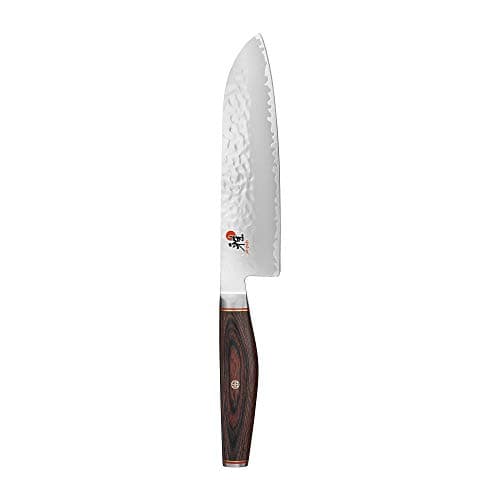
Miyabi Artisan 7" santoku in SG2 at 63 HRC
See price on AmazonSee it on Amazon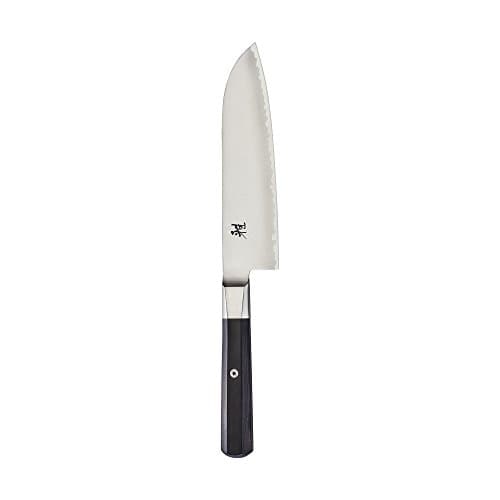
Miyabi Koh 7" santoku, FC61 steel at 61 HRC
See price on AmazonSee it on Amazon
Wusthof Classic Ikon 7" hollow-edge santoku, German
See price on AmazonSee it on Amazon
If you just bought a santoku, or you are deciding between a santoku and a chef knife, this page explains what the shape is for. It covers what the name means, how the flat edge and sheepsfoot tip change the way you cut, what the dimples on a granton edge do, and the jobs where a santoku is not the right tool. It is written for US home cooks who want one knife that does most daily prep, and it links to our comparisons and gear guides if you want to go further.
What santoku means
Santoku (三徳) is commonly translated as "three virtues" or "three uses". The two usual readings are that it handles three foods (vegetables, meat and fish) or three cuts (slicing, dicing and mincing). Either way, the point is the same: it was designed as a general home knife in Japan, a smaller and more compact alternative to the Western chef knife that had become popular there.
Today almost every knife maker sells one. Japanese brands such as Shun, Miyabi, Global and MAC make them in hard stainless steels, and German brands such as Wusthof and Zwilling make Western-style versions with softer steel and thicker edges. The shape is what makes a knife a santoku, not the country it comes from.
牛刀Gyuto
180 to 270 mm
三徳Santoku
165 to 180 mm
菜切Nakiri
160 to 180 mm
文化Bunka
165 to 180 mm
切付Kiritsuke
210 to 270 mm
筋引Sujihiki
240 to 300 mm
ペティPetty
120 to 150 mm
How the santoku shape differs from a chef knife
A santoku is usually 165 to 180 mm long (about 6.5 to 7 inches). The edge is fairly flat along most of its length, and the spine curves down to meet the edge at the tip, a shape often called a sheepsfoot. The blade is also tall for its length, which gives your knuckles clearance and makes it easy to scoop food off the board.
A Western chef knife or Japanese gyuto is longer, with more curve (belly) toward a pointed tip. That curve is what lets you rock the blade. A santoku has less curve, so it rewards straight down, forward or backward strokes. For a detailed side by side, see santoku vs chef knife and gyuto vs santoku.
Typical length
- Santoku
- 165-180 mm (6.5-7 in)
- Chef knife or gyuto
- 200-240 mm (8-9.5 in)
Edge profile
- Santoku
- Mostly flat, short curve at tip
- Chef knife or gyuto
- Long curve toward a pointed tip
Tip
- Santoku
- Blunt, dropped (sheepsfoot)
- Chef knife or gyuto
- Sharp, pointed
Best cutting motion
- Santoku
- Push cut, pull cut, chop
- Chef knife or gyuto
- Rock, push cut, pull cut
Good fit for
- Santoku
- Small boards, smaller hands, vegetable prep
- Chef knife or gyuto
- Larger boards, bigger batches, long slices
| Feature | Santoku | Chef knife or gyuto |
|---|---|---|
| Typical length | 165-180 mm (6.5-7 in) | 200-240 mm (8-9.5 in) |
| Edge profile | Mostly flat, short curve at tip | Long curve toward a pointed tip |
| Tip | Blunt, dropped (sheepsfoot) | Sharp, pointed |
| Best cutting motion | Push cut, pull cut, chop | Rock, push cut, pull cut |
| Good fit for | Small boards, smaller hands, vegetable prep | Larger boards, bigger batches, long slices |
What a santoku does best
The flat edge makes full contact with the board, so a santoku is very good at cuts where you want every slice to separate cleanly. That is why it is a favorite for vegetables. It also handles boneless proteins and herbs well.
- Thin slicing onions, cucumbers, carrots and potatoes with a forward push
- Dicing onions, peppers and celery with clean, separate cuts
- Fine mincing of garlic, ginger and shallots
- Chopping herbs with a light up and down motion
- Slicing boneless chicken breast, pork loin and beef for stir fry
- Cutting fish fillets into portions
- Scooping cut food off the board with the wide blade
Note.A santoku is not for bones, frozen food or prying. Hard Japanese steel can chip if it is twisted or hammered through hard items. Use a heavier Western knife or a cleaver for those jobs.
What the dimples on a granton santoku do
Many santoku knives have a row of oval hollows along the side of the blade, called a granton edge or kullenschliff. The hollows create small air pockets between the blade and the food. The idea is to reduce suction so wet slices of potato, cucumber or cheese release from the blade more easily.
They help a little with sticky foods, but they are not essential. Blade thinness and grind matter more for food release than dimples. A thin, well-ground plain santoku will often cut and release better than a thick dimpled one. If you sharpen often over many years, the edge eventually wears up toward the hollows, which is one small reason some cooks prefer a plain blade.
How to use a santoku knife
Hold the knife with a pinch grip, thumb and the side of your index finger on the blade just ahead of the handle. Curl the fingers of your guiding hand into a claw so the knuckles guide the side of the blade. Our guide on how to hold a chef knife shows the grip in detail.
- 1
Place the heel or middle of the edge on the food with the tip slightly down.
- 2
Push the knife forward and down in one smooth stroke so the edge slices rather than crushes.
- 3
Lift the knife just enough to clear the food, move your claw hand back, and repeat.
- 4
For delicate items such as fish or herbs, use a pull cut: start near the tip and draw the knife back and down.
- 5
To mince, gather the food, hold the spine near the tip with your guiding hand and chop up and down without twisting.
Who should choose a santoku
A santoku is a good main knife if you mostly prep vegetables, cook for one to three people, work on a smaller cutting board, or find a 210 mm chef knife long and awkward. Many cooks with smaller hands find it easier to control. It is also a common second knife next to a gyuto.
If you like to rock-chop herbs, break down large squash and melons, or carve roasts, a longer chef knife is the better main tool. Our what size chef knife do I need page helps with length. To shop, compare Japanese and German options in our best santoku knives guide, or start with the best Japanese knives for beginners.
Caring for a santoku
Hand wash and dry the knife right after use, and keep it out of the dishwasher. Cut on wood or soft plastic, never glass or stone. Japanese santoku knives usually have a more acute edge than German ones, so match your sharpening angle to the maker. Our sharpening angle finder lists factory angles by brand, and the whetstone sharpening guide walks through the process.
Frequently asked questions
Can a santoku replace a chef knife? For many home cooks, yes. It handles most daily vegetable and protein prep. It is less suited to rock chopping, long slices through big roasts, and very large produce.
What size santoku should I buy? Most are 165 to 180 mm. A 165 mm blade suits small boards and smaller hands, while 180 mm gives a bit more reach for larger vegetables.
Can you rock a santoku? You can rock it a little near the tip, but the flat edge makes rocking choppy. Push cuts and pull cuts work much better.
Is a santoku good for meat? It slices boneless meat and fish well. Avoid bones, joints and frozen meat, which can chip the edge.
What you need for this
- See price on AmazonAmazon
Miyabi Artisan 7" santoku in SG2 at 63 HRC
 See price on AmazonAmazon
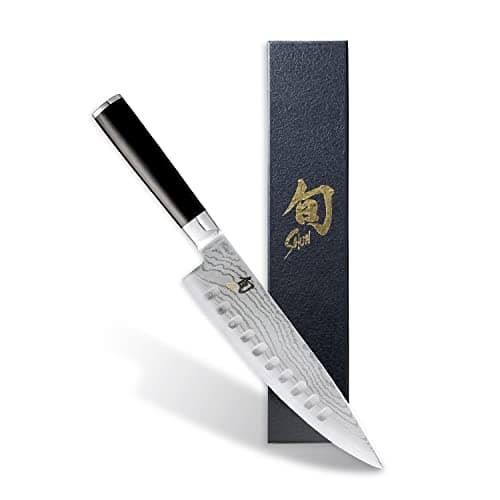
Shun Classic 8 in hollow ground chef, 16-degree
From Best Japanese knives for beginners: forgiving first picks