Explainer
What is a petty knife used for
Published
Short answer
A petty knife is a small Japanese utility knife, usually 120 to 150 mm long, used for jobs too fine for a chef knife and too large for a paring knife: trimming meat, slicing shallots and garlic, segmenting citrus, and small cutting board work. It pairs naturally with a gyuto or santoku as a two-knife kit.
Picks for this job
All 7 picks compared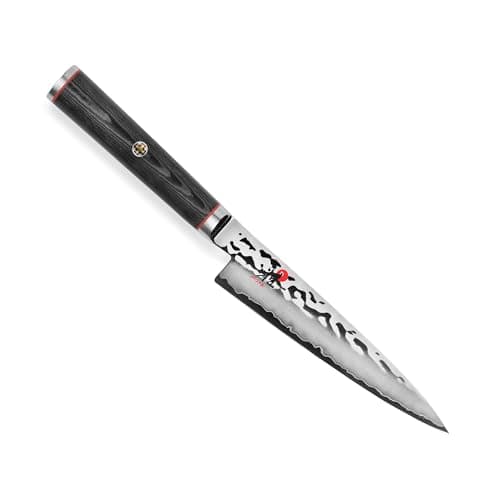
Miyabi Mizu SG2 5" utility at 63 HRC
See price on AmazonSee it on Amazon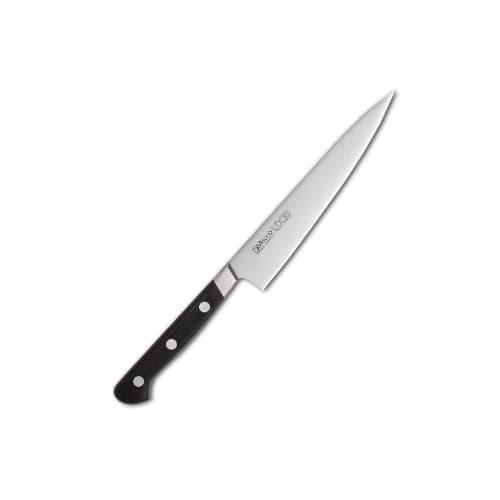
Misono UX10 15 cm petty, thin stainless blade
See price on AmazonSee it on Amazon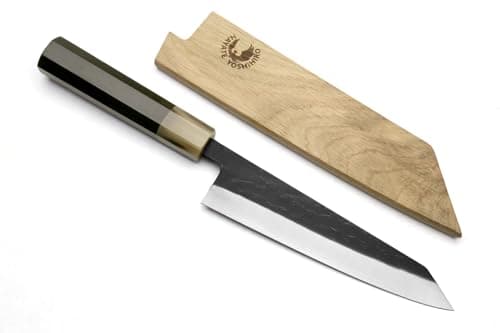
Yoshihiro SLD petty-kiritsuke 6" with saya
See price on AmazonSee it on Amazon
The petty is the knife many home cooks end up reaching for most after their chef knife. This page explains what a Japanese petty knife is, how it differs from a paring knife and a Western utility knife, what lengths make sense, which tasks it handles well, and how to pick one that matches your main knife. It is written for US home cooks putting together a small, practical set.
What a petty knife is
The name comes from the French word petit, meaning small. A petty is essentially a scaled-down gyuto: a narrow blade with a pointed tip and a gently curved edge. Most are double bevel and come in lengths from about 80 to 180 mm, with 120 to 150 mm being the most common.
Because the blade is narrow and short, a petty is easy to control for detail work both on the board and in the hand. It is lighter and thinner than most Western utility knives.
牛刀Gyuto
180 to 270 mm
三徳Santoku
165 to 180 mm
菜切Nakiri
160 to 180 mm
文化Bunka
165 to 180 mm
切付Kiritsuke
210 to 270 mm
筋引Sujihiki
240 to 300 mm
ペティPetty
120 to 150 mm
What a petty knife is used for
Think of the petty as the knife for small jobs that would feel clumsy with a 210 mm gyuto.
Many cooks find the petty is the knife they grab for quick weekday jobs, simply because it is less effort to pull out, use and wash than a full-size chef knife. That convenience is a big part of its value.
- Trimming silver skin and fat from meat
- Breaking down chicken thighs and removing small bones
- Mincing garlic, slicing shallots and small aromatics
- Segmenting citrus and cutting fruit
- Hulling strawberries and coring tomatoes
- Slicing a sandwich, a small cheese or a single steak at the table
- Quick prep when you do not want to pull out a large board
Petty vs paring knife vs chef knife
A paring knife is usually 75 to 100 mm and is best for in-hand work like peeling and turning vegetables. A petty is longer, so it can also do real board work. A chef knife or gyuto covers big tasks: chopping onions in quantity, splitting cabbage and slicing roasts.
Paring
- Typical length
- 75 to 100 mm
- Main use
- In-hand peeling, coring, fine detail
Petty
- Typical length
- 120 to 150 mm
- Main use
- Small board work, trimming, fruit, aromatics
Gyuto
- Typical length
- 210 to 240 mm
- Main use
- All-round prep and slicing
| Knife | Typical length | Main use |
|---|---|---|
| Paring | 75 to 100 mm | In-hand peeling, coring, fine detail |
| Petty | 120 to 150 mm | Small board work, trimming, fruit, aromatics |
| Gyuto | 210 to 240 mm | All-round prep and slicing |
Which petty length to choose
Length is the biggest choice. A 120 to 130 mm petty behaves close to a paring knife and is best if you want in-hand control and already have a chef knife for board work. A 135 to 150 mm petty is the most versatile size: long enough for board work and slicing small proteins, short enough for detail. A 165 to 180 mm petty overlaps with a small gyuto and suits cooks with tight counter space.
Blade height matters too. A slightly taller petty gives knuckle clearance on the board, while a very narrow one is better for in-hand work and trimming meat. Listings such as the Misono UX10 petty come in 120, 130 and 150 mm versions, which shows how much choice there is within one line.
Pairing a chef knife and petty knife
A gyuto plus a petty covers most home cooking. Several makers sell a chef knife and petty together as a two-piece set, which keeps the steel, handle and sharpening angle consistent. Matching steels means one sharpening routine: if your gyuto is a stainless VG-10 knife, a VG-10 petty sharpens the same way.
If you are building from scratch, see how many knives you need and the best Japanese knife sets. A two-knife pair often gives better value than a large block where several knives go unused.
Care and sharpening
Petty knives are thin and hard, so they follow the same rules as any Japanese blade. Hand wash and dry immediately. Do not cut through bones, frozen food or pits; the narrow tip is especially prone to snapping if you pry with it. If the tip does break, broken knife tip fix explains the repair.
Sharpen on whetstones at the maker's stated angle. The short blade is easy to sharpen, which makes a petty a good knife to practice on before you move to a gyuto. The sharpening angle finder gives typical angles by brand.
Note.Never use the tip of a petty as a pry bar for jar lids, packaging staples or frozen food. Thin hard tips break.
Frequently asked questions
Is a petty knife the same as a utility knife? They do the same job. Petty is the Japanese term, and Japanese petty knives are usually thinner and harder than Western utility knives.
What is the best petty knife size for a beginner? A 135 to 150 mm petty is the most flexible first choice because it can do both small board work and in-hand tasks.
Can a petty knife replace a paring knife? For most cooks, yes. A shorter petty around 120 mm handles nearly everything a paring knife does, though very fine peeling is easier with a shorter blade.
Can a petty knife be my only knife? A long petty can handle a small kitchen's needs, but large vegetables and roasts are much easier with a gyuto or santoku.
What you need for this
- See price on AmazonAmazon
Miyabi Mizu SG2 5" utility at 63 HRC
 See price on AmazonAmazon
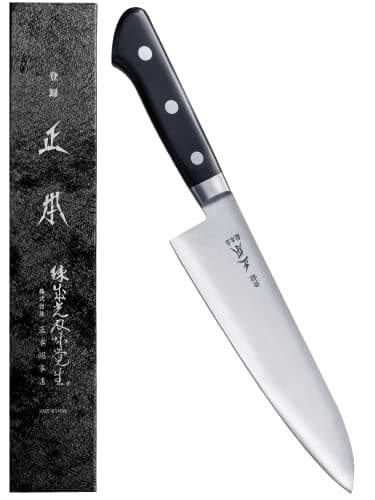
Masamoto VG 240 mm gyuto, HRC 58-59, POM handle
From Best gyuto knives: Japanese chef knives in 210 and 240 mm
 See price on AmazonAmazon
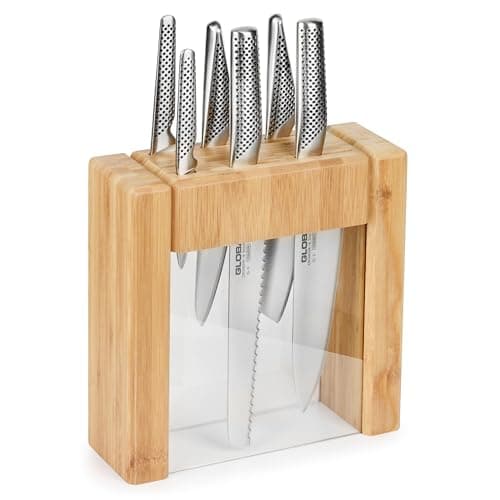
Global Ikasu 7-piece set, Cromova 18 at 58 HRC
From Best Japanese knife sets built around a gyuto or santoku