Explainer
Types of Japanese knives and what each one does
Published
Short answer
The main types of Japanese kitchen knives are the gyuto (chef knife), santoku (all-purpose), nakiri (vegetables), bunka (all-purpose with an angled tip), sujihiki (slicer), petty (utility), deba (fish butchery) and yanagiba (raw fish slicing). Most home cooks only need a gyuto or santoku plus a petty.
Picks for this job
All 8 picks compared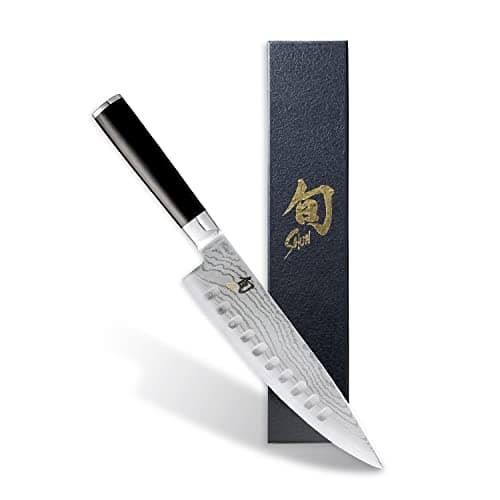
Shun Classic 8" chef's knife, VG-MAX with 16-degree edge
See price on AmazonSee it on Amazon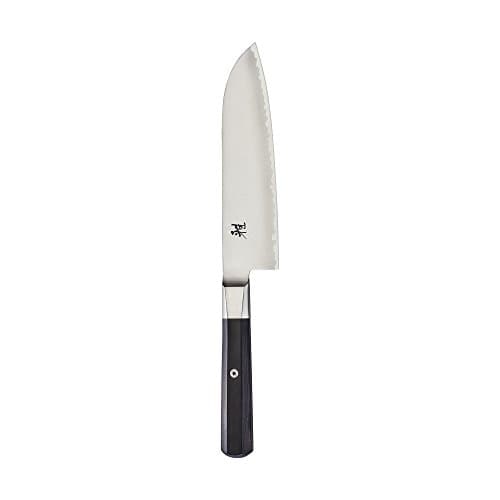
Miyabi Koh 7" santoku, FC61 steel at 61 HRC
See price on AmazonSee it on Amazon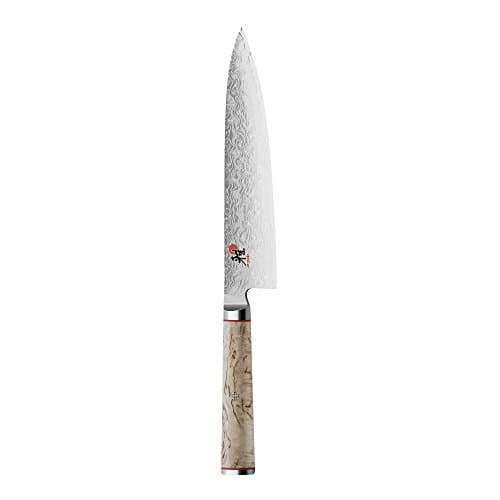
Miyabi Birchwood SG2 8" chef's knife, 9.5-12 degree edge
See price on AmazonSee it on Amazon
Japanese knife names can feel like a vocabulary test. This page is for US home cooks who want to know what a gyuto, santoku, nakiri, bunka, sujihiki, petty, deba or yanagiba actually does before spending money on one. For each type you get the shape, typical blade length, the jobs it handles well, the jobs it does poorly, and whether a home kitchen really needs it. A quick comparison table and a short buying order at the end help you build a small kit that covers almost everything.
How Japanese knife types are grouped
Japanese kitchen knives fall into two broad families. Western-influenced double-bevel knives such as the gyuto, santoku, nakiri, bunka, sujihiki and petty are sharpened on both sides, so they work for right- and left-handed cooks and feel familiar if you have used a German chef knife. Traditional single-bevel knives such as the deba, yanagiba and usuba are sharpened mostly on one side with a hollow back called the ura. They are specialist tools built for professional fish and vegetable work.
For a home kitchen, the double-bevel family does nearly everything. Single-bevel knives are rewarding to learn but need more sharpening skill and are usually made for one hand. See left-handed Japanese knives if that matters to you.
牛刀Gyuto
180 to 270 mm
三徳Santoku
165 to 180 mm
菜切Nakiri
160 to 180 mm
文化Bunka
165 to 180 mm
切付Kiritsuke
210 to 270 mm
筋引Sujihiki
240 to 300 mm
ペティPetty
120 to 150 mm
Quick comparison table
Lengths below are the common ranges you will see in listings. Many makers offer each shape in more than one size.
Gyuto
- Typical length
- 210 to 240 mm
- Bevel
- Double
- Best for
- All-round chef knife: slicing, chopping, rock cutting
Santoku
- Typical length
- 165 to 180 mm
- Bevel
- Double
- Best for
- All-purpose, shorter and flatter than a gyuto
Bunka
- Typical length
- 165 to 180 mm
- Bevel
- Double
- Best for
- All-purpose with an angled, pointed tip
Nakiri
- Typical length
- 165 to 180 mm
- Bevel
- Double
- Best for
- Vegetables, push cutting on a flat edge
Kiritsuke (double bevel)
- Typical length
- 210 to 240 mm
- Bevel
- Double
- Best for
- Gyuto alternative with a flat, angled tip
Sujihiki
- Typical length
- 240 to 300 mm
- Bevel
- Double
- Best for
- Long slices of roasts, brisket and fish
Petty
- Typical length
- 120 to 150 mm
- Bevel
- Double
- Best for
- Small tasks, trimming, fruit, shallots
Deba
- Typical length
- 150 to 210 mm
- Bevel
- Single
- Best for
- Breaking down whole fish, small bones
Yanagiba
- Typical length
- 240 to 300 mm
- Bevel
- Single
- Best for
- Slicing raw fish for sashimi
| Type | Typical length | Bevel | Best for |
|---|---|---|---|
| Gyuto | 210 to 240 mm | Double | All-round chef knife: slicing, chopping, rock cutting |
| Santoku | 165 to 180 mm | Double | All-purpose, shorter and flatter than a gyuto |
| Bunka | 165 to 180 mm | Double | All-purpose with an angled, pointed tip |
| Nakiri | 165 to 180 mm | Double | Vegetables, push cutting on a flat edge |
| Kiritsuke (double bevel) | 210 to 240 mm | Double | Gyuto alternative with a flat, angled tip |
| Sujihiki | 240 to 300 mm | Double | Long slices of roasts, brisket and fish |
| Petty | 120 to 150 mm | Double | Small tasks, trimming, fruit, shallots |
| Deba | 150 to 210 mm | Single | Breaking down whole fish, small bones |
| Yanagiba | 240 to 300 mm | Single | Slicing raw fish for sashimi |
Gyuto, santoku and bunka: the all-purpose knives
The gyuto is the Japanese chef knife. It has a pointed tip, a gentle curve toward the front and a long enough flat section for push cuts. A 210 mm gyuto is the most common starting size; 240 mm suits cooks with larger boards who prep a lot. Read what a gyuto is used for for more detail.
The santoku is shorter with a flatter edge and a rounded, dropped tip often called a sheep's foot. It favors chopping and push cutting over rocking. Many cooks with smaller kitchens prefer it, and the gyuto vs santoku comparison covers the trade-off.
The bunka is close to a santoku in length but has a sharp, angled reverse tanto tip that is handy for fine work like scoring and mincing garlic. The double-bevel kiritsuke sold to home cooks is essentially a gyuto with a flatter profile and an angled tip.
Nakiri, petty and sujihiki: the task knives
The nakiri is a rectangular vegetable knife with a flat edge and a square tip. It excels at clean push cuts through onions, cabbage and herbs. It is not designed for bones or for rocking. Learn more in what a nakiri is used for.
The petty is a small utility knife, usually 120 to 150 mm, for jobs that are too small for a chef knife and too big for a paring knife: trimming chicken, peeling and segmenting citrus, slicing shallots. See what a petty knife is.
The sujihiki is a long, narrow slicer. Its length lets you draw through a roast, ham or side of salmon in one stroke so the slices stay smooth instead of torn.
Deba and yanagiba: traditional single-bevel knives
The deba is a thick, heavy single-bevel knife used to break down whole fish. The weight lets it cut through small fish bones and heads, but it is not a cleaver and should not be used on large poultry or beef bones.
The yanagiba is a long, thin single-bevel slicer used for sashimi. The single bevel and length let a sushi cook slice raw fish in one long pull, leaving a glossy cut surface. Both knives need a dedicated sharpening routine that keeps the flat back (ura) intact, which the Japanese knife terms glossary explains.
50/50 double bevel
Same bevel on both sides. Most Western and many Japanese knives.
70/30 asymmetric
Wider bevel on one side, usually the right. Common on Japanese gyuto.
Single bevel with ura
One bevel and a slightly hollow back. Yanagiba, deba and usuba.
Note.Single-bevel knives are made for one hand. A right-handed yanagiba will steer badly in a left hand, so buy the matching version.
Which types a home cook actually needs
Most home cooks are well served by two or three knives. Start with one all-purpose blade, then fill gaps only when a real task keeps coming up. Our guide to how many knives you need goes further, and the best Japanese knives for beginners list focuses on forgiving first choices.
- 1
Start with one all-purpose knife: a 210 mm gyuto, or a santoku or bunka if you prefer a shorter blade.
- 2
Add a petty knife for small and in-hand work.
- 3
Add a nakiri only if you cut a lot of vegetables and like push cutting.
- 4
Add a sujihiki if you regularly carve roasts or slice fish.
- 5
Consider single-bevel knives only after you are comfortable sharpening on stones.
Steel and handle choices apply to every type
Each knife type is sold in many steels. Stainless steels such as VG-10 and SG2 resist rust and suit most home cooks. Carbon steels such as Aogami and Shirogami take a very keen edge but must be wiped dry and will develop a patina. The steel chart tool compares typical hardness and care for common steels.
Handles come in two styles: the Japanese wa handle (octagonal, oval or D-shaped, light and set into the blade with a tang) and the Western yo handle (riveted, heavier, balanced closer to the bolster). Neither is better; it is a matter of feel. See wa vs Western handles.
Octagonal wa
Light, eight flat faces, works in either hand.
D-shaped wa
Light, with a ridge for the fingers. Made for one hand.
Western yo
Full tang between two scales and three rivets. Heavier at the back.
Frequently asked questions
What is the most versatile Japanese knife? The gyuto. It handles slicing, chopping, rock cutting and tip work, which is why it is the default chef knife in Japanese kitchens. A santoku or bunka is the closest alternative if you want a shorter blade.
What is the difference between a santoku and a bunka? Both are short all-purpose knives with fairly flat edges. The santoku has a rounded, dropped tip, while the bunka has an angled, pointed tip that is better for fine tip work.
Do I need a single-bevel knife at home? Usually not. Deba and yanagiba knives are specialist tools for fish. They are worth it if you break down whole fish often, but a gyuto and sujihiki cover most home fish work.
What are Japanese knife names in English? Gyuto means beef sword and is the chef knife. Santoku is often translated as three virtues. Nakiri means leaf cutter. Sujihiki means muscle slicer. Petty comes from the French petit, meaning small.
What you need for this
- See price on AmazonAmazon
Shun Classic 8 in hollow ground chef, 16-degree
From Best Japanese kitchen knives for home cooks: one pick per job
 See price on AmazonAmazon
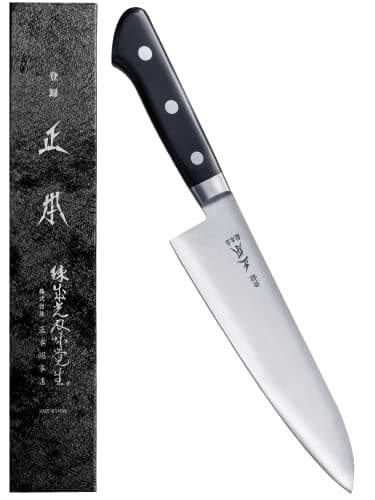
Masamoto VG 240 mm gyuto, HRC 58-59, POM handle
From Best gyuto knives: Japanese chef knives in 210 and 240 mm
 See price on AmazonAmazon
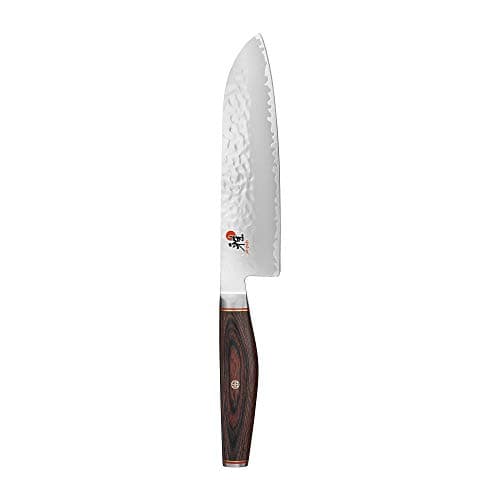
Miyabi Artisan 7" santoku in SG2 at 63 HRC