Explainer
Japanese knife terms: a glossary from aogami to yanagiba
Published
Short answer
Knife in Japanese is hocho (包丁), and kitchen knife names usually end in -bocho or describe the job, such as gyuto (cow sword) for a chef knife. This glossary explains the shape names, steel names, grind terms and blade parts you see in Japanese knife listings, each with a short plain meaning.
Picks for this job
All 8 picks compared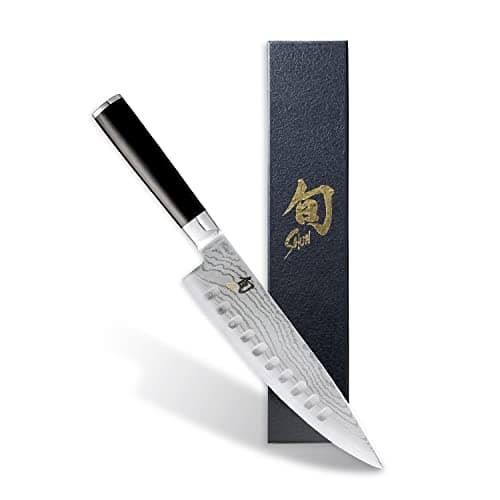
Shun Classic 8" chef's knife, VG-MAX with 16-degree edge
See price on AmazonSee it on Amazon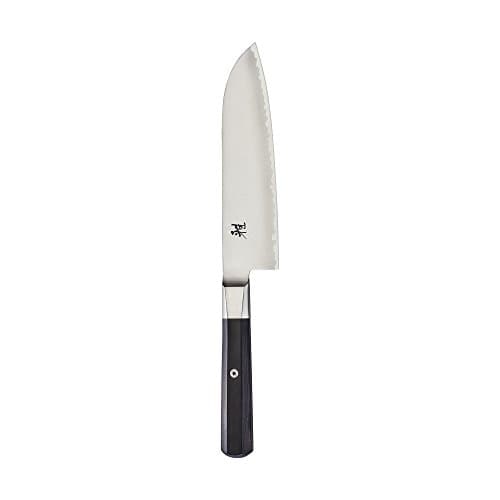
Miyabi Koh 7" santoku, FC61 steel at 61 HRC
See price on AmazonSee it on Amazon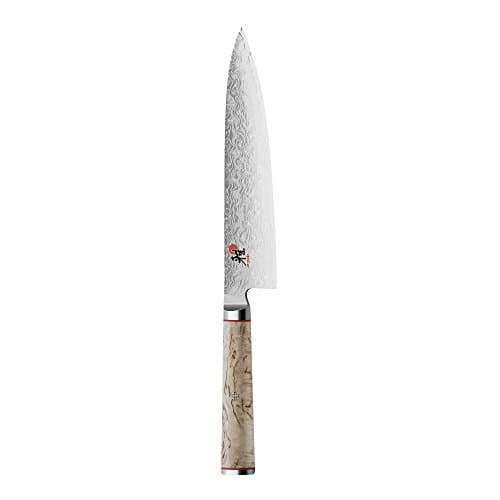
Miyabi Birchwood SG2 8" chef's knife, 9.5-12 degree edge
See price on AmazonSee it on Amazon
Japanese knife listings mix Japanese and English freely: a "210 mm gyuto, VG-10 core, 33-layer Damascus, wa handle, 50/50 grind." If those words are new to you, this glossary translates them. It is grouped into shapes, steels, construction and finishes, grind and edge terms, and parts of the knife. Each entry gives the Japanese term, kanji where it is common, and what it means when you shop or sharpen. Links point to our deeper explainers where they exist.
General words
To say "knife" in Japanese, use hocho for a kitchen knife. Naifu (ナイフ) is also used, usually for Western-style or pocket knives.
- Hocho (包丁): kitchen knife. Becomes -bocho in compounds, as in deba-bocho.
- Wa (和): Japanese style, as in wa handle or wa-gyuto.
- Yo (洋): Western style, as in yo handle or yo-deba.
- Honyaki (本焼): a knife forged from one piece of high-carbon steel and differentially hardened. Expensive and demanding to make.
- Kasumi (霞): "mist". A knife of hard steel laminated to soft iron, or the misty finish on that soft cladding.
- Saya (鞘): a wooden sheath that protects the blade.
- Kataba (片刃): single-bevel edge. Ryoba (両刃): double-bevel edge.
Knife shapes
These are the shape names you will see most often. Our types of Japanese knives page compares them side by side.
牛刀Gyuto
180 to 270 mm
三徳Santoku
165 to 180 mm
菜切Nakiri
160 to 180 mm
文化Bunka
165 to 180 mm
切付Kiritsuke
210 to 270 mm
筋引Sujihiki
240 to 300 mm
ペティPetty
120 to 150 mm
- Gyuto (牛刀): "cow sword". The Japanese chef knife, usually 210-240 mm. See what is a gyuto.
- Santoku (三徳): "three virtues". A shorter all-purpose knife with a flat edge. See what is a santoku used for.
- Nakiri (菜切): "vegetable cutter". Rectangular, double-bevel vegetable knife.
- Usuba (薄刃): "thin blade". Single-bevel professional vegetable knife.
- Bunka (文化): "culture". All-purpose knife with an angled, reverse tanto tip.
- Kiritsuke (切付): long knife with a flat edge and angled tip. See what is a kiritsuke.
- Petty (ペティ): from the French petit. A small utility knife, 120-150 mm.
- Sujihiki (筋引): "muscle puller". A long double-bevel slicer for roasts and fish.
- Yanagiba (柳刃): "willow blade". A long single-bevel knife for slicing raw fish.
- Deba (出刃): a thick single-bevel knife for breaking down whole fish.
- Honesuki (骨スキ): a triangular boning knife for poultry.
- Gokujo, Takobiki, Pankiri: a boning knife, an octopus-style slicer and a bread knife.
Steels
Steel names show up in almost every listing. Typical hardness ranges are in our Japanese knife steel chart and the interactive steel chart tool.
- Hagane (鋼): the hard steel that forms the cutting edge.
- Jigane (地金): the soft iron or steel cladding around the core.
- Shirogami (白紙): "white paper" steel from Hitachi (now Proterial). Simple high-carbon steel that sharpens very easily. Rusts.
- Aogami (青紙): "blue paper" steel. White steel with added chromium and tungsten for better edge retention. Rusts. See aogami vs shirogami.
- Aogami Super: blue steel with more carbon plus molybdenum and vanadium. Very hard, still rusts.
- Ginsan (銀三): "silver three". A stainless steel that sharpens much like carbon steel.
- VG-10: a common stainless core steel from Takefu. See what is VG-10 steel.
- SG2 / R2: stainless powder metallurgy steels that reach high hardness. See VG-10 vs SG2.
- HRC: Rockwell C hardness. See what HRC means.
Construction and finishes
- San mai (三枚): "three layers". A hard core sandwiched between two softer outer layers.
- Warikomi (割込): a hard core inserted into a split softer jacket. Similar result to san mai.
- Damascus / suminagashi (墨流し): patterned cladding made from layers of different steels. Mostly looks. See is Damascus steel better.
- Kurouchi (黒打): "black forged". The dark scale from forging left on the blade.
- Nashiji (梨地): "pear skin". A textured, matte finish.
- Tsuchime (槌目): hammered dimple finish that can help food release.
- Migaki (磨き): polished finish.
- Kireaji (切れ味): sharpness, or how a knife feels as it cuts.
Grind and edge terms
For angles by brand, try our sharpening angle finder. For the full method, see how to sharpen a Japanese knife on a whetstone.
50/50 double bevel
Same bevel on both sides. Most Western and many Japanese knives.
70/30 asymmetric
Wider bevel on one side, usually the right. Common on Japanese gyuto.
Single bevel with ura
One bevel and a slightly hollow back. Yanagiba, deba and usuba.
- Ura (裏): the hollow back side of a single-bevel knife.
- Uraoshi (裏押し): the narrow flat rim polished on the ura during sharpening.
- Shinogi (鎬): the line where the bevel meets the flat of the blade.
- Kireha (切刃): the wide bevel on a single-bevel knife.
- Hamaguri-ba (蛤刃): "clam shell" edge. A convex edge.
- 50/50, 70/30: how the edge bevel is split between the two sides. 50/50 is symmetric.
- Kaeri (返り): the burr raised during sharpening.
- Toishi (砥石): whetstone. Arato (coarse), nakato (medium) and shiageto (finishing) stones.
Parts of the knife
Western terms often appear too: bolster (a thick collar of steel at the heel), choil (the unsharpened notch or edge just before the handle) and full tang (steel running the full length of the handle). Shopping for a first knife? Our best Japanese kitchen knives guide explains the terms that matter for each pick.
- Tip
- The point, for fine work
- Belly
- The curve of the edge, for rocking cuts
- Flat
- The straight part of the edge near the heel
- Heel
- The rear corner of the edge
- Choil
- Where the edge ends at the handle
- Spine
- The thick back of the blade
- Ferrule
- The collar of a wa handle; a Western knife has a bolster
- Tang
- The steel inside the handle
- HRC
- Hardness of the steel, here 60-61
- Kissaki (切先): tip.
- Hasaki (刃先): the cutting edge.
- Mune (棟): spine.
- Hira (平): the flat face of the blade.
- Ago (アゴ): heel, the rear corner of the edge.
- Machi (区): the step where the blade meets the tang near the handle.
- Nakago (中子): tang.
- Kakumaki / Tsuka: ferrule and handle on a wa handle. See wa vs Western handles.
Frequently asked questions
How do you say knife in Japanese? A kitchen knife is hocho (包丁). In compound names it becomes -bocho. Naifu is used for Western-style knives.
What does gyuto mean? Gyuto (牛刀) means "cow sword" or "beef knife". It is the Japanese version of the Western chef knife.
What does wa mean on a knife listing? Wa means Japanese style. A wa handle is a lightweight Japanese handle, usually octagonal or D-shaped.
What is the difference between kataba and ryoba? Kataba is single-bevel, sharpened on one side. Ryoba is double-bevel, sharpened on both sides.
What you need for this
- See price on AmazonAmazon
Shun Classic 8 in hollow ground chef, 16-degree
From Best Japanese kitchen knives for home cooks: one pick per job
 See price on AmazonAmazon
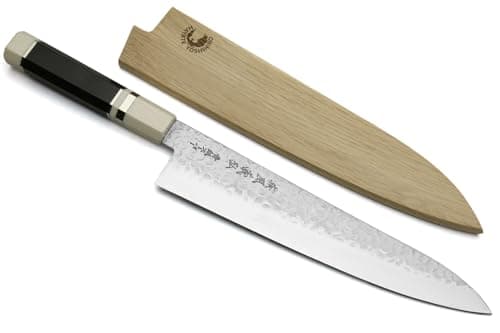
Yoshihiro Super Blue 210 mm gyuto, 63-64 HRC
 See price on AmazonAmazon
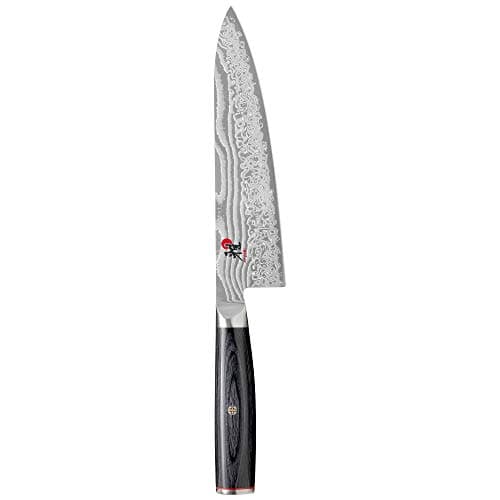
Miyabi Kaizen II 8" chef's knife, FC61 at 61 HRC
From Best Damascus Japanese knives, judged by the core steel