Explainer
Are Miyabi knives good, and where are they made
Published
Short answer
Yes, Miyabi knives are good, high-quality Japanese knives. They are made in Seki, Japan, in a factory owned by the German company Zwilling J.A. Henckels, and use hard Japanese steels such as FC61, SG2 and MC66 with thin, acute edges that Miyabi lists at 9.5 to 12 degrees per side. The main drawbacks are high prices, edges that can chip if misused, and some handle shapes that do not suit every hand.
Picks for this job
All 7 picks compared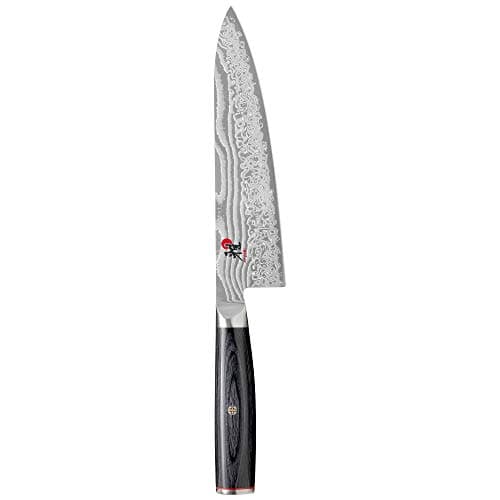
Miyabi Kaizen II 8" chef's knife, FC61 at 61 HRC
See price on AmazonSee it on Amazon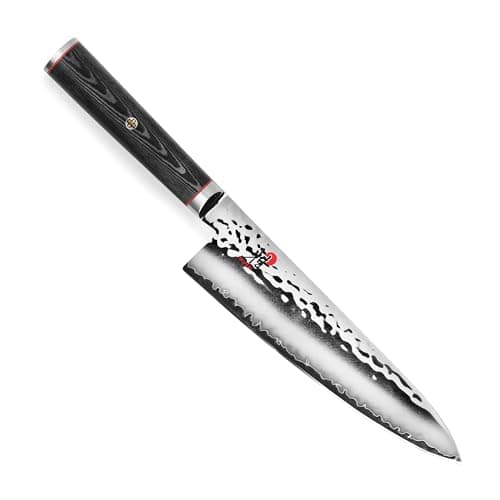
Miyabi Mizu SG2 8" chef's knife, 63 HRC, 12 degrees
See price on AmazonSee it on Amazon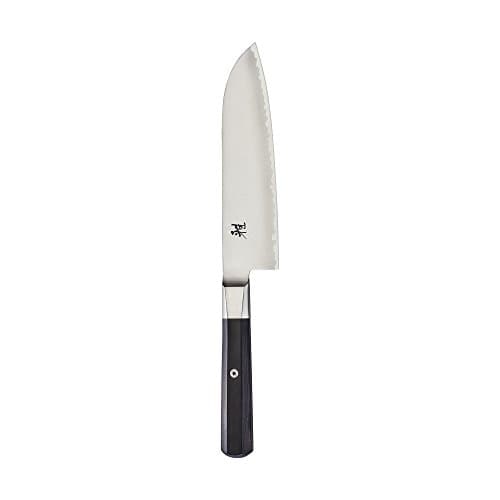
Miyabi Koh 7" santoku, FC61 with octagon pakkawood
See price on AmazonSee it on Amazon
This page is for shoppers comparing Miyabi with Shun, Global and German brands who want a straight answer on quality before paying premium prices. It covers who makes Miyabi and where, the steel and hardness in the main series, how the edges are finished, what Miyabi does well, the honest weak points, and how to pick a series. It does not rank individual knives; the Miyabi buying guide does that.
Who makes Miyabi and where
Miyabi is a brand of Zwilling J.A. Henckels, the German cutlery company founded in Solingen. Zwilling set up its knife production in Seki, Gifu Prefecture, which is one of Japan's best known blade-making cities and also home to Kai, the maker of Shun. Miyabi knives are produced in that Seki factory, and the blades are marked as made in Japan.
The German ownership sometimes leads people to ask whether Miyabi is "really" Japanese. The knives are designed as Japanese knives, made in Japan, and use Japanese steels and thin Japanese edge geometry. What Zwilling brings is large-scale manufacturing, quality control and wide US distribution, which is why Miyabi is easy to find at major retailers.
Steel and hardness by series
Miyabi uses several core steels, and the steel is the biggest difference between series. The figures below are as Miyabi and its retailers list them; check the current listing because lineups change. Use the steel chart to compare these steels with Shun, Global and German options.
- Edge retention
- rises with hardness
- Chip risk
- rises with hardness
- Ease of sharpening
- falls with hardness
Steels on the chart: X50CrMoV15 HRC 56 to 58; Cromova 18 HRC 56 to 58; AUS-10 HRC 59 to 60; VG-10 HRC 60 to 61; VG-MAX HRC 60 to 61; FC61 HRC 61 to 61; Ginsan (Silver 3) HRC 60 to 61; SG2 / R2 HRC 62 to 64; ZDP-189 HRC 64 to 66; Shirogami 1 and 2 HRC 61 to 64; Aogami 1 and 2 HRC 61 to 64; Aogami Super HRC 63 to 65.
Kaizen II
- Core steel
- FC61 fine carbide stainless
- Listed hardness
- About HRC 61
- Notes
- Damascus cladding, Western-style handle
Evolution
- Core steel
- FC61
- Listed hardness
- About HRC 61
- Notes
- Plain finish, Western-style handle
Birchwood
- Core steel
- SG2 powder steel
- Listed hardness
- About HRC 63
- Notes
- Damascus pattern, birch handle
Artisan
- Core steel
- SG2 powder steel
- Listed hardness
- About HRC 63
- Notes
- Hammered finish, cocobolo handle
Black
- Core steel
- MC66 powder steel
- Listed hardness
- About HRC 66
- Notes
- Very hard, very thin edge
| Series | Core steel | Listed hardness | Notes |
|---|---|---|---|
| Kaizen II | FC61 fine carbide stainless | About HRC 61 | Damascus cladding, Western-style handle |
| Evolution | FC61 | About HRC 61 | Plain finish, Western-style handle |
| Birchwood | SG2 powder steel | About HRC 63 | Damascus pattern, birch handle |
| Artisan | SG2 powder steel | About HRC 63 | Hammered finish, cocobolo handle |
| Black | MC66 powder steel | About HRC 66 | Very hard, very thin edge |
What Miyabi does well
Out of the box, Miyabi edges are very sharp. The company describes a hand-finished Honbazuke edge and lists factory angles of 9.5 to 12 degrees per side, which is more acute than most German knives at 14 to 15 degrees. Combined with hard steel, that gives a keen edge that stays sharp for a long time in home use.
Fit and finish are consistent, which matters at this price. Spines and choils are usually eased, Damascus patterns are clean, and the handles are well fitted. Miyabi also covers its knives with a limited lifetime warranty against manufacturing defects, and the knives are sold by many authorized US dealers, so warranty service is straightforward if you buy from one. See where to buy Japanese knives.
- Very sharp, thin factory edges.
- Hard steels with long edge retention, especially SG2 and MC66.
- Consistent fit and finish across large production runs.
- Wide availability from authorized US retailers.
Honest weak points
The same hardness and thinness that make Miyabi edges excellent also make them less forgiving. Twisting the blade in squash, cutting on glass or stone, or hitting bone can chip the edge, especially on SG2 and MC66 series. A honing steel used hard can also damage the edge; see honing rods for Japanese knives.
Prices are high, particularly for Birchwood, Artisan and Black. Part of what you pay for is the decorative finish and handle, not only cutting performance. Some Miyabi handles have a pronounced shape that suits some hands better than others, so if you can, hold one before buying. Finally, the thin geometry means they are not ideal for heavy, rough prep; a cheap cleaver or German knife is better for that.
- Edges can chip if twisted, dropped or used on hard surfaces.
- Premium pricing, especially for powder steel series.
- Some handle shapes feel bulky or narrow depending on hand size.
- Not dishwasher safe; the steels are stainless but still need hand washing and drying.
Miyabi vs Shun and German knives
Shun, made by Kai in the same city, is Miyabi's closest rival. Shun lists a 16 degree edge per side and uses VG-MAX in its core lines, while Miyabi lists 9.5 to 12 degrees and uses FC61, SG2 or MC66. In practice both are excellent; the choice often comes down to handle shape, blade profile and price. Our Shun vs Miyabi comparison and Kaizen II vs Birchwood page go deeper.
Compared with Wusthof or Zwilling's German lines, a Miyabi is lighter, harder, thinner and sharper, but less tolerant of rough handling. See Japanese vs German knives for the general trade-offs.
How to choose a Miyabi series
For a first Miyabi, an FC61 series such as Kaizen II or Evolution is the practical pick: still hard and sharp, with a little more toughness and easier sharpening than powder steels. Choose Birchwood or Artisan if you want SG2's edge retention and a more decorative knife, and are comfortable sharpening on whetstones. The Black series is for cooks who want maximum hardness and accept the extra care.
Whichever you choose, a 200 to 240 mm gyuto (Miyabi often lists 8 and 9.5 inch chef knives) is the best first piece, and a petty or paring knife is a sensible second. The Miyabi guide compares the current lineup, and how to sharpen Miyabi knives covers upkeep.
Frequently asked questions
Are Miyabi knives made in Japan? Yes. Miyabi knives are made in Seki, Japan, in a factory owned by Zwilling J.A. Henckels.
Are Miyabi knives real Damascus? Series such as Kaizen II and Birchwood have pattern-welded, layered cladding around a hard core steel, which is how modern "Damascus" kitchen knives are made. The pattern is cosmetic; the core steel does the cutting. See is Damascus steel better.
Is Miyabi better than Shun? Neither is clearly better. Miyabi edges are listed at a more acute angle and some series use harder steels; Shun offers a free sharpening service and a different handle style. Choose by fit and budget.
What angle should I sharpen a Miyabi at? Miyabi lists 9.5 to 12 degrees per side. Use the sharpening angle finder to set the spine height.
What you need for this
- See price on AmazonAmazon
Miyabi Kaizen II 8" chef's knife, FC61 at 61 HRC
From Best Miyabi knives: Kaizen II, Mizu, Koh, Koya, Artisan, Birchwood and Black
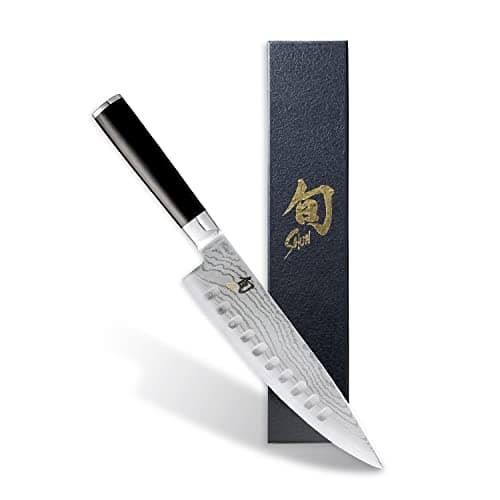 See price on AmazonAmazon
Shun Classic 8 in hollow ground chef, 16-degree
From Best Shun knives: Classic, Premier, Dual Core, Sora and Kanso
 See price on AmazonAmazon
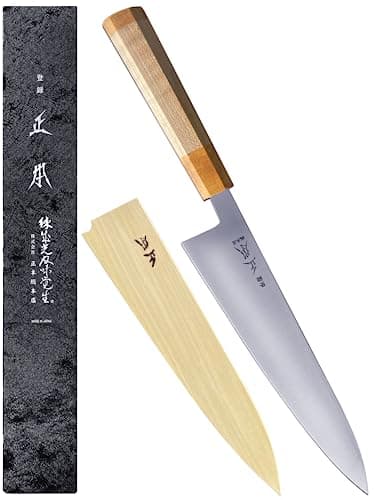
Masamoto KS 240 mm gyuto, Shirogami #2 at HRC 62-63