Comparison
Miyabi Kaizen II vs Miyabi Birchwood
Published
Short answer
The Miyabi Kaizen II uses FC61 stainless at 61 Rockwell under 48 layers of Damascus with a black Pakkawood handle, and costs a good deal less. The Miyabi Birchwood uses harder SG2 powder steel under a 100-layer flower Damascus pattern with a Karelian birch handle. Both are hand-honed to 9.5 to 12 degrees. Buy the Kaizen II for value and toughness; buy the Birchwood for longer edge retention and the premium look.
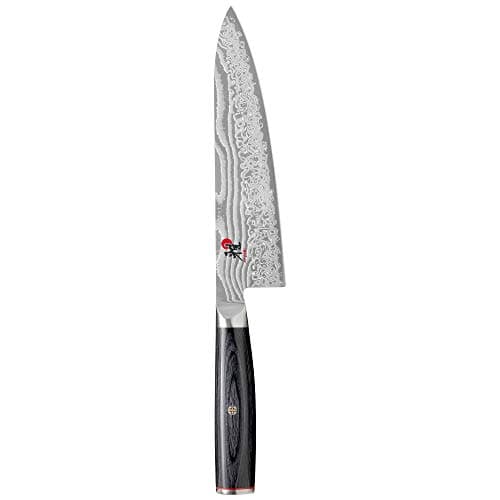
MIYABI
Miyabi Kaizen II 8" chef's knife, FC61 at 61 HRC
See price on Amazon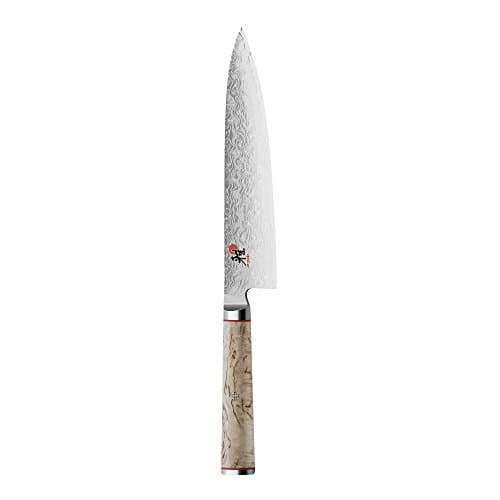
MIYABI
Miyabi Birchwood SG2 8" chef's knife, Karelian birch
See price on Amazon
- Miyabi Kaizen II 8" chef's knife, FC61 at 61 HRC
- Series
- Kaizen II
- Steel
- FC61 core, 48-layer damast cladding
- Hardness (HRC)
- 61
- Blade length
- 8 in
- Miyabi Birchwood SG2 8" chef's knife, Karelian birch
- Series
- Birchwood
- Steel
- SG2 micro carbide powder steel
- Hardness (HRC)
- Not stated
- Blade length
- 8 in
| Pick | Series | Steel | Hardness (HRC) | Blade length | Price | Link |
|---|---|---|---|---|---|---|
| Miyabi Kaizen II 8" chef's knife, FC61 at 61 HRC | Kaizen II | FC61 core, 48-layer damast cladding | 61 | 8 in | - | Amazon |
| Miyabi Birchwood SG2 8" chef's knife, Karelian birch | Birchwood | SG2 micro carbide powder steel | Not stated | 8 in | - | Amazon |
Facts are taken from each Amazon listing. Prices are checked daily and shown with their date.
Verdict
Buy the Miyabi Kaizen II 8-inch if you want a sharp, durable Damascus chef knife at a lower price and a low-maintenance Pakkawood handle. Buy the Miyabi Birchwood SG2 8-inch if you sharpen on stones, want the longest edge life and like the birch handle and 100-layer pattern enough to pay more.
This page is for buyers who have settled on Miyabi and are choosing between two of its most popular lines: the Kaizen II and the Birchwood SG2. Both are made in Seki, Japan, with thin Japanese blade profiles and acute hand-honed edges, but they differ in core steel, hardness, cladding, handle material and price. This comparison uses the 8-inch chef knife from each line and covers what those differences mean when you cook and when you sharpen.
Kaizen II vs Birchwood at a glance
Think of the Kaizen II as Miyabi's practical Damascus line and the Birchwood as its showpiece. The Kaizen II pairs FC61, a fine-carbide stainless steel, with 48 layers of damast cladding and a black Pakkawood handle. The Birchwood pairs SG2 micro carbide powder steel with a 100-layer flower Damascus pattern and a Karelian birch handle.
In daily use both feel thin, light and very sharp compared with German knives, and both share Miyabi's 9.5 to 12 degree edge. The Birchwood's harder steel holds that edge longer; the Kaizen II's steel is a little more forgiving and costs less. For the brand as a whole, see are Miyabi knives good.
Spec table: 8-inch chef knives
Specs below come only from the two listings. Where the listing does not state something, the table says so. Prices are as listed at the time of writing and change often.
Core steel
- Miyabi Kaizen II 8" Chef
- FC61, fine carbide distribution
- Miyabi Birchwood SG2 8" Chef
- SG2 micro carbide powder steel
Hardness
- Miyabi Kaizen II 8" Chef
- 61 Rockwell
- Miyabi Birchwood SG2 8" Chef
- Not stated in listing
Cladding
- Miyabi Kaizen II 8" Chef
- 48 layers of damast steel
- Miyabi Birchwood SG2 8" Chef
- 100-layer flower Damascus pattern
Edge
- Miyabi Kaizen II 8" Chef
- Honbazuke hand-honed, 9.5 to 12 degrees
- Miyabi Birchwood SG2 8" Chef
- Three-step Honbazuke, 9.5 to 12 degrees
Heat treatment
- Miyabi Kaizen II 8" Chef
- Double ice-hardened FRIODUR
- Miyabi Birchwood SG2 8" Chef
- Not stated in listing
Handle
- Miyabi Kaizen II 8" Chef
- Black Pakkawood, mosaic pin, logo end cap
- Miyabi Birchwood SG2 8" Chef
- Karelian birch, 5.39 inch long
Made in
- Miyabi Kaizen II 8" Chef
- Not stated in listing
- Miyabi Birchwood SG2 8" Chef
- Seki, Japan, handcrafted
Listed price
- Miyabi Kaizen II 8" Chef
- $169.90
- Miyabi Birchwood SG2 8" Chef
- $299.95
| Spec | Miyabi Kaizen II 8" Chef | Miyabi Birchwood SG2 8" Chef |
|---|---|---|
| Core steel | FC61, fine carbide distribution | SG2 micro carbide powder steel |
| Hardness | 61 Rockwell | Not stated in listing |
| Cladding | 48 layers of damast steel | 100-layer flower Damascus pattern |
| Edge | Honbazuke hand-honed, 9.5 to 12 degrees | Three-step Honbazuke, 9.5 to 12 degrees |
| Heat treatment | Double ice-hardened FRIODUR | Not stated in listing |
| Handle | Black Pakkawood, mosaic pin, logo end cap | Karelian birch, 5.39 inch long |
| Made in | Not stated in listing | Seki, Japan, handcrafted |
| Listed price | $169.90 | $299.95 |
FC61 vs SG2 steel
FC61 is a stainless steel that Miyabi runs at about 61 HRC, as the Kaizen II listing states. Its fine carbide structure gives a good balance of sharpness, edge holding and toughness, and it sharpens without much fuss on standard whetstones. It is a sensible steel for a knife that will see daily use by more than one person.
SG2, also sold as R2, is a powder metallurgy stainless steel that is typically hardened to around 62 to 64 HRC, which you can compare in our steel chart tool. The harder steel holds a fine edge noticeably longer between sharpenings. The trade-offs are a higher chip risk if you twist the blade or hit something hard, and slower sharpening. Our VG-10 vs SG2 page explains powder steels in more depth.
- Edge retention
- rises with hardness
- Chip risk
- rises with hardness
- Ease of sharpening
- falls with hardness
Steels on the chart: X50CrMoV15 HRC 56 to 58; Cromova 18 HRC 56 to 58; AUS-10 HRC 59 to 60; VG-10 HRC 60 to 61; VG-MAX HRC 60 to 61; FC61 HRC 61 to 61; Ginsan (Silver 3) HRC 60 to 61; SG2 / R2 HRC 62 to 64; ZDP-189 HRC 64 to 66; Shirogami 1 and 2 HRC 61 to 64; Aogami 1 and 2 HRC 61 to 64; Aogami Super HRC 63 to 65.
Handles, balance and feel
The Kaizen II has a black Pakkawood handle with a mosaic pin and a Miyabi end cap. Pakkawood is a resin-stabilized wood composite that resists moisture well and needs little care. It is a durable, low-key choice that suits busy kitchens.
The Birchwood's handle is Karelian birch, a figured wood with a distinctive swirling grain, and the listing gives a handle length of 5.39 inches. Miyabi shapes it as a D-shaped Japanese-style handle, which suits a pinch grip and indexes well in a right hand. Natural wood looks striking but benefits from keeping dry and an occasional wipe with food-safe oil. If handle style is a big factor for you, read wa vs Western handles and check product photos closely before you buy.
Octagonal wa
Light, eight flat faces, works in either hand.
D-shaped wa
Light, with a ridge for the fingers. Made for one hand.
Western yo
Full tang between two scales and three rivets. Heavier at the back.
Sharpening and care for both lines
Both knives come with an acute 9.5 to 12 degree edge per side, much sharper than the roughly 14 to 15 degrees used on German knives. Keep that angle when you sharpen, ideally on whetstones. The sharpening angle finder shows how high to lift the spine for these angles, and our Miyabi sharpening guide walks through the steps.
Pull-through and many electric sharpeners default to wider angles and can thicken the edge, so check settings first; see electric sharpeners on Japanese knives. Both steels are stainless, but hand wash and dry both knives, use a wood or rubber board, and avoid bones and frozen food, especially with the harder SG2 Birchwood.
- 1
Hand wash with mild soap and a soft sponge right after use.
- 2
Dry the blade and handle fully with a towel.
- 3
Store in a block, on a magnetic strip or in an edge guard.
- 4
Hone gently with a ceramic rod, not a coarse steel.
- 5
Sharpen on whetstones at 9.5 to 12 degrees when honing no longer restores the edge.
Is the Birchwood worth the price gap?
At listed prices the Birchwood costs well over the Kaizen II. What you get for that is harder powder steel that stays sharp longer, more Damascus layers and a natural birch handle. If you sharpen on stones and like to keep a knife at peak sharpness, or if looks matter to you, the upgrade is easy to justify.
If you want a sharp, attractive Japanese knife that tolerates a bit more casual use and costs less, the Kaizen II is the better value. It is also a reasonable first Japanese knife, while the Birchwood rewards cooks who already have good habits. Both appear in our Miyabi knife guide, and the Birchwood also features in our Damascus knife guide.
Frequently asked questions
Is SG2 better than FC61? SG2 holds an edge longer because it is harder. FC61 is a little tougher and easier to sharpen. Better depends on whether you value edge retention or a more forgiving edge.
Do Kaizen II and Birchwood knives rust? Both use stainless core steels, so rust risk is low with normal care. Leaving them wet or in a dishwasher can still cause spots; see Japanese knife rust.
How do these compare with Shun? Miyabi's 9.5 to 12 degree edge is more acute than Shun's 16 degrees. For a full brand comparison, see Shun vs Miyabi.
Is there a smaller Kaizen II chef knife? Yes. Miyabi also lists a 6-inch Kaizen II chef's knife aimed at smaller hands, which appears in our beginner guide.
What you need for this
- See price on AmazonAmazon
Miyabi Kaizen II 8" chef's knife, FC61 at 61 HRC
From Best Miyabi knives: Kaizen II, Mizu, Koh, Koya, Artisan, Birchwood and Black
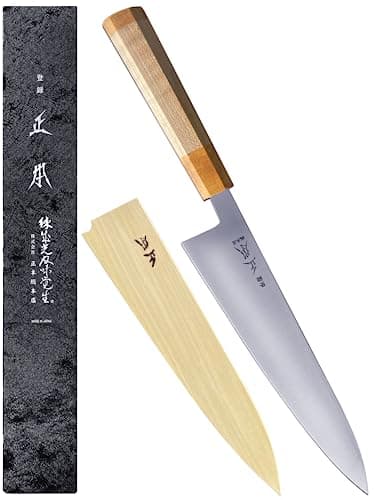 See price on AmazonAmazon
Masamoto KS 240 mm gyuto, Shirogami #2 at HRC 62-63