Comparison
Shun Classic vs Shun Premier
Published
Short answer
Shun Classic and Shun Premier use the same VG-MAX core, 68 layers of Damascus cladding and a 16 degree edge, and both get Shun's free sharpening. The Classic has a flat Damascus finish and a D-shaped Pakkawood handle. The Premier adds a hammered tsuchime finish that reduces sticking and a rounder, contoured Pakkawood handle. Cutting performance is very close; choose by handle feel and looks.
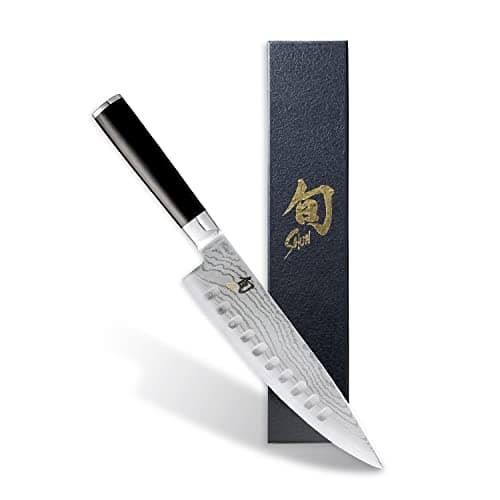
Shun
Shun Classic 8 in hollow ground chef, 16-degree
See price on Amazon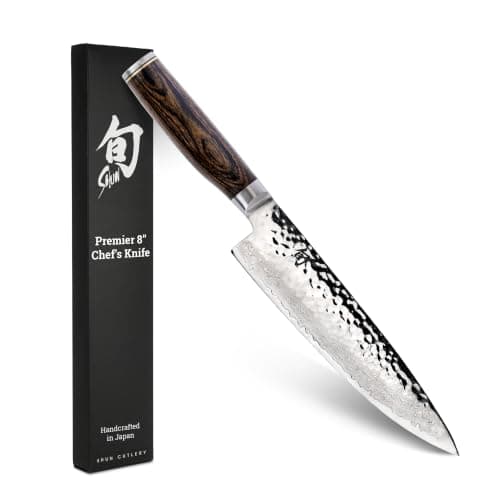
Shun
Shun Premier 8 in chef knife, VG-MAX, 16-degree edge
See price on Amazon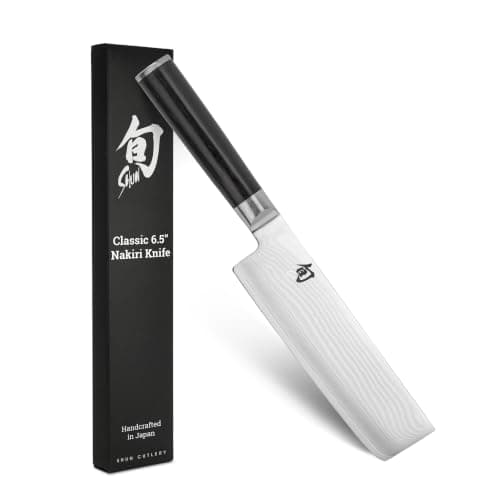
Shun
Shun Classic 6.5" nakiri for flat vegetable cuts
See price on Amazon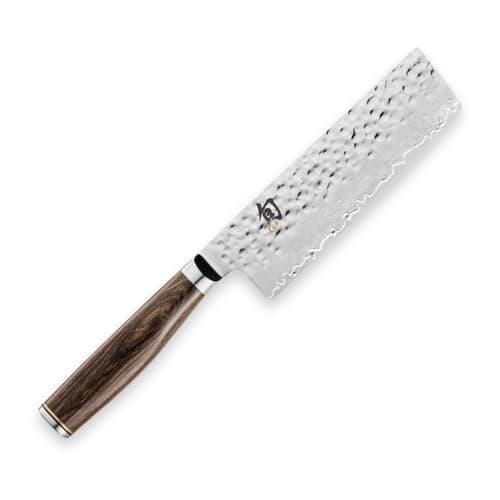
Shun
Shun Premier 5.5" nakiri with hammered tsuchime finish
See price on Amazon
- Shun Classic 8 in hollow ground chef, 16-degree
- Steel
- VG-MAX, 68-layer Damascus cladding
- Hardness (HRC)
- Not stated
- Blade length
- 8 in
- Edge angle
- 16 degrees
- Shun Premier 8 in chef knife, VG-MAX, 16-degree edge
- Steel
- VG-MAX core, 68-layer Damascus cladding
- Hardness (HRC)
- Not stated
- Blade length
- 8 in
- Edge angle
- 16 degrees
- Shun Classic 6.5" nakiri for flat vegetable cuts
- Steel
- VG-MAX core, 68-layer Damascus cladding
- Hardness (HRC)
- Not stated
- Blade length
- 6.5 in
- Edge angle
- 16 degrees
- Shun Premier 5.5" nakiri with hammered tsuchime finish
- Steel
- VG-MAX core, 68-layer Damascus cladding
- Hardness (HRC)
- Not stated
- Blade length
- 5.5 in
- Edge angle
- 16 degrees
| Pick | Steel | Hardness (HRC) | Blade length | Edge angle | Price | Link |
|---|---|---|---|---|---|---|
| Shun Classic 8 in hollow ground chef, 16-degree | VG-MAX, 68-layer Damascus cladding | Not stated | 8 in | 16 degrees | - | Amazon |
| Shun Premier 8 in chef knife, VG-MAX, 16-degree edge | VG-MAX core, 68-layer Damascus cladding | Not stated | 8 in | 16 degrees | - | Amazon |
| Shun Classic 6.5" nakiri for flat vegetable cuts | VG-MAX core, 68-layer Damascus cladding | Not stated | 6.5 in | 16 degrees | - | Amazon |
| Shun Premier 5.5" nakiri with hammered tsuchime finish | VG-MAX core, 68-layer Damascus cladding | Not stated | 5.5 in | 16 degrees | - | Amazon |
Facts are taken from each Amazon listing. Prices are checked daily and shown with their date.
Verdict
Since steel, edge and warranty are the same, buy the Shun Classic if you like the D-shaped handle and the widest range of shapes, and the Shun Premier if you prefer a rounder handle and the hammered finish. Do not pay a large premium for either, since they cut the same.
This page is for shoppers choosing between Shun's two best-known series. Because the steel and edge are identical, the choice comes down to finish, handle and blade shape, plus price on the day you buy. We compare the 8 inch chef's knives and the nakiri knives from both lines using listing specs, explain what the hammered finish actually does, and say who each series suits.
What is the same
Every listing for both series states VG-MAX steel with 68 layers of Damascus cladding and a 16 degree edge. Shun publishes a hardness of about HRC 60 to 61 for VG-MAX. Both are handcrafted in Japan, both use Pakkawood handles, and both are supported by free sharpening and honing from Shun. Our Shun free sharpening and repair page explains how that works.
So edge retention, sharpening angle and care are identical. You sharpen both at 16 degrees per side; our how to sharpen Shun knives page and sharpening angle finder cover the method.
Spec table from the listings
All facts below are from the product listings. Prices move often, so the two lines frequently sit within a few dollars of each other.
Shun Classic 8" Hollow Ground Chef's
- Steel
- VG-MAX, 68-layer Damascus
- Edge per side
- 16 degrees
- Finish
- Damascus with hollow ground indentations
- Handle
- D-shaped Pakkawood
Shun Premier 8" Chef's
- Steel
- VG-MAX, 68-layer Damascus
- Edge per side
- 16 degrees
- Finish
- Hammered tsuchime
- Handle
- Contoured Pakkawood
Shun Classic 6.5" Nakiri
- Steel
- VG-MAX, 68-layer Damascus
- Edge per side
- 16 degrees
- Finish
- Damascus
- Handle
- D-shaped Pakkawood
Shun Premier 5.5" Nakiri
- Steel
- VG-MAX, 68-layer Damascus
- Edge per side
- 16 degrees
- Finish
- Hammered tsuchime
- Handle
- Contoured Pakkawood
| Knife | Steel | Edge per side | Finish | Handle |
|---|---|---|---|---|
| Shun Classic 8" Hollow Ground Chef's | VG-MAX, 68-layer Damascus | 16 degrees | Damascus with hollow ground indentations | D-shaped Pakkawood |
| Shun Premier 8" Chef's | VG-MAX, 68-layer Damascus | 16 degrees | Hammered tsuchime | Contoured Pakkawood |
| Shun Classic 6.5" Nakiri | VG-MAX, 68-layer Damascus | 16 degrees | Damascus | D-shaped Pakkawood |
| Shun Premier 5.5" Nakiri | VG-MAX, 68-layer Damascus | 16 degrees | Hammered tsuchime | Contoured Pakkawood |
Finish: Damascus vs hammered tsuchime
The Classic shows a wavy Damascus pattern across the blade face. The chef's knife in our table is the hollow ground version, which adds a row of oval indentations above the edge for food release. Shun also sells a Classic chef's knife without them.
The Premier has a hammered tsuchime finish on the upper blade with Damascus below it. Shun's listing says the hammered texture reduces drag and keeps food from sticking. Both features help a little with potatoes and cucumbers; neither stops sticking completely. The look is the bigger difference: the Classic is sleek, the Premier is rustic. Our is Damascus steel better page explains what the cladding does and does not do.
Handle and profile
The Classic uses a D-shaped handle. The flat side of the D sits against your fingers and the ridge sits in the palm. Many cooks find it locks in place for a pinch grip; some left-handed users find it less natural, although the listing describes it as suitable for both hands.
The Premier handle is rounder and contoured, closer to a Western grip. It feels neutral in either hand, which makes it an easy pick for households with a left-handed cook. Blade shapes in the two lines are similar for the same knife type, so most of the difference you feel comes from the handle and the slight extra texture of the hammered face. If you can, hold both before buying; handle feel is the deciding factor for most people. See wa vs Western handles.
Octagonal wa
Light, eight flat faces, works in either hand.
D-shaped wa
Light, with a ridge for the fingers. Made for one hand.
Western yo
Full tang between two scales and three rivets. Heavier at the back.
Sets, sizes and care
Both lines come in many shapes: chef's knives, santokus, nakiris, kiritsukes, slicers and utility knives. Both also come in sets, such as the Shun Classic 3 Piece Starter Set and the 7 piece Classic and Premier block sets. If you plan to build a collection, pick the line whose handle you like best, since mixing handle shapes in one block can feel inconsistent. Our best Japanese knife sets guide covers the sets.
Care is identical. Hand wash and dry right away, never use a dishwasher, cut on wood or soft synthetic boards, and avoid bones and frozen food. Store the knives in a block, on a magnetic strip or in a saya so the edges do not knock against other tools. See how to store Japanese knives and can Japanese knives go in the dishwasher.
Which is worth the step up
The Premier is not a performance upgrade over the Classic; it is a different style at a similar price. There is no reason to pay much more for the Premier unless you prefer its handle or finish.
If you want a true step up in steel within Shun, look at the Dual Core line, which layers two steels in the blade. If you want harder steel with a thinner edge from another brand, our Shun vs Miyabi page compares Shun with Miyabi's SG2 knives. For the full lineup see best Shun knives and our review of are Shun knives good.
- Pick Classic if you like a D-shaped grip, a sleek Damascus look, or want the widest choice of shapes and sizes.
- Pick Premier if you prefer a round handle, like the hammered look, or share the knife with a left-handed cook.
- Pick either for the same edge, steel and free sharpening.
Frequently asked questions
Is Shun Premier sharper than Shun Classic? No. Both use VG-MAX at a 16 degree edge and are equally sharp out of the box.
Do Shun Classic and Premier use the same steel? Yes. Both listings state VG-MAX with 68 layers of Damascus cladding.
Which Shun series is best for beginners? Either, but the Classic offers the most shapes and sets, including the Classic 3 piece starter set. See best Japanese knives for beginners.
Does the hammered finish need special care? No. Hand wash, dry right away and store safely, the same as the Classic.
What you need for this
- See price on AmazonAmazon
Shun Classic 8 in hollow ground chef, 16-degree
From Best Shun knives: Classic, Premier, Dual Core, Sora and Kanso
 See price on AmazonAmazon
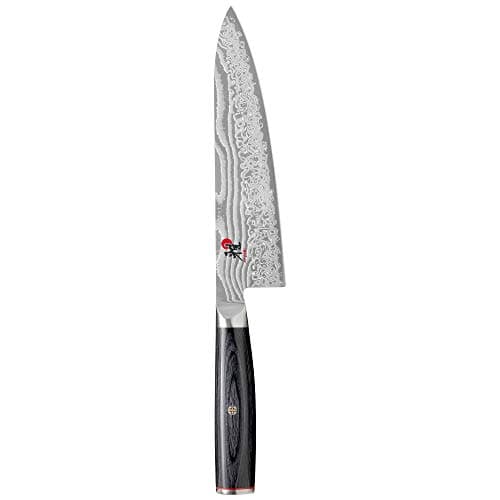
Miyabi Kaizen II 8" chef's knife, FC61 at 61 HRC
From Best Damascus Japanese knives, judged by the core steel
 See price on AmazonAmazon
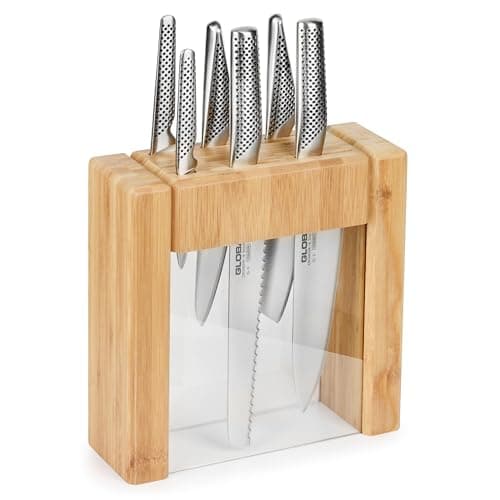
Global Ikasu 7-piece set, Cromova 18 at 58 HRC
From Best Japanese knife sets built around a gyuto or santoku