Comparison
Shun vs Miyabi knives: which Japanese brand fits you
Published
Short answer
Both brands make their knives in Seki, Japan, and both sell thin, hard stainless blades with Damascus cladding. Shun (made by Kai) uses VG-MAX steel sharpened to 16 degrees per side, a slightly more forgiving edge with free sharpening from the maker. Miyabi (owned by Zwilling) uses FC61 at HRC 61 or SG2 powder steel at HRC 63, honed to 9.5 to 12 degrees, so its edges are thinner and harder but need more careful use.
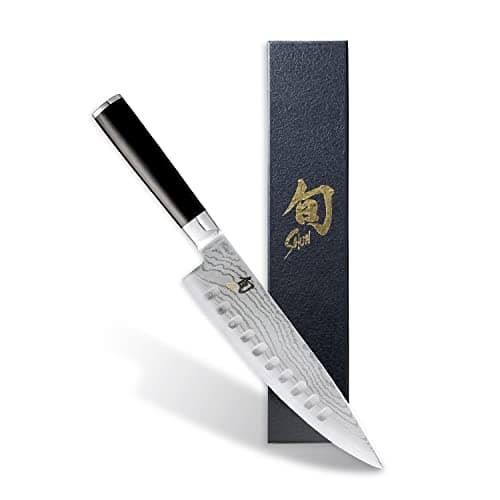
Shun
Shun Classic 8 in hollow ground chef, 16-degree
See price on Amazon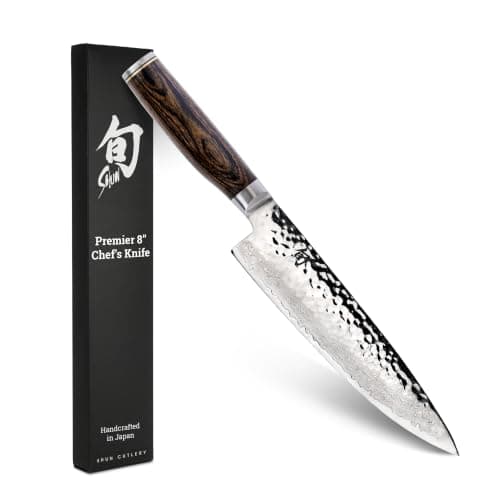
Shun
Shun Premier 8 in chef knife, VG-MAX, 16-degree edge
See price on Amazon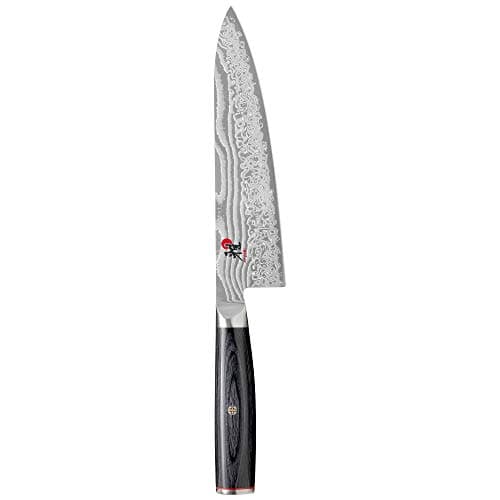
MIYABI
Miyabi Kaizen II 8" chef's knife, FC61 at 61 HRC
See price on Amazon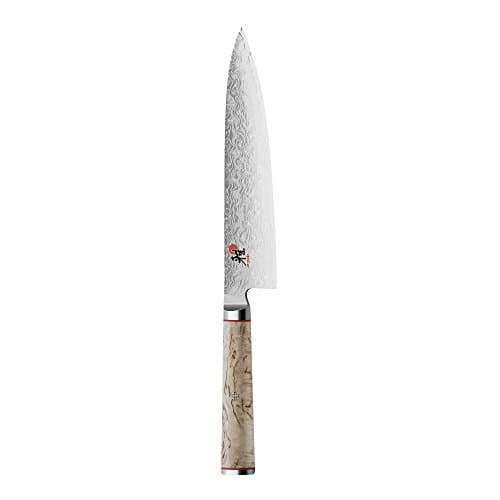
MIYABI
Miyabi Birchwood SG2 8" chef's knife, Karelian birch
See price on Amazon
- Shun Classic 8 in hollow ground chef, 16-degree
- Steel
- VG-MAX, 68-layer Damascus cladding
- Hardness (HRC)
- Not stated
- Blade length
- 8 in
- Edge angle
- 16 degrees
- Shun Premier 8 in chef knife, VG-MAX, 16-degree edge
- Steel
- VG-MAX core, 68-layer Damascus cladding
- Hardness (HRC)
- Not stated
- Blade length
- 8 in
- Edge angle
- 16 degrees
- Miyabi Kaizen II 8" chef's knife, FC61 at 61 HRC
- Steel
- FC61 core, 48-layer damast cladding
- Hardness (HRC)
- 61
- Blade length
- 8 in
- Edge angle
- 9.5-12 degrees
- Miyabi Birchwood SG2 8" chef's knife, Karelian birch
- Steel
- SG2 micro carbide powder steel
- Hardness (HRC)
- Not stated
- Blade length
- 8 in
- Edge angle
- 9.5-12 degrees
| Pick | Steel | Hardness (HRC) | Blade length | Edge angle | Price | Link |
|---|---|---|---|---|---|---|
| Shun Classic 8 in hollow ground chef, 16-degree | VG-MAX, 68-layer Damascus cladding | Not stated | 8 in | 16 degrees | - | Amazon |
| Shun Premier 8 in chef knife, VG-MAX, 16-degree edge | VG-MAX core, 68-layer Damascus cladding | Not stated | 8 in | 16 degrees | - | Amazon |
| Miyabi Kaizen II 8" chef's knife, FC61 at 61 HRC | FC61 core, 48-layer damast cladding | 61 | 8 in | 9.5-12 degrees | - | Amazon |
| Miyabi Birchwood SG2 8" chef's knife, Karelian birch | SG2 micro carbide powder steel | Not stated | 8 in | 9.5-12 degrees | - | Amazon |
Facts are taken from each Amazon listing. Prices are checked daily and shown with their date.
Verdict
Buy a Shun Classic or Premier if you want a slightly tougher 16 degree edge, a belly for rocking and free sharpening from the maker. Buy a Miyabi Kaizen II for a thinner edge at a similar hardness, or a Birchwood or Mizu if you want SG2 edge retention and will treat the knife gently.
This page is for cooks deciding between the two Japanese knife brands most often found side by side in US kitchen stores. Shun and Miyabi look similar on the shelf, but they differ in steel, edge angle, hardness and handle shape. Below we compare the brands series by series, using the Shun Classic, Shun Premier, Miyabi Kaizen II and Miyabi Birchwood chef's knives as the main examples, and finish with who should buy which.
Shun vs Miyabi at a glance
The quickest way to see the difference is to put the published specs next to each other. Every figure below comes from the product listings. Shun lists the same steel and edge across Classic and Premier, while Miyabi changes steel by series, so the Kaizen II and Birchwood behave differently from each other.
The short version: Shun is one recipe in several styles, and Miyabi is a ladder of steels. If you want to compare a specific Miyabi series against Shun, check which steel that series uses first. Our steel chart tool lets you put VG-MAX, FC61 and SG2 side by side.
Shun Classic 8" Hollow Ground
- Core steel
- VG-MAX, 68-layer Damascus
- Hardness
- Not listed
- Edge angle per side
- 16 degrees
- Handle
- D-shaped Pakkawood
- Finish
- Damascus, hollow ground
Shun Premier 8"
- Core steel
- VG-MAX, 68-layer Damascus
- Hardness
- Not listed
- Edge angle per side
- 16 degrees
- Handle
- Contoured Pakkawood
- Finish
- Hammered tsuchime
Miyabi Kaizen II 8"
- Core steel
- FC61, 48-layer Damascus
- Hardness
- HRC 61
- Edge angle per side
- 9.5 to 12 degrees
- Handle
- Black Pakkawood
- Finish
- Damascus
Miyabi Birchwood SG2 8"
- Core steel
- SG2 powder steel, 100-layer Damascus
- Hardness
- Not listed on this listing
- Edge angle per side
- 9.5 to 12 degrees
- Handle
- Karelian birch
- Finish
- Flower Damascus
| Knife | Core steel | Hardness | Edge angle per side | Handle | Finish |
|---|---|---|---|---|---|
| Shun Classic 8" Hollow Ground | VG-MAX, 68-layer Damascus | Not listed | 16 degrees | D-shaped Pakkawood | Damascus, hollow ground |
| Shun Premier 8" | VG-MAX, 68-layer Damascus | Not listed | 16 degrees | Contoured Pakkawood | Hammered tsuchime |
| Miyabi Kaizen II 8" | FC61, 48-layer Damascus | HRC 61 | 9.5 to 12 degrees | Black Pakkawood | Damascus |
| Miyabi Birchwood SG2 8" | SG2 powder steel, 100-layer Damascus | Not listed on this listing | 9.5 to 12 degrees | Karelian birch | Flower Damascus |
Steel and hardness
Shun uses VG-MAX, a Kai variant of VG-10 with added chromium and vanadium. Shun publishes a hardness of about HRC 60 to 61 for it. That is hard by Western standards but still tough enough to forgive the occasional twist on a board. Learn more in our guide to VG-10 steel.
Miyabi splits its lineup. The Kaizen II uses FC61, a fine-carbide stainless steel the listing rates at HRC 61, so it lands very close to Shun. The Birchwood, Mizu, Artisan and Black series use SG2 powder steel, which Miyabi typically hardens to about HRC 63. SG2 holds an edge longer than VG-MAX but is more prone to chipping if you cut bone or frozen food, and it takes a bit longer to sharpen. Our VG-10 vs SG2 comparison covers that trade in detail.
- Edge retention
- rises with hardness
- Chip risk
- rises with hardness
- Ease of sharpening
- falls with hardness
Steels on the chart: X50CrMoV15 HRC 56 to 58; Cromova 18 HRC 56 to 58; AUS-10 HRC 59 to 60; VG-10 HRC 60 to 61; VG-MAX HRC 60 to 61; FC61 HRC 61 to 61; Ginsan (Silver 3) HRC 60 to 61; SG2 / R2 HRC 62 to 64; ZDP-189 HRC 64 to 66; Shirogami 1 and 2 HRC 61 to 64; Aogami 1 and 2 HRC 61 to 64; Aogami Super HRC 63 to 65.
Edge angle and how they cut
Shun sharpens to 16 degrees per side. Miyabi hand hones its edges to 9.5 to 12 degrees per side using the Honbazuke method. A lower angle means a thinner edge that falls through onions and herbs with less pressure. A higher angle gives more steel behind the edge, which resists rolling and chipping.
In practice both feel far sharper out of the box than a typical German knife. Miyabi's thinner edge is the more aggressive cutter; Shun's is a little more durable for cooks who are hard on knives. If you sharpen at home, our sharpening angle finder gives the spine height for each brand, and the angles by brand page explains why the numbers differ.
Handles, profile and feel
Shun Classic uses a D-shaped Pakkawood handle, a Japanese style that sits well in a right hand and is listed as usable by left-handed cooks too. Shun Premier uses a rounder, contoured Pakkawood handle that many people find closer to a Western grip. Shun blades have a fairly pronounced belly, which suits a rocking cut.
Miyabi handles vary by series. Kaizen II uses a black Pakkawood handle with a mosaic pin, the Mizu has a D-shaped Micarta handle with a bolster, and Birchwood uses a Karelian birch octagon-style handle. Miyabi profiles tend to be flatter toward the heel with a thin Japanese blade, which suits push cutting. See wa vs Western handles if you are unsure which grip you prefer.
Octagonal wa
Light, eight flat faces, works in either hand.
D-shaped wa
Light, with a ridge for the fingers. Made for one hand.
Western yo
Full tang between two scales and three rivets. Heavier at the back.
Series by series: matching the lineups
If you are cross-shopping at a given price, these pairings are the fairest comparisons. Prices change, so treat the pairs as similar tiers rather than exact matches.
- Shun Classic vs Miyabi Kaizen II: the entry tier for both. VG-MAX at 16 degrees against FC61 at HRC 61 and 9.5 to 12 degrees. Similar hardness, Miyabi has the thinner edge.
- Shun Premier vs Miyabi Mizu: both have a hammered tsuchime finish. The Mizu steps up to SG2 at HRC 63 with a 12 degree edge and a Micarta handle.
- Shun Dual Core vs Miyabi Birchwood or Black: the high end. Shun's Dual Core uses two steels layered together; Miyabi's top lines use SG2 or harder powder steel with premium wood handles.
- Shun Sora or Kanso vs Miyabi Koh: plainer, lower cost lines from each brand for cooks who do not need Damascus looks.
Warranty, sharpening and care
Shun listings state that the knives are supported by free sharpening and honing. Shun runs this through a mail-in program, explained on our Shun free sharpening and repair page. Miyabi's Mizu listing states a limited lifetime warranty; Miyabi does not run the same kind of free sharpening service, so plan to sharpen yourself or use a local sharpener.
Care is the same for both. Hand wash, dry right away, and never put them in the dishwasher. Use a wood or soft synthetic board, avoid bones and frozen food, and store them in a block, magnetic strip or saya. The harder SG2 Miyabi models deserve extra care around twisting cuts. Our how to sharpen Shun knives and how to sharpen Miyabi knives guides cover each brand's edge.
Note.Do not use a pull-through or electric sharpener set to 20 degrees on either brand. It will widen the edge and remove the main advantage you paid for.
Frequently asked questions
Is Miyabi better than Shun? Neither is better across the board. Miyabi's SG2 series are harder with thinner edges and hold sharpness longer. Shun's VG-MAX at 16 degrees is a little tougher and comes with free factory sharpening. Pick by edge style and handle feel.
Are Shun and Miyabi made in the same place? Both are made in Seki, Japan, a city known for blade making. Shun is made by Kai; Miyabi is made by Zwilling's Japanese factory there.
Which brand is better for beginners? Shun Classic or Miyabi Kaizen II. Both are close to HRC 61, which forgives more mistakes than HRC 63 SG2. See our best Japanese knives for beginners.
Can I sharpen Shun and Miyabi the same way? Yes, on whetstones, but hold different angles: about 16 degrees per side for Shun and about 10 to 12 for Miyabi.
What you need for this
- See price on AmazonAmazon
Shun Classic 8 in hollow ground chef, 16-degree
From Best Shun knives: Classic, Premier, Dual Core, Sora and Kanso
- See price on AmazonAmazon
Miyabi Kaizen II 8" chef's knife, FC61 at 61 HRC
From Best Miyabi knives: Kaizen II, Mizu, Koh, Koya, Artisan, Birchwood and Black
 See price on AmazonAmazon
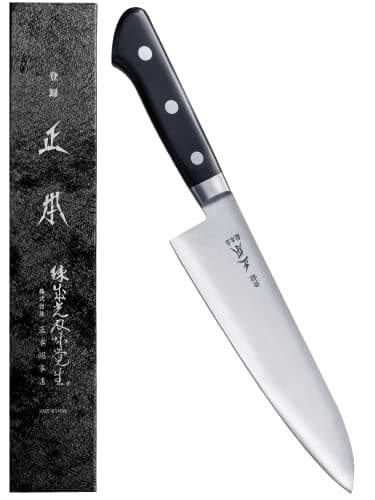
Masamoto VG 240 mm gyuto, HRC 58-59, POM handle
From Best gyuto knives: Japanese chef knives in 210 and 240 mm